
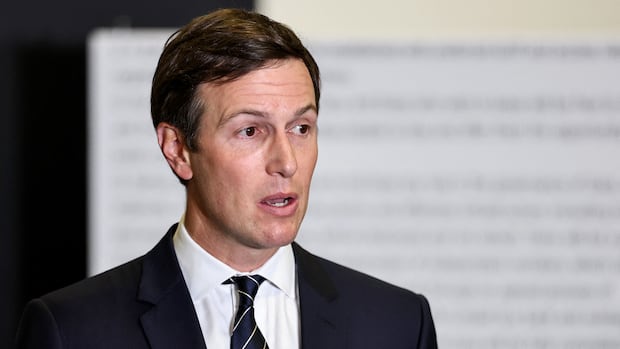

While Donald Trump campaigned for a comeback to the White House in early 2024, the political news platform Axios organized its annual summit featuring discussions with influential figures in Washington, as well as leaders from business and media.
Among the interviews conducted was one with Jared Kushner, who Axios had previously suggested as a potential candidate for secretary of state in a prospective 2025 Trump administration. Kushner, Trump’s son-in-law, attempted to dismiss such speculation.
“I’ve been very clear that my focus at this stage of my life is on my firm,” stated Kushner, the CEO of investment firm Affinity Partners. “As a family, we’ve truly appreciated the chance to step out of the limelight.”
If Kushner aimed to distance himself, the current situation — as the U.S. engages in further discussions to resolve the Russia-Ukraine conflict — indicates he has been drawn back in, echoing a famous line from the divisive The Godfather Part III.
-
LIVE: U.S. officials meet with Putin in Russia
-
Witkoff’s leaked phone call with Russia rankles U.S. lawmakers
On Tuesday, Kushner joined U.S. special envoy for peace missions, Steve Witkoff, at the Kremlin in Moscow for discussions with Russian President Vladimir Putin. Witkoff has reportedly met with Putin five times before, raising concerns about his lack of a U.S.-based translator and, according to some Democrats and a few Republicans, being vulnerable to Russian narratives.
This marks the first occasion Kushner has met with Putin.
‘We need that brain on occasion’
The notion of Kushner assuming the role of secretary of state appeared questionable at best, if not far-fetched. During Trump’s initial term, Kushner was involved in a variety of areas — from energy policy to Middle Eastern diplomacy to North American trade negotiations — all without undergoing the typical Senate confirmation hearings required for those participating in high-level discussions for the State Department.
Many foreign policy analysts credited Kushner in the first Trump term for contributing to the Abraham Accords, diplomatic agreements established between Israel and the United Arab Emirates, Bahrain, Sudan, and Morocco.
“I believe my disadvantage was my lack of context, and my advantage was my lack of context,” Kushner explained to the Harvard University Middle East Initiative program in March 2024. “Thus, I would always take a first principles, results-driven approach with the aim of ‘how do you maximize human potential?'”
However, there were also setbacks. In the early stages of the COVID-19 pandemic, Kushner oversaw a disorganized effort involving unpaid volunteers that inadvertently led the federal government to compete with states for essential medical resources.
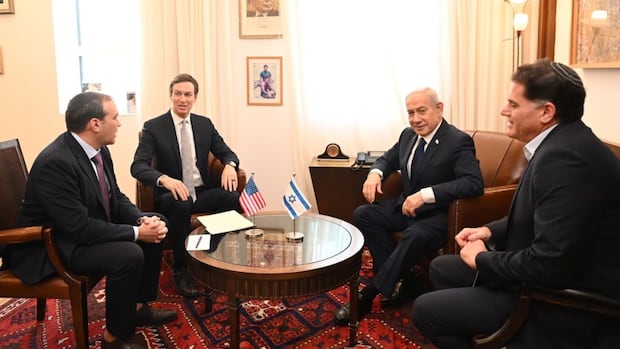
Kushner’s renewed involvement in a second Trump term began months ago as he collaborated with Witkoff to facilitate the U.S. negotiation of what was finalized in October, an Israel-Hamas ceasefire agreement.
While speaking to Israel’s Knesset in October, Trump remarked regarding Kushner, “We need that brain on occasion.”
“We always bring Jared when we want to finalize a deal,” Trump stated.
-
Trump receives praise, even from frequent critics, for Israel-Hamas deal
-
Tracking Palestinian, Israeli deaths since the Gaza ceasefire went into effect
This development is intriguing given that 18 months prior to Hamas and other militants executing their lethal assault in southern Israel, Kushner penned a Wall Street Journal op-ed stating, “We are observing the final remnants of what has been known as the Arab-Israeli conflict.”
Kushner suggested that this apparently complicated, historically rich conflict was “nothing more than a real-estate argument between Israelis and Palestinians.”
Amassing wealth, investors
Kushner’s re-entry into the political arena comes without even a title as a White House adviser, raising numerous questions. During his and his wife Ivanka Trump’s tenure as advisers in his father-in-law’s first term, they reported at least $172 million US in external income, as per the non-profit watchdog, Citizens For Ethics.
Additionally, his Affinity Partners group, which has invested in video game company Electronic Arts and co-founded an AI startup named Brain Co., has received substantial financial backing during Kushner’s absence from politics from Saudi, Qatari, and Emirati investors.

Ivanka Trump and Jared Kushner gaze toward photographers on June 26 in Venice, where they attended the wedding ceremonies for Amazon founder Jeff Bezos and Lauren Sanchez. (Luigi Costantini/The Associated Press)
Last year, Democratic lawmakers called for an investigation into the $2 billion that Kushner’s equity fund received from Saudi Arabia, sensing the potential for a conflict of interest, but they soon lost control of the Senate.
Kushner, for his part, stated in a podcast last year that he had made it clear to his Middle Eastern business associates not to anticipate any special treatment if Trump returned to office.
Regarding negotiations in Eastern Europe, Reuters reported in late November about a meeting the prior month in Miami that involved Witkoff, Kushner, and Kirill Dmitriev, the head of a Russian sovereign wealth fund. Few individuals within the State Department and White House were informed about that meeting, according to two sources familiar with the situation, which contributed to a 28-point peace proposal that raised concerns across Europe for favoring Russian interests.
Since then, Kushner has also been spotted participating in discussions with Ukrainian representatives.
Kushner was not heavily engaged in Russian diplomacy during Trump’s first term, although he does mention having discussions with Dmitriev in his 2022 memoir, Breaking History, where the conversations revolved around keeping Russia informed about Middle Eastern talks leading to the Abraham Accords.
In his memoir, Kushner acknowledged avoiding first-term diplomacy with Moscow after enduring multiple interviews with special counsel Robert Mueller’s team, who were probing connections between Russia and the 2016 Trump presidential campaign.
The most serious accusation against Kushner during the Mueller investigation involved a report that, between Trump’s election victory and his inauguration, he suggested to then-Russian ambassador Sergey Kislyak the establishment of a back channel for discussions using Russian diplomatic facilities. Kushner, in his memoir, strongly denied this claim, suspecting a damaging leak from the office of then-secretary of state Rex Tillerson, who reportedly resented Kushner’s role as an adviser.
Revolving cast of negotiators
Several American officials have engaged with Ukrainian and Russian counterparts in efforts to conclude the conflict, while Secretary of State Marco Rubio appears to be only sporadically involved.
Keith Kellogg, a retired army lieutenant general who has long been associated with Trump, is reportedly winding down his envoy role according to recent reports from Reuters and The Associated Press. While Kellogg has been one of the few administration officials to have visited Kyiv, he has also urged President Volodymyr Zelenskyy to conduct overdue elections as soon as possible.
U.S. Army Secretary Dan Driscoll has emerged as a fresh voice in the negotiations. A former Yale Law School classmate of Vice-President JD Vance, Driscoll was involved in discussions with Russian officials in Abu Dhabi last month.
Vance and Driscoll also held talks with Zelenskyy days later, where Driscoll reportedly commented on the “remarkable” performance of the Ukrainian military during nearly four years of conflict.
Additionally, Witkoff, a wealthy supporter of Trump and longtime friend, has been mentioned as Kushner’s informal adviser on Middle Eastern matters as Trump approaches his second inauguration.
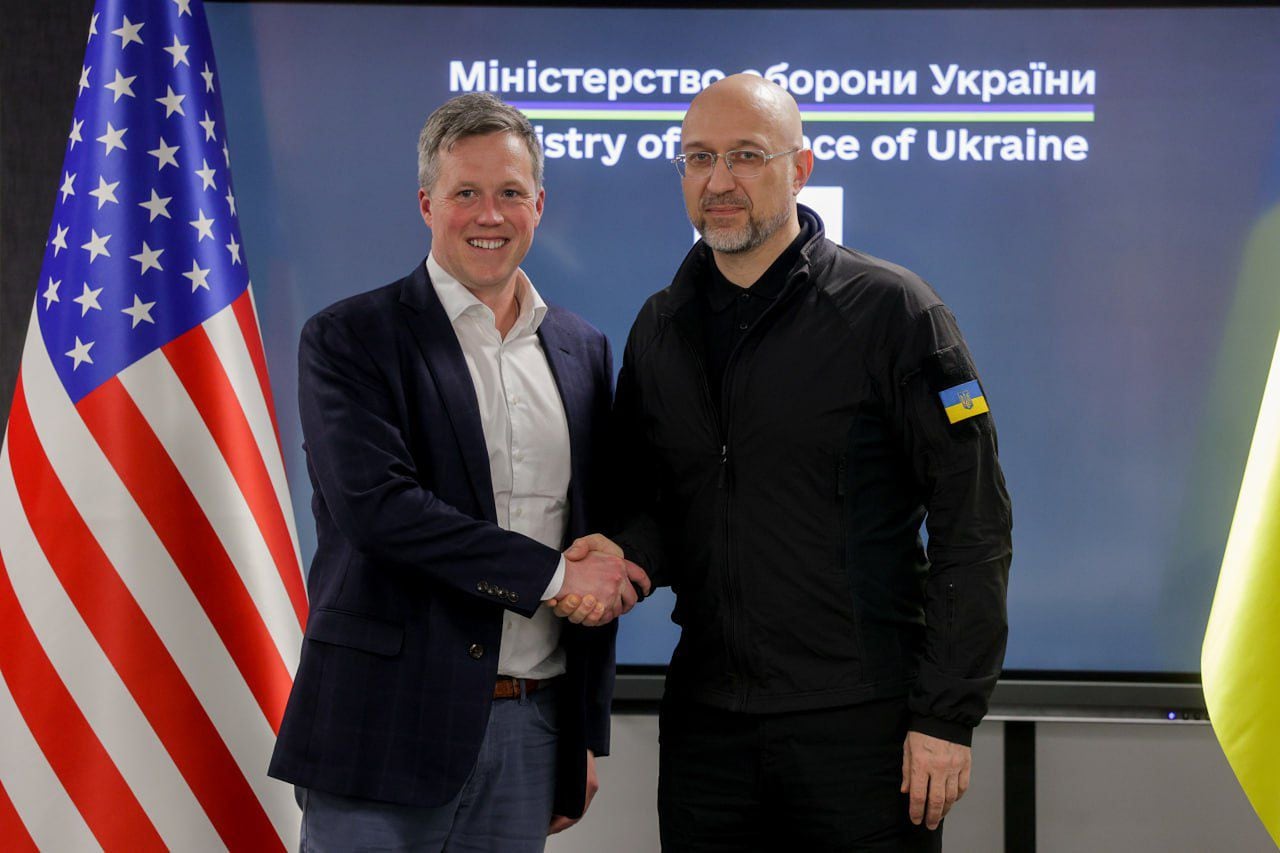
Dan Driscoll, U.S. Secretary of the Army, left, shakes hands with Ukrainian Defence Minister Denys Shmyhal, in Kyiv on Nov. 19. (Ukrainian Defence Ministry Press Office/The Associated Press)
Following Trump’s extraordinary political resurgence, which included pledges made during the campaign to swiftly resolve the Russia-Ukraine conflict, his stance towards Ukraine and Zelenskyy has shifted from conciliatory to confrontational. Just last week, Witkoff accused Ukraine’s leadership of showing “zero gratitude” for U.S. efforts to mediate the conflict.
Kushner has now returned. He has frequently made subtle criticisms of the roles played by career diplomats and described his negotiation approach to the New York Times in October.
“You have to be able to kind of get the bottom line out of them and then see who you think is playing games and how much room you have to push things,” asserted Kushner.
“It’s just different being dealmakers — it’s just a different sport.”