
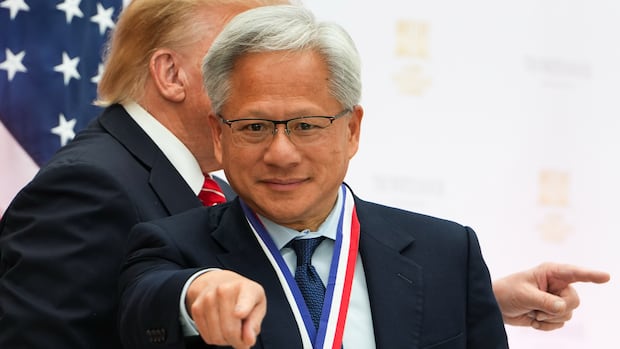

Nvidia’s CEO Jensen Huang stepped down on Thursday following concerns over national security related to his extramarital relationship with an individual alleged to be a Chinese spy.
The company has appointed Colette Kress as the interim CEO. She currently serves as the executive vice-president and chief financial officer.
Calls for Huang’s resignation intensified after it was revealed that he was involved with Alice Huang, a former executive at Megaspeed, who is suspected of having connections to the Chinese government.
On Wednesday evening, the New York Times disclosed that Huang was also involved in another affair with an Nvidia employee who reports directly to him.
On Thursday, the board of directors announced the appointment of Harvey C. Jones, an entrepreneur and investor, as the company’s first chairman.
Nvidia, one of the world’s largest firms, saw its shares decline by approximately eight percent at the start of trading on Thursday.
In its first response since the scandal emerged, Megaspeed International, based in Singapore, stated on Thursday that it takes compliance with U.S. export control regulations “extremely seriously.”
“Megaspeed is dedicated to cooperating constructively and transparently with the U.S. government,” said the statement, which was signed by its chairman and CEO, Tan Yong Pong, also known as James Tan.
-
How China gets around the U.S. ban on Nvidia chips
-
Who is Alice Huang? Alleged Chinese spy, businesswoman involved with Nvidia CEO
Nvidia stated that it had “no reason to believe” that either national security or its proprietary secrets had been compromised, although its investigation will review all pertinent information.
Trump says FBI investigating
Information regarding Huang’s relationship with the alleged Chinese spy remains unclear. The New York Times reported that the woman in question is Alice Huang, also known as Huang Le, who was a senior executive at Megaspeed. The company prominently advertises its partnership with Nvidia on its website, and the two are not related.
Last month, the Times revealed that U.S. intelligence agencies found that Nvidia’s Huang had formed a close connection with Alice Huang and assessed that she was relaying information directly to Beijing.
On Sunday, U.S. President Donald Trump announced that the FBI is conducting an investigation.
Megaspeed faced accusations last year regarding the illegal shipment of advanced Nvidia chips into China, but stated in December that there was “no evidence” supporting such claims. Singapore has also indicated that it is looking into these allegations.
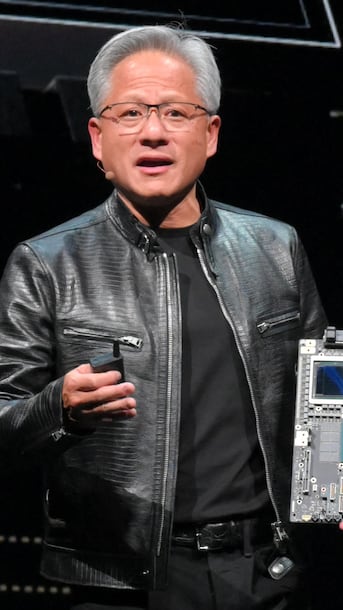
U.S. tech giant Nvidia’s shares tumbled after CEO Jensen Huang admitted to an affair with a woman accused of spying for Beijing. Andrew Chang breaks down what we know so far and what the scandal means for the world’s most valuable AI chipmaker.
China has denied any involvement in attempts to compromise Huang. Nvidia has established itself as a leader in producing chips that drive AI technology, and Huang has advocated for Washington to ease restrictions on the sale of Nvidia chips to China.
In January, he received approval from Trump to sell its H200 chips to China.
On Thursday, Megaspeed stated that it has been cooperating with the U.S. Department of Commerce’s Bureau of Industry and Security (BIS), which enforces national security export restrictions, and is prepared to “fully cooperate with any other relevant U.S. government authority.”
It also announced that it has engaged a U.S. law firm to conduct a “comprehensive census” of its computer chips and to validate its export controls.
“Megaspeed welcomes appropriate government scrutiny and is committed to demonstrating through tangible actions that it operates responsibly, transparently, and in compliance with applicable U.S. laws,” the company stated.
In addition to national security concerns, Megaspeed’s financial situation has also attracted attention. Its total assets reportedly surged nearly 90-fold from late 2023 to 2024, reaching close to $3 billion USD, according to corporate records in Singapore.
Revenue increased dramatically to over $294 million USD in 2024, up from none in 2023.