
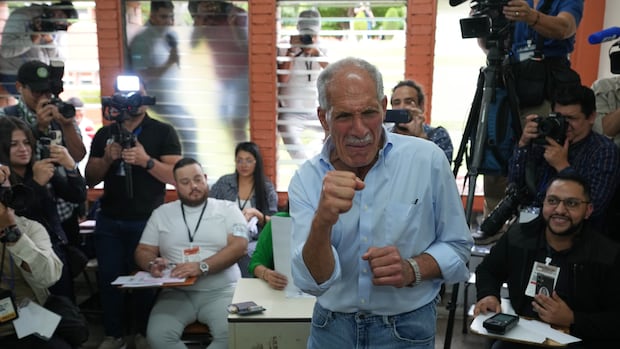

In the presidential elections in Honduras, two conservative candidates were nearly neck and neck in the early results, with around 55 percent of polling places reporting by early Monday morning, based on initial and incomplete data.
This voting event occurred shortly after U.S. President Donald Trump made a significant move by endorsing one of the candidates and announcing plans to pardon a former president.
According to the National Electoral Council, Nasry (Tito) Asfura from the National Party garnered 40 percent of the vote in early tallies, while Salvador Nasralla from the conservative Liberal Party followed closely with approximately 39.78 percent. Rixi Moncada from the democratic socialist LIBRE Party lagged behind with 19.49 percent.
Both Asfura and Nasralla refrained from claiming victory, emphasizing that it was still early in the counting process. Following initial enthusiasm at their respective campaign headquarters, the streets of the capital, Tegucigalpa, were relatively calm on Sunday night as the tally continued.
Asfura, a 67-year-old former mayor of Tegucigalpa who received Trump’s endorsement, presented himself as a pragmatic choice, highlighting his well-received infrastructure initiatives.
Nasralla, 72, a sportscaster by profession, has previously campaigned with various parties, including a run with the current president Xiomara Castro four years earlier.
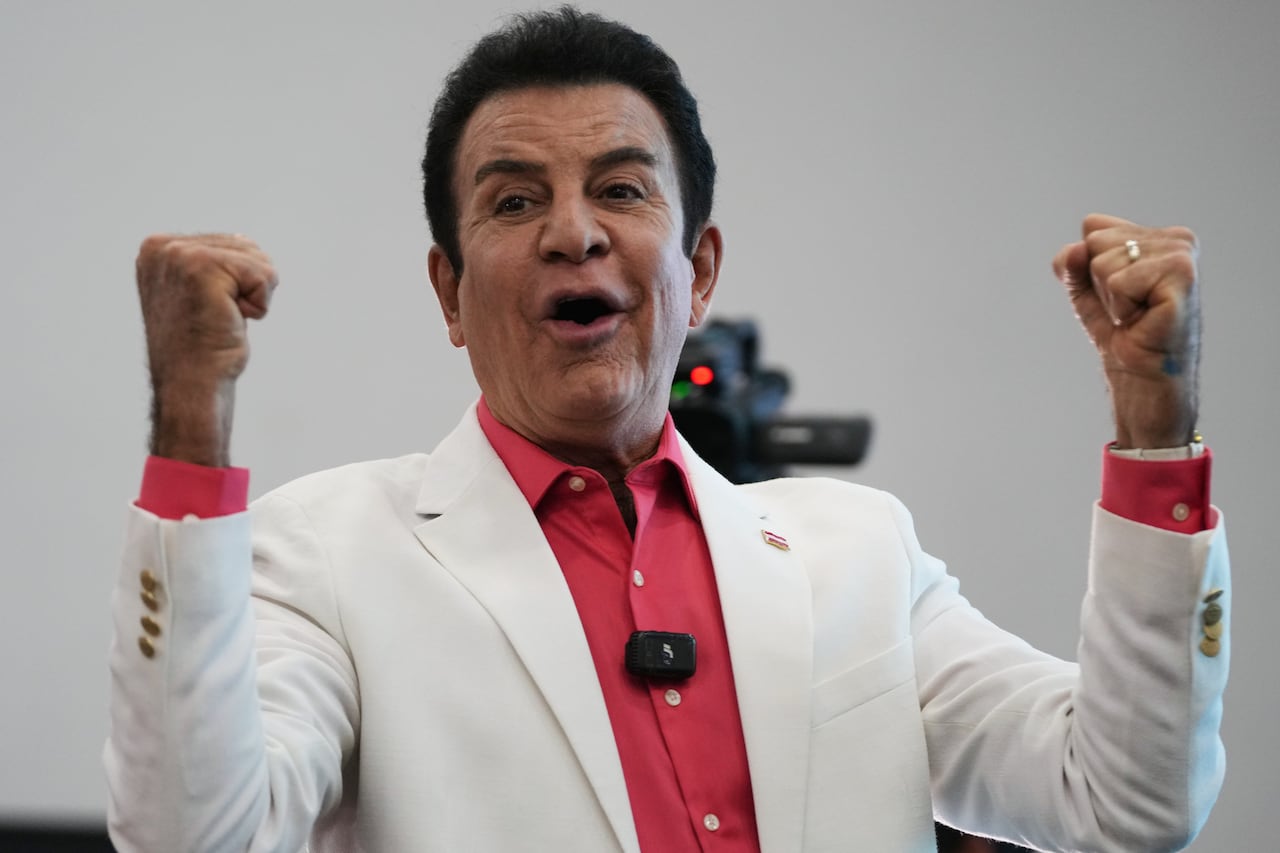
Salvador Nasralla of the Liberal Party celebrates in Tegucigalpa after the announcement of the first official preliminary results, expressing optimism about the remaining vote count. (Moises Castillo/The Associated Press)
As preliminary results emerged late Sunday, Nasralla indicated that the race remained too close to determine a clear winner, expressing confidence that the outstanding votes would ultimately favor him.
Nasralla attempted to leverage Trump’s involvement to enhance his image as an outsider, despite this being his fourth presidential campaign.
“I reject any dark alliances, corrupt networks, or criminals who have harmed our citizens,” he stated.
‘Surprising’ pardon
On Friday, Trump endorsed Asfura, asserting that they could collaborate to combat drug trafficking, and mentioned that “if he doesn’t win, the U.S. will not be wasting resources,” without providing further details.
“I cannot cooperate with Moncada and the Communists, and Nasralla is not a trustworthy ally for Freedom,” Trump posted on Truth Social.
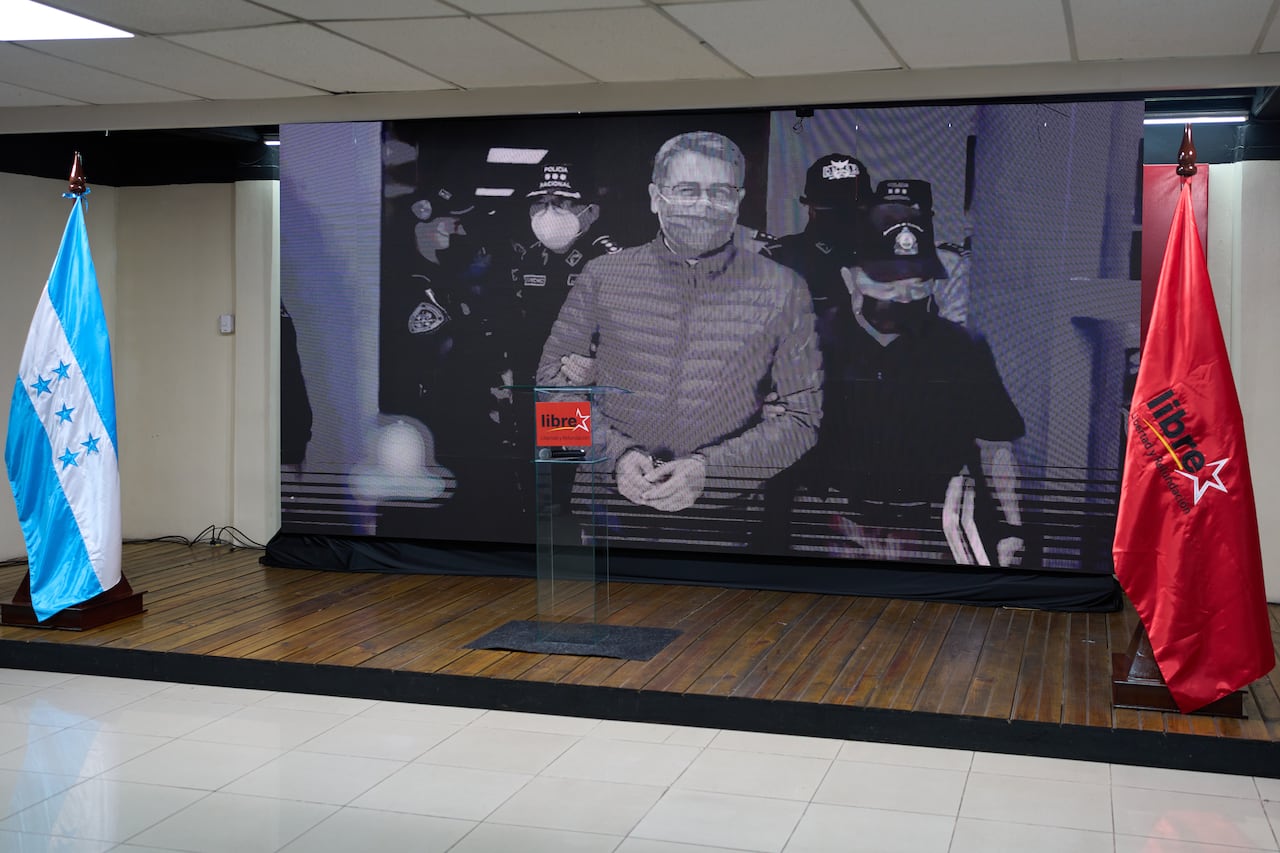
A screen shows an image of former Honduran president Juan Orlando Hernandez, whom U.S. President Donald Trump stated he would pardon, prior to a press conference held by the ruling LIBRE party in Tegucigalpa, Honduras, on Saturday. (Moises Castillo/The Associated Press)
Trump also caused a stir by declaring his intention to pardon former president Juan Orlando Hernández, who was serving a 45-year prison sentence in the U.S. for facilitating drug trafficking into the country.
Prosecutors claimed that Hernández utilized Honduras’s military and police to facilitate drug shipments, amassing millions that contributed to his rise from a rural congressman to the presidency.
However, Trump criticized the prosecution of Hernández, which also implicated the former president’s brother, stating Friday that respected individuals had informed him Hernández, affiliated with the National Party, was “treated very harshly and unjustly.”
-
Honduran president’s brother convicted of drug trafficking in U.S. trial
-
U.S. prosecutors lay out allegations as Hernandez is extradited (2022)
This decision provoked anger among Democrats in Washington, as Trump has cited the alleged drug flow to the U.S. as the basis for various military actions against vessels near Venezuela and in the eastern Pacific, actions that have resulted in over 80 fatalities since September 2.
Senator Tim Kaine from Virginia referred to Trump’s choice to pardon Hernández as “shocking.”
“He led one of the largest criminal enterprises ever convicted in U.S. courts, and less than a year into his sentence, President Trump is pardoning him, indicating that he is indifferent to narcotrafficking,” Kaine stated in an interview on CBS’s Face the Nation.

Candidates express reluctance to accept results
Oliver Erazo, a law professor at the National Autonomous University of Honduras, indicated that he does not anticipate a significant influence from Trump’s involvement on voter choices.
“The social and collective behavior of the electorate was already set a week or two prior, particularly regarding the National Party and the Liberal Party,” he remarked.
In Honduras, where 60 percent of the population lives in poverty, a coup occurred in 2009, resulting from a coalition of right-wing military leaders, politicians, and business figures who ousted Manuel Zelaya, the spouse of the current president.
In 2017, during Trump’s first term, Hernández’s re-election was supported, despite the Organization of American States calling for a new election due to widespread fraud allegations. His re-election campaign was controversial, as he secured a Supreme Court ruling to circumvent a constitutional ban on consecutive terms established in 1982.
The time between the election conclusion and inauguration was characterized by extensive protests.
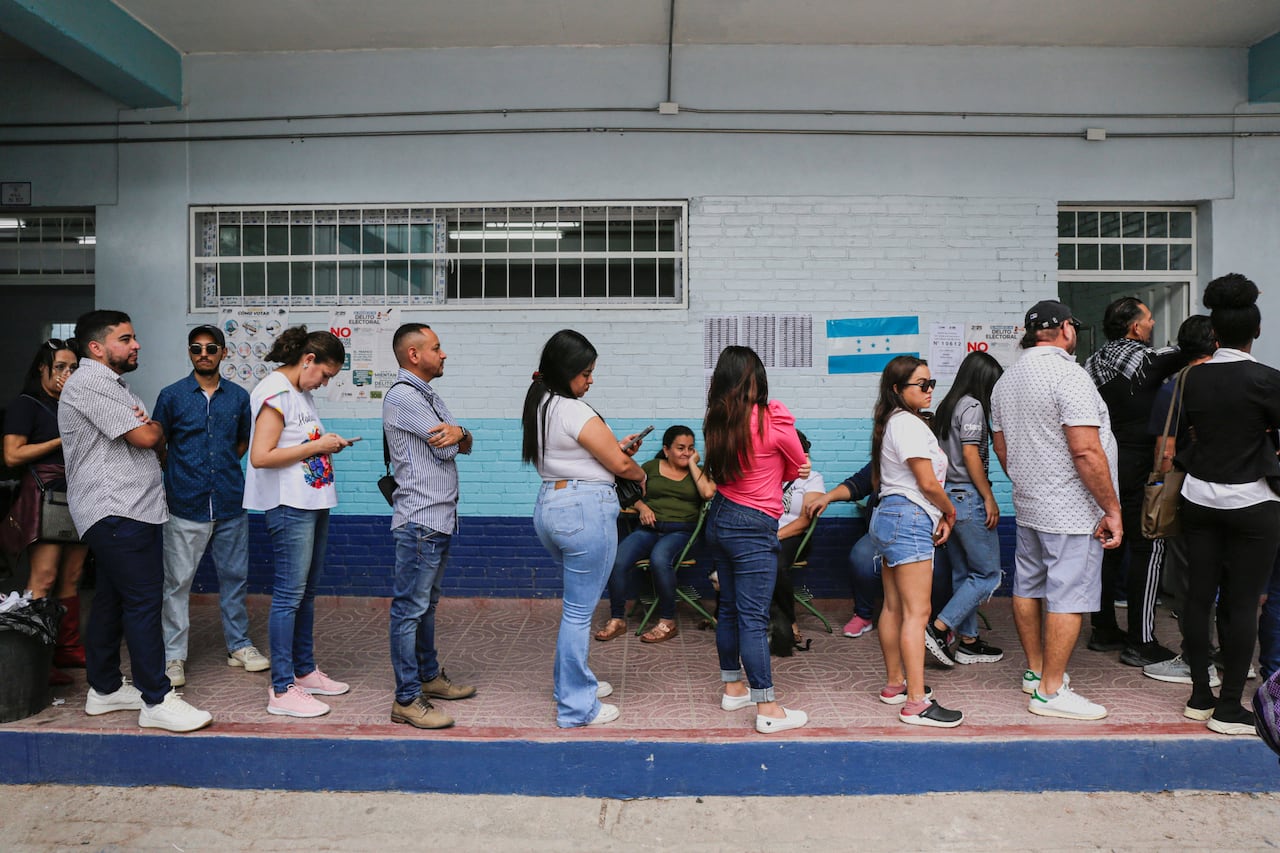
Voters line up at the Government Institute Espana Jesus Milla Selva during the election in Tegucigalpa on Sunday. (Leonel Estrada/Reuters)
In 2021, the people of Honduras overwhelmingly elected Xiomara Castro, marking the end of over a century of governance by the National and Liberal parties.
The final phases of this election campaign were dominated by allegations of electoral fraud among the top three candidates, prompting both local and international observers to caution that such claims could undermine the acceptance of the election outcomes.
Moncada, the chosen successor of President Castro, indicated in the lead-up to the election that she would reject the preliminary results, believing there was a scheme to manipulate them.
She stated that she would refrain from commenting on the electoral council’s preliminary findings until Monday.
Meanwhile, the opposition expressed concerns that the ruling LIBRE party might exploit governmental resources to favor Moncada in the election.
Christopher Landau, U.S. Deputy Secretary of State, issued a warning ahead of the elections, stating that Washington would act “swiftly and decisively against anyone who compromises the integrity of the democratic process in Honduras.”
Melany Martínez, a 30-year-old nurse, mentioned hearing discussions about potential unrest following the vote and suggestions to stock up on essential supplies. She expressed her dissatisfaction with the U.S. president’s involvement.
“The decision must be made by the people here, as we are the citizens,” she asserted.
Many voters prioritized concerns regarding security and employment.
While homicide and unemployment rates have improved over the last four years under Castro’s leadership, and the International Monetary Fund praised her administration’s fiscal discipline, Honduras still holds the highest homicide rate in Central America.
Supporters of Castro highlight the difficulties she faced from former president Hernández, whom her administration extradited to the U.S. to confront drug trafficking charges after his presidency ended.