
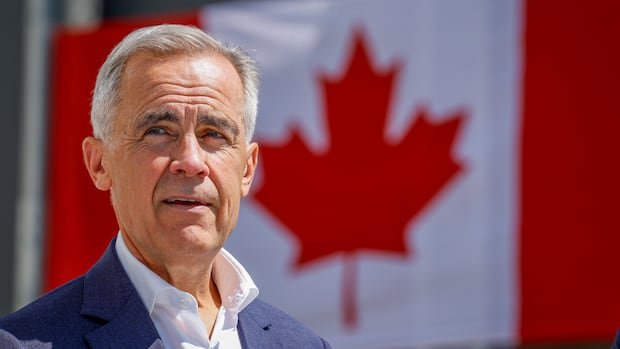

Prime Minister Mark Carney expressed his reluctance to use Canadian energy exports as a bargaining tool amidst U.S. President Donald Trump’s threat of imposing additional tariffs on Canadian goods. Carney emphasized the importance of reaching an agreement before the new tariffs take effect on August 19 during a housing-related news conference in Red Deer, Alta.
When pressed about the possibility of withholding energy exports, including oil, Carney refrained from divulging specific strategies, stating that the focus should be on building towards a mutual agreement. He highlighted the significance of being a dependable supplier, stressing that he doesn’t see the benefit of using energy exports as leverage in trade negotiations.
Carney’s stance marks a shift from his previous remarks following a meeting with Canada’s premiers, where he stated that all options were on the table if an agreement was not reached by the deadline. Ontario Premier Doug Ford has been vocal in advocating for using energy exports as leverage, while Alberta’s Danielle Smith dismissed the idea of withholding energy resources.
The Trump administration’s proposed 50% tariffs are in response to perceived unfair trade practices, including provincial bans on U.S. alcohol, Canada’s protected dairy industry, and the integrated auto sector. Canadian provinces that have restricted U.S. liquor sales are expected to bear the brunt of the impending tariffs.
Federal Minister Dominic LeBlanc, responsible for Canada-U.S. trade, met with U.S. Trade Representative Jamieson Greer in Washington to discuss the escalating trade tensions. Carney disclosed that he had spoken with President Trump and both parties agreed to intensify negotiations amid the ongoing Canada-U.S.-Mexico Agreement talks.
The latest developments underscore the complex trade dynamics between Canada and the U.S., with efforts underway to navigate the challenges and reach a mutually beneficial resolution.