

The U.S. military conducted its 20th operation targeting a boat suspected of drug trafficking in the Caribbean Sea, resulting in the deaths of four individuals, as confirmed by the U.S. military on Friday. This action is part of the Trump administration’s heightened efforts in South American waters.
The recent operation took place on Monday, according to a social media update by U.S. Southern Command, responsible for military activities in the Caribbean and Latin America. This brings the total casualties from the series of operations initiated in September to 80, with the Mexican Navy halting its rescue efforts after a strike in late October.
A video shared by Southern Command depicts a boat racing across the water before being consumed by flames. The command stated that intelligence indicated the vessel was engaged in illegal drug trafficking along a known route and was carrying narcotics.
Notably, the announcement of these strikes marked a departure from the usual practice of Defense Secretary Pete Hegseth, who typically announces such actions on social media, although he promptly reposted Southern Command’s announcement.
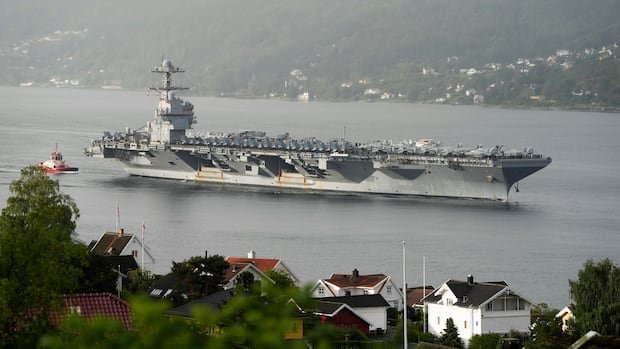
Meanwhile, the Trump administration is bolstering the U.S. military presence in the area by deploying the USS Gerald R. Ford aircraft carrier, the nation’s most advanced warship, which is en route from the Mediterranean Sea and expected to arrive soon.
Hegseth officially designated the mission as Operation Southern Spear on Thursday, underscoring the increasing significance and enduring nature of the military’s involvement in the region. Once the USS Gerald R. Ford arrives, the operation will involve nearly a dozen U.S. naval vessels and approximately 12,000 sailors and marines.
The administration has emphasized that the buildup of naval forces aims to combat drug trafficking into the U.S., although it has not presented evidence to support its claims that those targeted in the operations were “narcoterrorists.”
These strikes have mainly focused on vessels in the Caribbean Sea but also extended to the eastern Pacific Ocean, a crucial route for cocaine smuggling from major producers.
Observers suggest that the aircraft carrier’s deployment serves as a significant tool of intimidation against Venezuelan President Nicolás Maduro, who faces allegations of narcoterrorism from the U.S. There are varying opinions on whether U.S. warplanes might target land installations to pressure Maduro to step down.
U.S. Secretary of State Marco Rubio has disavowed Maduro’s leadership in Venezuela, accusing the government of collaborating with drug traffickers. In response, Maduro has accused the U.S. of fabricating a conflict against him and has mobilized troops and civilians to defend against potential U.S. actions.
President Trump has defended the operations by asserting that the U.S. is engaged in a conflict with drug cartels and alleges that the targeted boats are linked to foreign terrorist groups flooding American cities with drugs.
Lawmakers, including Republicans, have demanded more transparency regarding the targets and legal justifications for these operations. Rubio and Hegseth briefed a bipartisan group overseeing national security matters, offering insights into the legal rationale and strategy behind the strikes.
In a subsequent move, Senate Republicans rejected legislation aimed at restricting Trump’s authority to launch an attack on Venezuela without congressional approval.