
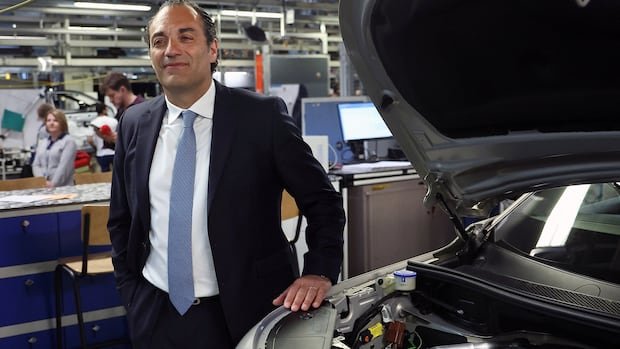

Stellantis CEO Antonio Filosa emphasized that the company’s significant strategic revamp would require time to yield results following the announcement of lower-than-anticipated second-quarter financial outcomes, impacting its stock value.
Earlier in May, Stellantis unveiled a $70 billion restructuring plan aimed at introducing 60 new vehicle models by 2030 and recapturing the previously lost high-margin market position in the United States from its former CEO Carlos Tavares, who was removed in late 2024.
During a recent conference call with analysts, Filosa outlined three key priorities for the company: expanding market reach, cutting operational expenses, and enhancing product quality. However, the progress on these fronts has been gradual, with Filosa stressing the need for time to address these challenges effectively.
Filosa acknowledged to reporters that overcoming these obstacles would not happen overnight, reiterating that the company is on course, executing diligently, and striving for swift progress.
In North America, Stellantis witnessed a 6% uptick in sales, primarily driven by an 11% surge in sales of high-margin Ram pickup trucks and Jeep models — a segment Filosa has prioritized to reclaim market share in the U.S. The Chrysler Pacifica minivan, manufactured in Windsor, also recorded a 7% sales increase year-over-year.
Conversely, revenue in Europe remained flat as Stellantis had to reduce prices to combat the escalating competition from Chinese automakers, impacting the region’s financial performance.
To counter the growing competition from Chinese rivals like BYD and Chery, Filosa disclosed plans to leverage its partnership with Chinese joint-venture partner Leapmotor, which witnessed a significant sixfold sales surge in Europe during the initial half of 2026. Additionally, Stellantis is developing cutting-edge vehicle platforms for the European market to match the competitive standards set by Chinese automakers.
Despite generating $884 million in adjusted earnings before interest and tax in the second quarter, largely bolstered by robust North American sales, the figure fell short of analysts’ expectations. This resulted in a 4.31% decline in the company’s Milan-listed shares by the end of the trading day.
Citi analysts highlighted the company’s low adjusted operating income margin of 1.8%, attributing it to price adjustments in Europe, elevated administrative and research and development costs, adverse currency fluctuations, and tariffs.
Since assuming the CEO position in June the previous year, Filosa has been dedicated to revitalizing sales volume and reclaiming lost market share, anticipating that a resurgence in the core business will set the stage for a broader corporate turnaround. Stellantis has also scaled down its electrification ambitions, with the company’s shares hitting a record low and dropping approximately 40% since Filosa took the helm.
In the second quarter, Stellantis observed a 13% year-on-year growth in revenue, driven by a 32% surge in North American sales, led by popular models such as the Jeep Grand Wagoneer and Ram 1500 truck. However, Fabio Caldato, a fund manager at Stellantis investor AcomeA Sgr, noted that the strong North American revenue was somewhat inflated by dealers increasing their inventory.
Looking ahead, Stellantis retained its full-year projections, including expectations for mid-single-digit revenue growth and a low-single-digit adjusted operating income margin. The company does not anticipate positive industrial free cash flow until the following year and foresees U.S. tariff expenses ranging from $1.15 billion to $1.38 billion for the current year.