
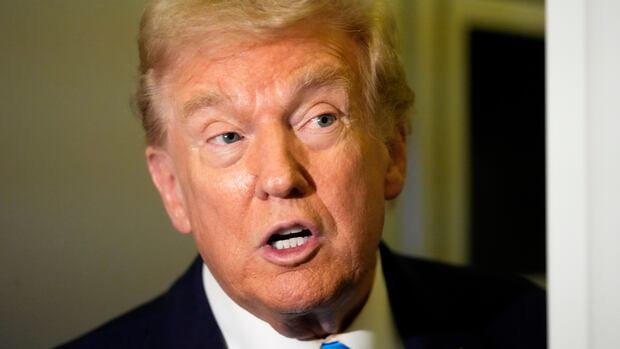

U.S. President Donald Trump took to social media to announce a 10% increase in tariffs on Canada due to an Ontario government advertisement that he deemed fraudulent. Trump criticized Canada for running the misleading ad during the World Series, leading to the tariff escalation. The specific tariffs affected by the increase are currently unspecified.
Flavio Volpe, president of the Automotive Parts Manufacturers’ Association, expressed concern over the impact of the advertisement on American consumers, estimating a cost of around $50 billion. The contentious ad features former president Ronald Reagan’s anti-tariff stance, prompting Trump’s strong reaction.
Trump’s decision to terminate trade discussions with Canada stems from his belief that the ad misrepresented Reagan’s views on tariffs. The Ronald Reagan Presidential Foundation & Institute also disapproved of the ad, claiming unauthorized use of Reagan’s remarks.
Despite Ford’s decision to withdraw the ad from U.S. screens, millions of viewers are expected to see it during the upcoming World Series game. Candace Laing of the Canadian Chamber of Commerce emphasized the detrimental effects of tariffs on American competitiveness and called for diplomatic resolution.
Trump accused Canada of hoping for Supreme Court intervention to overturn previous tariff rulings. The Supreme Court is set to hear arguments in November, potentially affecting the fate of the imposed tariffs. Meanwhile, Prime Minister Mark Carney is pursuing trade opportunities in Malaysia amid escalating trade tensions with the U.S.
Carney expressed readiness to resume trade discussions with the U.S. for mutual benefit, emphasizing progress in specific sectors like steel and energy. Conservative Leader Pierre Poilievre criticized Carney for failing to secure a trade deal earlier, attributing the tariff hike to broken promises.
The ongoing trade conflict between the U.S. and Canada underscores the complexities of international trade relations and the economic implications of tariff disputes.