
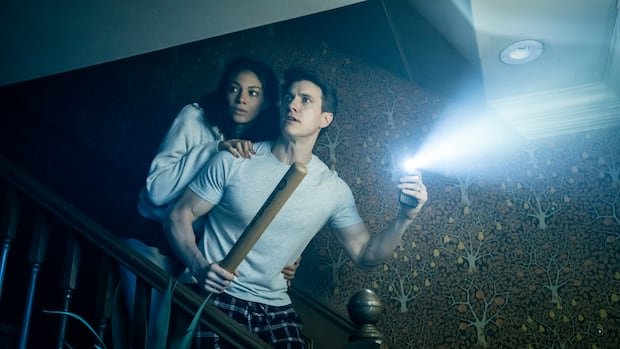

On the premiere night of the live performance of “Paranormal Activity” in Toronto this June, an audience member expressed disapproval by booing the lead actor during his act. The booing was not targeted at the actor’s performance but rather at the character’s choices on stage.
Following the incident, several attendees shushed the disruptor, and many took to online platforms to criticize the lack of traditional theater etiquette. One Reddit user emphasized the need to address such behavior, stating, “Whoever booed after such an incredible monologue needs to be shadow-banned … for real. Like, this isn’t a panto,” in reference to lively pantomime shows.
Furthermore, concerns were raised about various disruptive behaviors during the Mirvish production, including excessive chatter and laughter during suspenseful moments in the horror-themed show inspired by the film franchise.
Lead actor Patrick Heusinger, who has been part of the “Paranormal Activity” stage adaptation since its 2025 debut, reflected on the diverse audience the production attracts. He acknowledged that many attendees may not be familiar with traditional theater norms and tend to behave as if they are in a casual setting, such as eating popcorn or making noise during tense scenes. Heusinger embraced audience reactions, stating that provoking engagement is a fundamental aspect of art.
In response to evolving audience preferences, Mirvish Productions introduced the concept of a “chilled performance” for “& Juliet,” a jukebox musical offering a modern twist to a classic Shakespearean tale. These relaxed shows maintain the original content but allow for a more casual atmosphere where patrons can freely move around, make noise, and enjoy the performance without strict adherence to conventional theater decorum.
Similarly, Cineplex has adapted to changing audience behaviors by accommodating activities like loud sing-alongs and live sports screenings alongside traditional film screenings. Embracing the shift, the company aims to provide tailored experiences that cater to diverse audience preferences, including allowing the use of cellphones during certain events.
The evolution of theater etiquette was discussed by Toronto theater critic Ryan Borochovitz, who highlighted how historical norms aimed to exclude or alienate certain social groups. He suggested practical changes, such as adjusting lighting to minimize distractions from electronic devices and setting clear expectations to enhance the overall theater experience for all attendees. Borochovitz emphasized the importance of aligning marketing promises with audience conduct to avoid misunderstandings during live performances.