
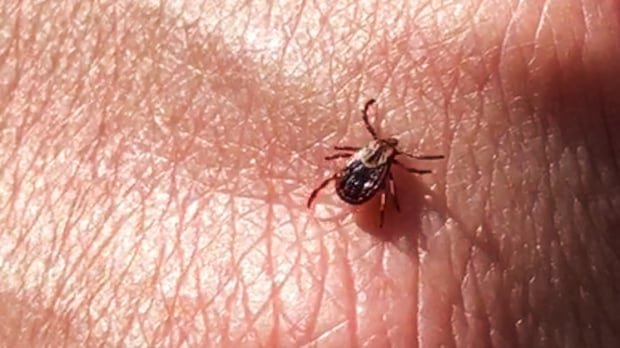

Wellington-Dufferin-Guelph Public Health has issued updated guidelines regarding tick encounters, expanding the time frame for potential exposure to above-freezing temperatures. Phil Wong, overseeing health protection operations at the health unit, revealed that through a surveillance initiative involving photo submissions of tick encounters, findings indicate a broader range of locations beyond wooded trails.
The identified key areas where tick exposure is prevalent include parks, trails, camping areas with tall grass, private properties, and workplaces with outdoor exposure. Wong emphasized that individuals are also reporting tick encounters in residential settings, particularly during activities like gardening or leaf raking.
While parents need not worry about ticks on playgrounds, Wong advised conducting a tick check on children upon returning indoors as ticks prefer damp, shaded areas and are less likely to be found in playgrounds. The guidance comes amid a rise in the local tick population and a projected influx of ticks from the U.S.
According to Health Canada, there are over 40 tick species in Canada, some native while others are introduced through hosts like birds and deer. Some of these ticks carry diseases, such as the Western blacklegged tick which transmits Lyme disease. A new Canadian Tick Research and Innovation Centre at Acadia University and the G Magnotta Lyme Disease Research Lab at the University of Guelph aim to advance research on ticks and tick-borne diseases.
Justin Wood, a Lyme disease researcher and CEO of Geneticks, stressed the importance of early diagnosis and intervention for tick-borne illnesses, recounting his own ordeal with Lyme disease. Despite hopes for reduced tick activity during cold winters, Wood explained that ticks typically survive by hibernating in leaf litter, emphasizing the need for continued vigilance.
To monitor tick encounters, the health unit encourages the public to report ticks online through a dedicated website for photo submissions and information sharing. Despite the escalating risk, Wong reassured the public that outdoor activities can still be enjoyed, advocating for regular tick checks post-outdoor excursions as a preventive measure.