
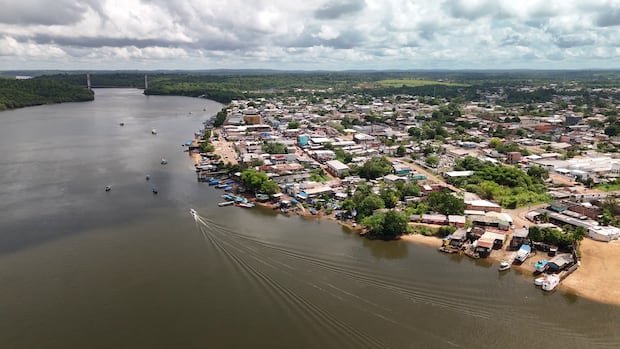

At the river dock in Oiapoque, a frontier city near Brazil’s northern coast, Cleidiney Ribeiro guides his river boat into the water. Expressing hope for the future, he mentions the impending progress in Oiapoque as he embarks on a journey to where the river meets the Atlantic Ocean.
Brazil’s state-owned oil company Petrobras has initiated exploratory drilling 170 kilometers off the Amazonian coast concurrent with the commencement of COP30, the world’s largest climate conference in Belém. Despite President Luiz Inácio Lula da Silva advocating for a transition to sustainable energy sources at the conference, Brazil stands on the brink of another oil boom if reserves are confirmed in the Foz do Amazonas basin, located 500 kilometers from the mouth of the Amazon River.
The decision to escalate oil production in the midst of a climate crisis has raised concerns, particularly voiced by Suely Araújo, a public policy coordinator at Brazil’s Climate Observatory. Araújo criticizes the government’s move to expand oil production, labeling it as senseless given the current environmental challenges.
President Lula, while hosting COP30 in Belém, highlights the necessity for an energy transition to tackle fossil fuel emissions. Thousands of delegates and observers have gathered in the city, with accommodation shortages leading to the use of cruise ships to house some attendees.
In Oiapoque, anticipation for a potential oil boom is high among residents, who view it as a catalyst for economic growth in the region. Despite the excitement, concerns linger among Indigenous tribes living nearby, with Chief Wagner Karipuna expressing fears about potential risks to their land and waterways due to the oil drilling activities.
Petrobras, holding rights to Block 59 for exploration, has been preparing for over a decade, with recent approvals aligning with the COP30 timeline. The energy minister views the potential oil reserves as a significant opportunity to create jobs and combat poverty in the region.
The Indigenous communities in the area have raised objections to the oil drilling, citing environmental risks and lack of consultation in decision-making processes. As tensions escalate, protests are being planned to draw international attention to the issue.
While debates continue regarding the balance between economic development and environmental concerns, the future of oil drilling off the Amazon coast remains uncertain. The conflicting views and potential consequences add complexity to the ongoing discussions at COP30 in Belém.