
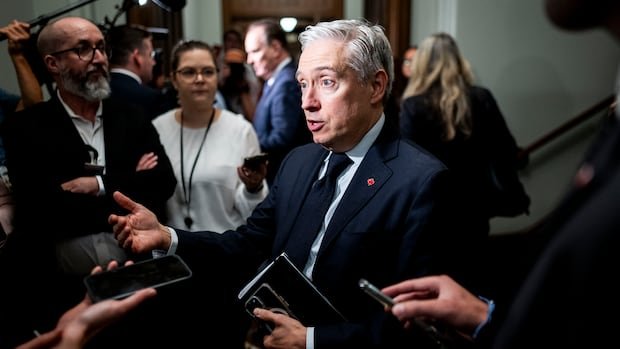

The federal government’s plan, announced by Finance Minister François-Philippe Champagne, includes the establishment of a specialized agency to combat online scams as part of a comprehensive national anti-fraud initiative. The strategy, set to be unveiled on November 4 in the upcoming budget, aims to address the escalating threat posed by sophisticated financial scams like ghost texts, phishing links, and fake bank emails that are increasingly affecting Canadians.
According to the Canadian Anti-Fraud Centre, Canadians suffered an estimated $643 million in losses to fraud in 2024, marking a significant surge from previous years. To enhance fraud prevention and management, one of the proposed measures involves amending the Bank Act to mandate banks to implement anti-fraud policies. Minister Champagne emphasized the complexity of combating financial crimes in the modern era and expressed the government’s ambition for Canada to lead in this area.
While the exact budget allocation for the new financial crimes agency is pending assessment, spokesperson John Fragos mentioned that specific funding details will not be included in the upcoming budget. The announcement was made alongside Public Safety Minister Gary Anandasangaree, Wayne Long, secretary of state for Canada Revenue Agency and financial institutions, and Stephanie McLean, secretary of state for seniors.
Amidst the government’s pre-budget preparations, the Conservative Party has been advocating for a fiscally responsible budget. Conservative Leader Pierre Poilievre urged for tax reductions and a cap on the deficit to $42 billion, contrasting with the projected increase in the budget deficit to $68.5 billion for the current year. Despite these concerns, the International Monetary Fund acknowledged Canada’s strong fiscal position compared to other G7 nations.
Responding to questions about deficit targets, Minister Champagne and Secretary of State Long highlighted Canada’s fiscal strength and the need for strategic investments while maintaining fiscal discipline. Budget negotiations with opposition parties, such as the Bloc Québécois and the New Democrats, are ongoing, with demands ranging from increased federal health transfers to investments in housing and infrastructure. The Liberals are poised to engage with various stakeholders to navigate the budget landscape and address key priorities for the nation’s economic well-being.