
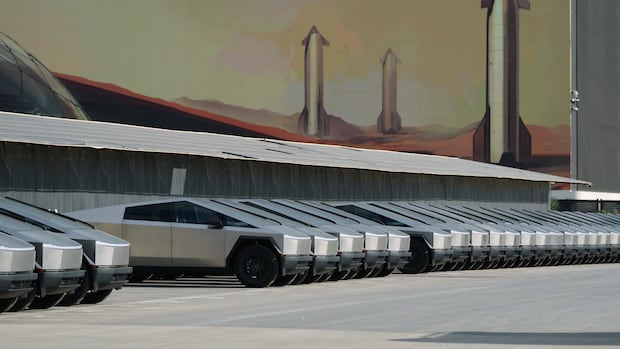

Tesla is set to halt Cybertruck production at its Gigafactory in Texas around the middle of 2027, as stated by CEO Elon Musk on Friday. This decision comes after an extended period of disappointing sales for a vehicle that was once positioned as a competitor to traditional pickup trucks.
This development marks a significant retreat from one of Musk’s favored projects. In a post on X, Musk mentioned that the cessation of production would allow Tesla to increase output of the Cybercab, a robotaxi that is integral to the company’s aspirations in the autonomous vehicle sector, although it has yet to demonstrate commercial viability.
The announcement follows a challenging week for Musk, who saw his unprecedented political expenditure of nearly $500 million yield minimal results in Tuesday’s U.S. midterm elections, as most Republican candidates he supported were defeated.
Additionally, his businesses faced a combined market capitalization decline of over $180 billion US for the week.
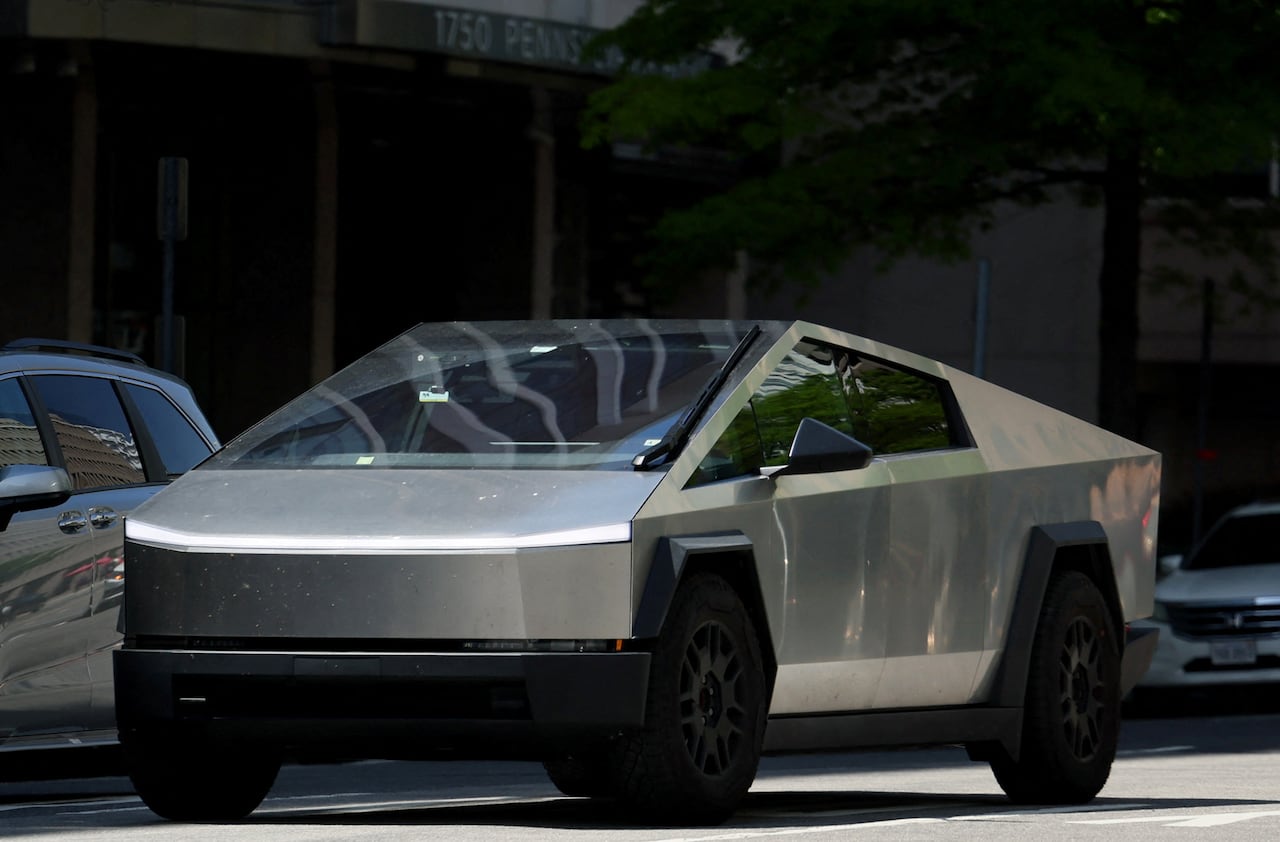
A Tesla Cybertruck near the White House last year. (Leah Millis/Reuters)
It remains uncertain whether the Cybertruck production will be shifted to a different site or completely phased out, as the Austin plant is currently the sole Tesla facility capable of producing the unique components needed for the heavy, angular vehicle.
Musk referred to the Cybertruck as the “best vehicle Tesla has ever made” in response to a user on X, describing the production halt as the “end of an era.”
Shifting its focus towards robotics and autonomy, Tesla is undergoing a transition that analysts believe is impacting its electric vehicle operations, especially as competition from Chinese manufacturers intensifies.
The American electric vehicle manufacturer began delivering the Cybertruck to customers in late 2023. Data from automotive platform Kelley Blue Book indicates that only 20,237 Cybertrucks were sold in the U.S. last year, marking a 48 percent decrease from 38,965 in 2024. When production began in 2023, Musk had forecasted annual sales of 250,000 units.
Former Aston Martin CEO Andy Palmer commented, “It doesn’t make sense to continue when it’s not achieving its goals. Every rational auto executive would agree.”
“While it may only be a minor entry on Tesla’s balance sheet, the numbers are telling,” he added.
Last year, Musk’s SpaceX emerged as one of the largest purchasers of the Cybertruck, acquiring $131 million worth from Tesla in 2025 at the list price, as per its IPO filing.
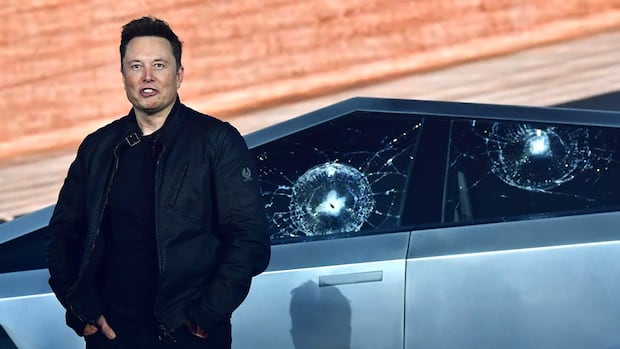
Tesla showcased its upcoming entry into the electric truck market during a lavish launch event last night. However, an attempt to demonstrate its “bulletproof” glass using a metal ball resulted in the windows shattering, twice.
‘Cybertruck won’t go, can’t go’
Since its debut in 2019, the Cybertruck has been a polarizing choice for Musk. Traditional pickup enthusiasts ridiculed its geometric design, and safety analysts warned that it would face challenges in obtaining sales approval in key markets like Europe.
The launch event itself was marred when Musk attempted to showcase the vehicle’s shatterproof windows by having metal balls thrown at them, only to end up causing significant cracks in two of the windows.
During the official launch of the Cybertruck in 2023, Musk promoted it as a futuristic alternative to pickups from General Motors and Ford, asserting that “finally, the future will look like the future.”
However, the model has not lived up to those aspirations. Since its market introduction in late 2023, Tesla has initiated 11 recalls for the Cybertruck, as reported by the National Highway Traffic Safety Administration. Some units needed physical repairs, while others were rectified through over-the-air software updates.
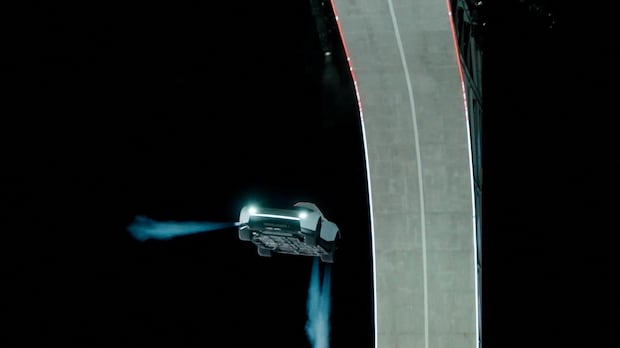
Elon Musk’s car company Tesla debuted its second generation Roadster, which includes a set of cold gas thrusters and a “multi-mode” suction system that can fling the car in the air for short spurts and spin the vehicle mid-flight.
Automotive expert Felipe Munoz pointed out that although the Cybertruck has been labeled a failure due to its dismal sales, electric pickups from Ford and other manufacturers have also struggled in the U.S. market.
“They all lost the race because electric pickups aren’t popular in the U.S.,” Munoz remarked.
However, the Cybertruck’s sharp-edged stainless steel design limited its appeal in regions like Europe, where electric vehicles are more favored. Regulatory approval has been unattainable in Europe due to pedestrian impact regulations.
“In any area where crash regulations consider pedestrian impact, that Cybertruck won’t go, can’t go,” stated former Aston Martin CEO Palmer.