
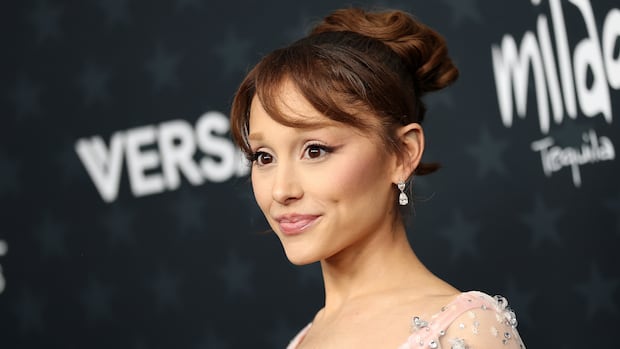

At a concert in Chicago on Monday, Ariana Grande addressed her audience, expressing her desire to “clear the air” regarding her choice to reduce her public presence.
Recently, a spokesperson for the Grammy-winning artist and star of Wicked issued a statement indicating that “Ariana will be stepping back from visibility following the completion of the Eternal Sunshine Tour.”
According to the statement, “She is eager to conclude the tour on a positive note—both mentally and physically—and afterward, she intends to take a well-deserved hiatus from public engagements and appearances, which have resulted in relentless public scrutiny.”
The 33-year-old singer clarified that she is not reacting to any specific remarks and is not providing explicit reasons for her decision to take a break.
Nonetheless, her announcement arrives amidst heightened public focus on her appearance in recent weeks, particularly following a viral image shared by a fan, coinciding with the release of her latest music video for “Petal”. This has ignited a broader, ongoing dialogue online regarding body image and celebrity culture.
During her performance, the Thank U Next artist remarked that when stories circulate that do not originate from her, “things can get a bit exaggerated,” prompting her to desire to “clear the air,” as seen in videos from the concert shared on social media.
In an almost four-minute address, she stated that her choice to step back “was not a reactive or impulsive decision”—implying that it was not a result of online speculation, but rather a premeditated choice.
Grande told the audience, “This was a decision I made a long time ago, one that I considered thoughtfully and with empowerment.”
She also reassured her fans who expressed concern that negative attention was affecting her.
“I’ve heard my fans worry that the negativity is ruining everything for me. But I must say that is completely … the opposite,” she expressed. “Boundaries are essential. Sometimes, people need a break.”
Speculation surges online after her announcement
On the internet, a familiar debate has emerged since the 2024 media tour for Wicked: fans voice their concerns, but the dialogue swiftly transitions into speculation about body image.
Even though Grande—who gained fame as a child actor on Nickelodeon—has never specifically acknowledged any health-related issues, she has frequently become a topic of discussion on social media.
Pop culture analyst Zorianna Zurba, an assistant professor at Toronto Metropolitan University, notes that Grande is at the center of a complex array of interrelated issues.
“On one side, we have the diet culture that has reached new extremes over the past few years,” Zurba informed CBC News. “Additionally, we see celebrities advocating for the use of Ozempic. There is also a rise in misogyny and critiques targeting women’s choices and bodies.”
“In this scenario, we have Ariana amid speculation regarding her body, potential health issues, and mental health concerns related to her physique. She truly appears to be caught in a perfect storm of interconnected issues.”
Zurba added that social media transforms fandom in ways that can obscure boundaries—fans feel sufficiently connected to respond as if their remarks belong in the public domain.
“We experience these parasocial interactions through social media, allowing fans to engage quickly with celebrities, share their posts. It can feel very personal,” she noted.
“This can create a perception that our commentary is welcomed.”
Zurba cautioned that what often gets “lost or overlooked” is the differentiation between public and private realms.
Reframing the conversation
Dr. Vanessa Scaringi, a psychologist and author based in Texas, who specializes in outpatient therapy for eating disorders, anxiety, and self-awareness, asserts that this issue transcends any single celebrity.
“Nuance is often absent in online discussions,” Scaringi remarked, emphasizing that as conversations narrow down to focus on bodies, they can create a harmful feedback loop, particularly when speculation is normalized as “concern.”
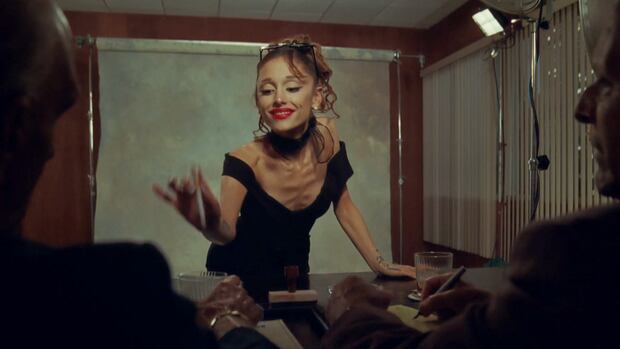
Pop superstar Ariana Grande announced she will be stepping back from the public eye after wrapping her current tour. Grande’s break comes after months of scrutiny over her appearance, with many saying she looks dangerously thin and is contributing to so-called skinny culture.
She emphasized that if individuals discuss what they observe with compassion, the dialogue can be “healing” rather than damaging.
Scaringi mentioned that for educators and platforms, the goal should be to minimize focus on appearance while enhancing discussions about meaning, identity, and value beyond physical appearance.
She pointed out that taking breaks from social media can be beneficial, but acknowledged that algorithms still promote image-centric content. “Taking breaks is crucial,” she stated, “yet it’s challenging to completely avoid it.”
Regarding Grande’s choice to step back, Scaringi expressed her hope that the artist can surround herself with supportive individuals who will offer her the necessary space and shield her from continuous scrutiny.
“I believe we should follow her example. Let’s take a break too.”