


The latest federal budget in Canada introduces a modification to Registered Retirement Savings Plans (RRSPs) designed to make financial planning easier for numerous seniors each year.
Experts in taxation and personal finance indicate that although the new “RRSP for life” initiative could enhance convenience, it fails to support seniors facing challenges due to escalating living expenses.
An RRSP is a Canadian savings vehicle that reduces your current tax burden and allows your savings and investments to grow tax-deferred until retirement. These accounts can encompass a diverse range of financial assets, such as cash, stocks, guaranteed investment certificates (GICs), and exchange-traded funds (ETFs).
For the tax year 2026, individuals can contribute as much as 18 percent of their earned income in 2025, up to a cap of $33,810. If you participate in a workplace pension plan, the value of those pension contributions will be subtracted from that 18 percent limit.
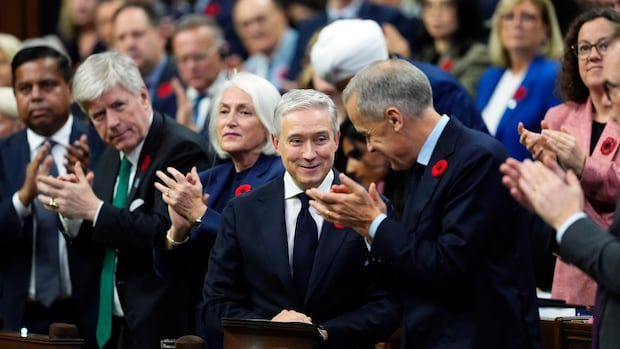
Thursday’s federal budget includes a number of measures aimed at making life more affordable for Canadians. More low-income workers will get benefit payments to help them make ends meet. Those who make a minimum of $3,000 annually get a refundable tax credit under the Canada Workers Benefit, but that threshold is being lowered to $500 for all workers.
What are the proposed changes?
Under current regulations, individuals must withdraw or convert their RRSPs into a Registered Retirement Income Fund (RRIF) by the time they turn 71. The new federal budget suggests allowing Canadians to retain their RRSPs beyond this age.
Presently, if an individual passes away after turning 71 with a RRIF, the account can be transferred to a spouse without the need to close it or complete tax documentation. This rule does not apply to RRSPs currently.
The budget proposal aims to “enable a surviving spouse or partner to assume the role of a successor holder of an RRSP and facilitate tax-free transfers to qualified survivors following the death of the account holder.”
A public consultation regarding this proposal began on Thursday and will continue until January 8, 2027.
-
7 takeaways from the Carney government’s 2nd budget
-
Carney’s new budget aims to end homelessness in 10 years
Jamie Golombek, managing director of tax and estate planning at CIBC Private Wealth Management, notes that most 71-year-olds currently opt to convert their RRSPs to RRIFs to avoid taxes incurred from cashing out.
“It’s a complicated administrative task for at least hundreds of thousands every year,” he stated to CBC News.
“What the government proposes is, ‘Why not have an RRSP for life?’ Essentially, an RRSP that you can keep until the day you pass away.”
- Cross Country Checkup is asking: What sacrifices are you making to make ends meet? Is the federal government doing enough to lower your cost of living? Leave your comment here and we may read it or call you back for Sunday’s show
According to the proposed amendment, the government would mandate RRSP holders to withdraw a specified minimum percentage of their savings each year, starting at age 72. These percentages are determined based on average life expectancy to ensure that retirement funds are distributed and taxed gradually over the account holder’s lifetime.
John Fragos, press secretary for Finance Minister François-Philippe Champagne, confirmed to CBC News that under the new proposal, RRSP account holders will not be permitted to make contributions after reaching 71 years of age.

The Carney government’s second budget lays out over $150 billion in spending to attract investment, accelerate nation-building projects, boost housing and tackle the affordability crisis. The NDP says it favours the rich, while Conservatives call it a ‘credit card budget Canadians can’t afford.’
Why do the changes matter?
Aaron Hector, a senior wealth advisor at Tier Wealth in Calgary, views the government’s efforts to streamline the financial system for seniors as a commendable initiative. He also appreciates the plan to facilitate the transfer of RRSPs following a death.
“Eliminating the need for someone to navigate the paperwork involved in converting an RRSP to a RRIF just makes practical sense to me,” he remarked. “If it happens to get overlooked, it could lead to complications for individuals.”
Li Zhang, director of social impact at Chartered Professional Accountants of Canada, perceives the government’s “RRSP for life” proposal as “more of a change in terminology,” which overlooks larger issues faced by seniors.
Firstly, she estimates that merely 33 to 37 percent of Canadians have access to a pension.
“This means that you are not addressing a significant portion of individuals with substantial retirement savings,” she stated. “If you observe the lines at food banks, you’ll notice they consist mainly of the very young or the elderly.”
Another challenge for RRSP holders is that the mandatory withdrawals can complicate income management. “This can lead to increased taxation,” she added.
While the consultation phase for this initiative lasts until January 8, Golombek anticipates that it may take significantly longer to implement these changes if Ottawa decides to proceed.
“I believe it will take several years before we witness the complete integration of these changes, or at least the removal of the RRIF.”