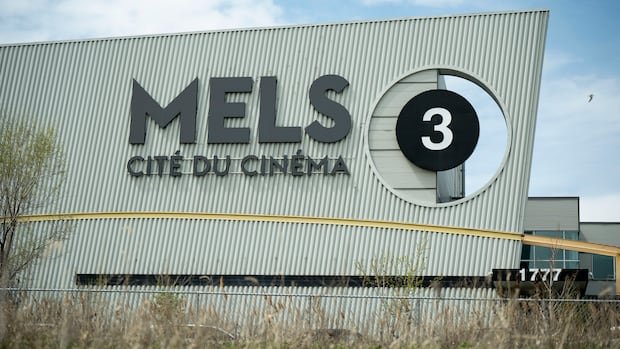

One of the leading post-production companies in Canada is shutting down its Quebec facility, which currently houses one of the few film development laboratories in North America for professional film productions. Patrick Jutras, the president of MELS studio in Montreal, confirmed this decision, citing insufficient tax incentives to attract foreign productions to the city and a decline in local audiovisual production investments. Jutras mentioned that the company’s photochemical lab will be closed in the upcoming months.
Although MELS itself will not cease operations, Jutras stated that the studio will be relocating and consolidating specific post-production services to adapt to market demands and ensure profitability. Consequently, the photochemical lab and a projection room will be closed, while the remaining post-production services will be transferred to a new location.
In a statement to CBC, Jutras acknowledged the sentimental value attached to the facilities, especially the analog film laboratory, which is unique in Canada. He emphasized the urgent need for government intervention to support the struggling local audiovisual sector and preserve Quebec’s expertise in this field.
Digital vs. Film
With the film industry predominantly transitioning to digital production methods, MELS’ photochemical lab has become one of the limited options for filmmakers interested in working with and developing 16mm and 35mm film for broad distribution. According to Concordia film professor Michael Yaroshevsky, MELS’ facility is among the three “full-service” development labs in North America, capable of handling 6,100 meters of film daily, with the other two located in L.A. and Atlanta.
This capacity has supported the production of various films, including “Dream Scenario” featuring Nicolas Cage, “Universal Language” by Matthew Rankin, “Mommy” by Xavier Dolan, and several Quebec-made movies that have gained recognition globally.

MELS photochemical laboratory in Montreal will close its doors, to the dismay of many filmmakers who used this lab for their movies. Filmmaker Michael Yaroshevsky started a petition asking to keep the lab open.
In response to the closure announcement, Yaroshevsky initiated a petition to preserve the photochemical studio, which has garnered 2,577 signatures as of Friday afternoon. Yaroshevsky emphasized the significance of saving the photochemical laboratory for numerous local filmmakers who consider film as a crucial medium for creativity and learning.
Yaroshevsky stated, “While digital technology is prevalent and valuable, film remains essential for cinema creation in Montreal and beyond. Students aspire to work with celluloid, and it should remain accessible to them. Our concern is not against progress but against its limitation.”