
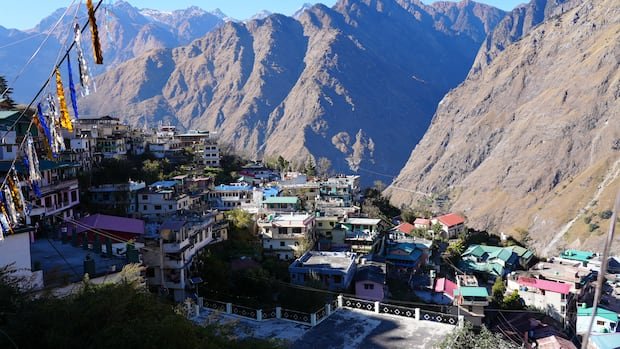

In the dead of night, a family friend alerted Abhishek Nautiyal and his kin in Joshimath, Uttarakhand, about an urgent evacuation due to the town sinking from water saturation, causing widespread structural damage to over 800 homes. Nautiyal, now 18, faced academic setbacks during the six-month displacement that followed the government’s order to vacate unsafe residences in early 2023.
Studies post-evacuation revealed significant land subsidence in Joshimath, with rapid sinking and fissures appearing across the town, impacting homes, a temple, and hotels. The unstable ground beneath Joshimath, sitting at a precarious elevation of 1,874 meters, stems from its foundation on glacier debris and an ancient landslide, worsened by increasing construction activities in the seismically active region.
Climate change exacerbates the situation, with Himalayan glaciers receding rapidly due to rising temperatures, augmenting the risks for mountain communities. The vulnerable ecosystem faces challenges from changing precipitation patterns and glacial lake outburst floods, as evidenced by past calamities like the 2021 flash flood in Chamoli district.
The ongoing construction boom, driven by infrastructure projects to accommodate pilgrims, further strains Joshimath’s stability. Environmental activists blame large-scale developments, like the Tapovan Vishnugad hydropower project, for intensifying the town’s sinking. Despite warnings dating back to the 1970s, calls to halt construction in the fragile area were ignored, leading to the current crisis.
Residents like Nautiyal and Durga, living in marked unsafe homes, face uncertainty and fear as they grapple with deepening cracks and the looming threat of further sinking. With livelihoods tied to their residences, many residents refuse to relocate despite the risks, underscoring the complex challenges posed by the town’s precarious condition.
As experts debate mitigation strategies, the plight of Joshimath’s residents underscores the urgent need for sustainable development practices and informed decision-making to safeguard vulnerable communities in the face of environmental threats.