
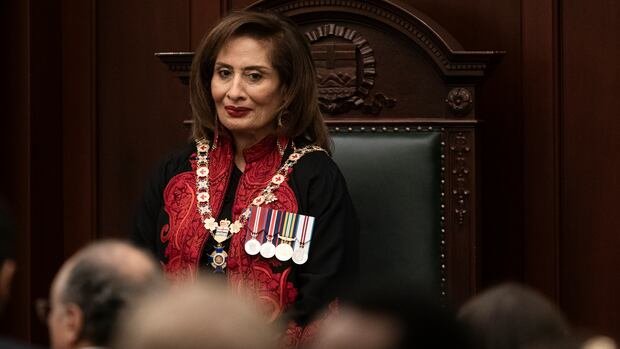

Alberta’s government plans to eliminate the constraints on the oilsands by collaborating with partners to construct pipelines to the northwest coast of British Columbia and Ontario, as stated by Lt.-Gov. Salma Lakhani in the speech from the throne marking the beginning of a new legislative session. The speech underscores the province’s success in persuading the rest of Canada about the significance of selling Alberta’s natural resources and reaffirms the commitment to doubling oil and gas production within an unspecified timeframe. Alberta’s strategic approach in handling U.S. tariff threats is acknowledged as effective.
The speech emphasizes that Alberta’s drive for sovereignty does not equate to separation and highlights the importance of reaching a “grand bargain” with the federal government to restore economic autonomy. Following the Liberal victory in the federal election in April, there has been a surge in separatist sentiments among certain Albertans, leading to a citizen petition that could potentially trigger a referendum on Alberta’s continued membership in Canada.
A pro-separatist group is currently engaged in legal battles to secure approval for a pro-separation referendum question from Elections Alberta. Premier Danielle Smith has introduced the International Agreements Act as the government’s first bill of the session, aiming to clarify the province’s role in international agreements. The proposed legislation specifies that international agreements signed by Ottawa will only be enforceable in Alberta if aligned with provincial legislation.
Premier Smith’s bill is modeled after a similar law in Quebec and aims to enhance Alberta’s control over international agreements within its jurisdiction. The government is considering this step in response to concerns that federal timelines for meeting climate targets have negatively impacted the province’s economy. A second bill is set to be introduced to end a provincewide teacher strike, affecting approximately 51,000 teachers in Alberta.
Furthermore, the speech addresses the decline in oil and gas royalty revenues, resulting in a deficit for Alberta this year. However, the province’s strategy to enhance the Heritage Fund’s value and promote economic diversification aims to reduce reliance on these revenues in the future. The speech also highlights Alberta’s ambition to become a leader in both energy and artificial intelligence sectors, envisioning the province as a global powerhouse in these critical fields.
The speech reiterates the government’s commitment to various initiatives, including the development of a passenger rail system, recruitment of additional police officers, restructuring of healthcare administration, and a long-term plan for school infrastructure development. Opposition leaders, such as Alberta NDP Leader Naheed Nenshi, criticize the throne speech for allegedly neglecting crucial issues like public services and healthcare improvements. Independent MLA Pete Guthrie raises concerns that Bill 1 could prioritize political interests over the province’s needs, sparking potential constitutional challenges if enacted.
Overall, the government’s agenda, as outlined in the speech from the throne, reflects its focus on economic growth, resource development, and asserting provincial rights within the Canadian federation.