
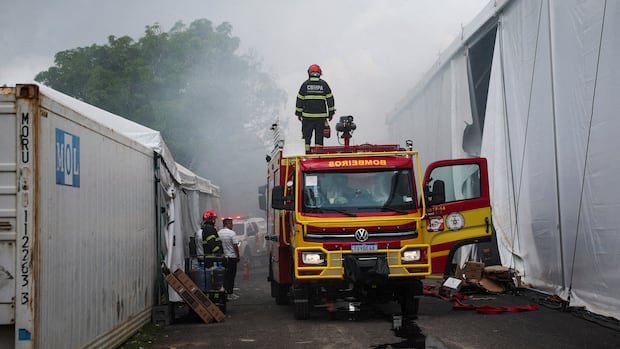

A fire incident disrupted the United Nations climate talks in Brazil, leading to evacuations and causing a delay in negotiations at the COP30 event. Thirteen individuals required treatment for smoke inhalation following the fire outbreak in an area where ancillary events are typically held during the annual climate talks.
Although authorities swiftly contained the fire, safety checks mandated the evacuation of the entire site, casting uncertainty on when conference activities would resume. The interruption could result in significant time loss if negotiations do not recommence until the scheduled final day on Friday. Plans to extend working hours on Thursday were thwarted, potentially limiting participation to only key negotiators during a scaled-down session in the evening.
The fire incident occurred at a crucial juncture as the COP30 presidency aimed to finalize a draft agreement on four contentious topics related to financial matters, reducing fossil fuel emissions, and trade agreements. Despite initial intentions to reach a consensus by Wednesday, the presence of Brazil’s president and the UN secretary general on-site did not materialize the hoped-for agreement.
Experts noted the setback in negotiations, emphasizing the substantial challenges ahead within a limited timeframe. The urgency to bridge significant gaps in viewpoints was accentuated, with concerns raised about the potential for a weakened agreement due to the time constraints and existing disagreements.
UN Secretary General António Guterres urged countries to exhibit flexibility and willingness to compromise to achieve results, acknowledging the critical nature of the ongoing discussions. As the world closely monitors the events in Belem, negotiators were urged to engage constructively in the remaining days of the talks, which had already surpassed a self-imposed deadline for progress.
Guterres reiterated the importance of addressing financial aid for vulnerable nations grappling with climate-related disasters, pushing for an increase in adaptation finance from $40 billion US to $120 billion US annually. Calls for action intensified as officials from disaster-prone countries shared emotional pleas for concrete steps to combat the impacts of climate change.
The COP30 conference, known for its extended durations, saw debates revolving around phasing out fossil fuels and enhancing transparency in climate progress reporting. Rich countries were urged to step up support for poorer nations facing climate challenges, with a proposed goal of $300 billion US in annual aid amidst growing climate-related crises worldwide.
The need for a comprehensive plan to transition away from fossil fuels garnered attention, building upon the previous agreement from the COP in Dubai. While references were made to prior commitments, the necessity for detailed strategies remained a point of contention, reflecting the complexity of negotiations at the summit.