
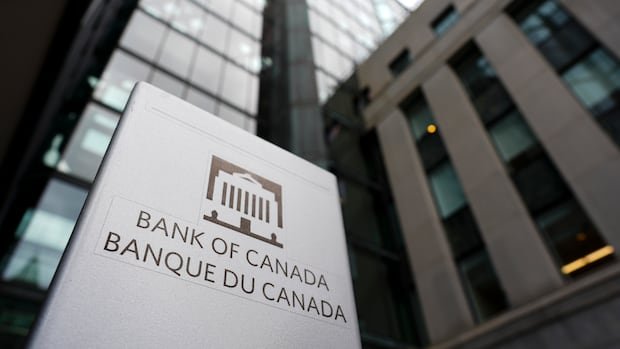

The Bank of Canada decided to maintain its key interest rate at 2.25 percent on Wednesday, in line with expectations. Governor Tiff Macklem mentioned that potential adjustments to the rate might be minor if the economy progresses as projected by the central bank. However, he acknowledged the need for flexibility in monetary policy due to the current high level of uncertainty.
The bank is closely monitoring the impacts of the Iran conflict, which has led to a surge in energy prices, and trade policy uncertainties. While acknowledging the positive effect of elevated oil prices on export revenues, the bank expects a modest overall impact on Canada. Inflation is projected to rise to around three percent in April, up from 2.4 percent in March, before settling around 2.3 percent for the year and returning to the bank’s two percent target by early next year. Additionally, the bank revised its growth forecast for 2026 to 1.2 percent.
Macklem emphasized that current inflation is mainly driven by energy prices, with long-term inflation expectations remaining stable. He noted that short-term inflation expectations have increased due to higher energy and food prices but reiterated that long-term expectations are well anchored. There is a concern that inflation expectations may not be as stable as before the COVID-19 pandemic, particularly considering the public’s discontent during the pandemic when inflation spiked to 8.1 percent.
The Bank of Canada assumed that U.S. tariffs would remain unchanged, with oil prices projected to decrease to $75 per barrel by mid-2027. Macklem warned that sustained high energy prices could lead to broader inflation, necessitating consecutive rate hikes. The ongoing trade war is another factor complicating the economic outlook, with potential implications for future rate decisions.
If faced with intensified trade restrictions from the United States following the upcoming CUSMA review, Macklem mentioned the possibility of further rate cuts to support the economy. The bank’s senior deputy governor, Carolyn Rogers, highlighted the short-term impact of the oil crisis and the more enduring effects of trade tensions. Economists suggest that the Bank of Canada’s acknowledgment of these factors indicates a stance of maintaining the current rate for the foreseeable future.
The next monetary policy announcement is scheduled for June 10, with market expectations leaning towards no rate change, although a 25-basis-point hike is priced in for October.