
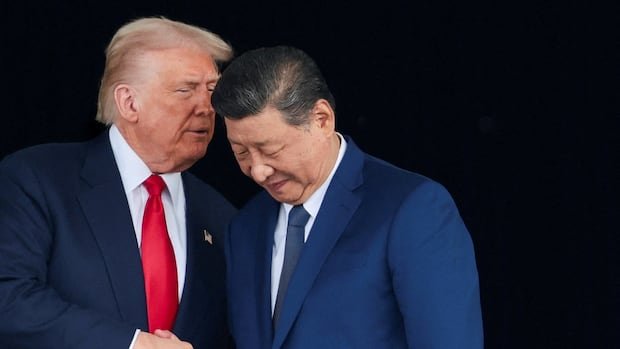

In South Korea’s city of Busan, U.S. President Donald Trump and Chinese President Xi Jinping reached an agreement to reduce tariffs on China. This deal was brokered in exchange for China cracking down on the illicit fentanyl trade, increasing U.S. soybean purchases, and ensuring the continued export of rare earths. The face-to-face talks between Trump and Xi, their first since 2019, concluded Trump’s recent Asia trip, during which he also highlighted trade advancements with South Korea, Japan, and Southeast Asian nations.
Trump expressed satisfaction with the meeting, rating it a “12 out of 10” and announcing a reduction in tariffs on Chinese imports from 57% to 47%. This reduction was attributed to China’s commitment to combat the flow of fentanyl, a potent synthetic opioid responsible for a significant number of overdose deaths in the U.S. Despite the tariff cut, India and Brazil are the only major U.S. trading partners still facing higher rates.
Following the discussions, Xi emphasized the importance of further cooperation, as reported by Chinese state media. The global stock markets had previously reached record highs in anticipation of a potential breakthrough in the trade war between the two largest economies. However, concerns arose about the sustainability of the truce, given the history of promising trade negotiations followed by setbacks.
During the meeting on the sidelines of the Asia-Pacific Economic Cooperation (APEC) summit, Xi acknowledged the occasional frictions between superpowers and expressed willingness to work with Trump on strengthening China-U.S. relations. Apart from the fentanyl tariff adjustment, China sought relaxed U.S. export controls on sensitive technology and a rollback of new U.S. port fees targeting Chinese vessels. Trump announced significant purchases of U.S. soybeans by China, signaling immediate economic cooperation.
Prior to the summit, China resumed buying U.S. soybeans after a hiatus, while existing trade agreements that had lowered retaliatory tariffs and reestablished rare earth magnet imports from China were set to expire soon. Trump reassured that China would not impose further restrictions on rare earths. Additionally, Trump signed agreements with Japan and Southeast Asian nations to diversify rare earth supplies, aiming to reduce China’s dominance in that sector, a process that may span several years.
The leaders did not delve into discussions about Nvidia’s cutting-edge Blackwell artificial intelligence chip. U.S. Treasury Secretary Scott Bessent confirmed that China had committed to purchasing 12 million metric tonnes of American soybeans in the current season and an additional 25 million tonnes annually for the next three years. Moreover, other Southeast Asian countries agreed to buy an extra 19 million tonnes of U.S. soybeans, though specific timelines for these purchases were not disclosed.