
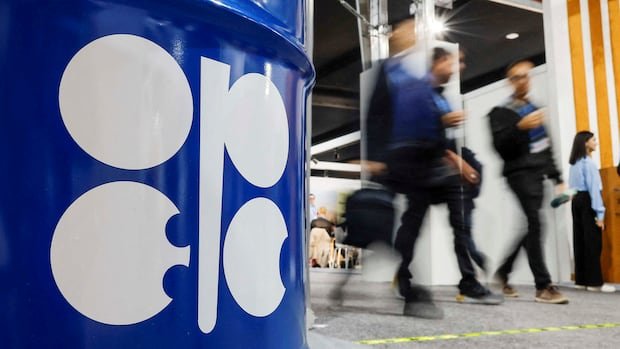

The United Arab Emirates has announced its decision to withdraw from both the Organization of the Petroleum Exporting Countries (OPEC) and OPEC+ effective Friday. This move comes amidst an unprecedented energy crisis triggered by the Iran conflict, revealing disagreements among Gulf nations.
The U.A.E., a longstanding member of OPEC, initially represented by its emirate of Abu Dhabi in 1967 and later as an independent country in 1971, is a key player in the cartel, which collectively contributes about 40% of the world’s oil production. However, with the rise of U.S. oil production in recent years, OPEC’s dominance in the global oil market has been on the decline.
The departure of the U.A.E., a major oil producer within the group, weakens OPEC’s influence over global oil supply and further strains its relationship with Saudi Arabia, the de facto leader of OPEC. This move potentially allows the U.A.E. to boost its oil output once Gulf exports resume, as it will no longer be bound by OPEC production quotas.
The decision to exit OPEC was communicated by the U.A.E. through its state-run WAM news agency, citing a strategic shift in energy policies and an emphasis on enhancing domestic energy production. The country reaffirmed its commitment to responsibly increasing production in line with market demand and conditions.
U.A.E. Energy Minister Suhail Mohamed al-Mazrouei explained that the decision was made after a thorough evaluation of regional energy strategies. He clarified that the U.A.E. did not consult with Saudi Arabia or any other country before reaching this policy decision.
The strained relations between the U.A.E. and Saudi Arabia, exacerbated by political and economic differences in the Middle East, have been further complicated by attacks from Iran on both countries. The ongoing challenges in shipping oil exports through the Strait of Hormuz due to Iranian threats have also influenced the U.A.E.’s decision.
The U.A.E.’s exit from OPEC has been anticipated due to its discontent with production quotas set by the organization. With global spare capacity at historically low levels, the U.A.E., alongside Saudi Arabia, possesses the ability to increase oil production, potentially impacting Saudi Arabia’s role as the market’s primary stabilizer.
While the immediate market impact of the U.A.E.’s withdrawal is expected to be minimal due to ongoing supply constraints from the Iran conflict, the long-term implications could lead to oil market volatility. This move reflects a shifting geopolitical landscape where individual interests supersede multilateral alliances, signaling a new era of self-reliance in global affairs.