
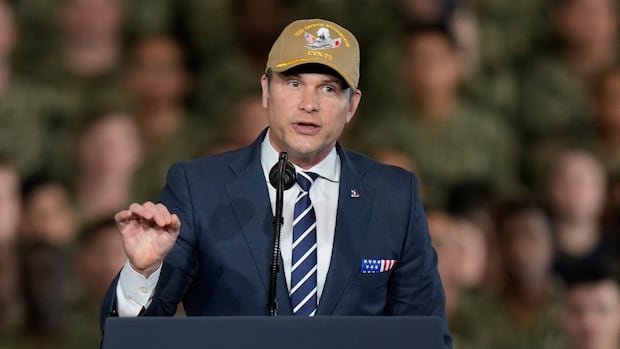

A string of military strikes carried out by the U.S. military on vessels in the eastern Pacific Ocean resulted in the deaths of 14 individuals and one survivor, as stated by U.S. Defense Secretary Pete Hegseth on Tuesday. Hegseth claimed that the individuals aboard were involved in drug trafficking. He mentioned that Mexican authorities took charge of the search-and-rescue efforts for the lone survivor after the three strikes occurred on Monday.
Hegseth noted that intelligence had identified the four vessels as traveling along established drug trafficking routes and carrying narcotics. He released a brief video showing two vessels in close proximity exploding in the water and another vessel detonating after moving in the water.
Following a series of strikes in the Caribbean earlier in September, the U.S. government recently expanded its military activities to the Pacific region. There have been concerns raised by experts regarding the legality of these strikes, which have resulted in the deaths of at least 57 individuals. It is unclear if alternative methods were explored to intercept the shipments, as typically the U.S. Coast Guard is involved in drug interception operations.
The U.S. military has been strengthening its presence in the Caribbean, deploying assets such as the USS Gerald R. Ford aircraft carrier, guided missile destroyers, F-35 fighter jets, a nuclear submarine, and approximately 6,500 troops. Recent actions by the U.S. military near Venezuela have raised speculations about potential intentions to destabilize Venezuelan President Nicolas Maduro’s regime.
Criticism has emerged from various quarters, including U.S. Congress members, about the lack of transparency and specifics surrounding the military strikes. While concerns have been voiced, the Senate rejected a resolution requiring congressional authorization for future military actions. President Trump has brushed off suggestions of seeking a declaration of war from Congress, emphasizing the intent to combat drug trafficking aggressively.
The United Nations experts have condemned the strikes as “extrajudicial killings” and a severe escalation that threatens peace and security in the Caribbean region. They have highlighted the violation of international laws and sovereignty in the use of lethal force in international waters without proper legal justification. Venezuela and neighboring countries have expressed discontent over the military operations, with calls for accountability and adherence to international norms.