
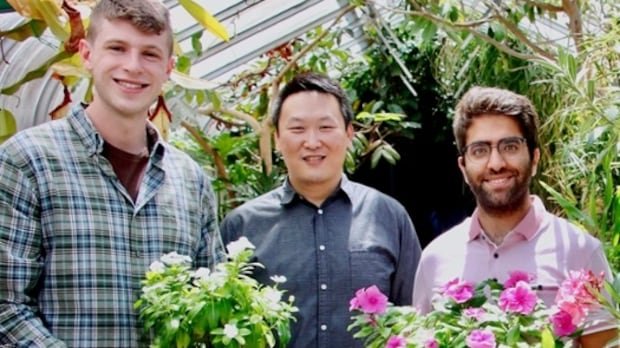

A recent study conducted by chemists from the University of New Brunswick has the potential to transform the manufacturing process of certain drugs.
Collaborating with researchers from Zhejiang and Westlake universities in China, the UNB team has unveiled the mechanism used by certain plants to produce cancer-fighting drugs.
Lead researcher Yang Qu, an associate professor of chemistry at UNB, stated that understanding the plant’s drug manufacturing process could significantly expedite lab production of the drug.
Qu highlighted the remarkable enhancement in efficiency, indicating that the drug could now be manufactured nearly 1,000 times faster than previously reported.
The groundbreaking research has been featured in the latest edition of the prestigious scientific journal, Science.
Challenges in Production
The focus of the study was on vinblastine, a vital drug used in the treatment of various cancers such as bladder, brain, and testicular cancer.
However, the manufacturing of vinblastine has long been a complex and challenging process.
This drug is exclusively derived from the Madagascar periwinkle plant, a species known for its medicinal properties.

Qu explained the inefficiency of the plant in producing vinblastine, revealing that a substantial amount of plant material is required to yield a minute quantity of the drug.
He emphasized the intricate nature of vinblastine, making chemical synthesis arduous and expensive.
Role of Scaffold Proteins
The research team successfully identified the process through which the Madagascar periwinkle synthesizes vinblastine.
Typically, plant-derived drugs are synthesized through enzymatic catalysis.
However, the Madagascar periwinkle employs a unique method involving “scaffold proteins” that facilitate the assembly of drug components.
Qu likened scaffold proteins to the structures seen on construction sites, enhancing the efficiency and speed of drug production.
With this newfound knowledge, researchers intend to integrate the scaffold protein into the plant’s microbial system, streamlining the production process.
While the medical breakthrough has not yet translated into immediate drug production acceleration, Qu expressed optimism about the imminent industrial application of the research.
He anticipated that the findings could pave the way for a significant advancement in industrial drug production, bringing it closer to reality.