
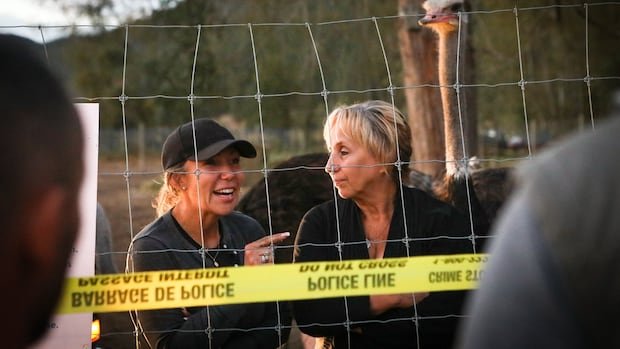

The Syilx Okanagan Nation in British Columbia denies issuing a cease and desist letter allegedly protecting a controversial ostrich farm from a cull ordered by the Canada Food Inspection Agency (CFIA). The Universal Ostrich Farm in Edgewood, B.C., has been in a legal battle with the CFIA following an avian flu outbreak that resulted in the death of 69 ostriches in December. The federal agency had ordered the destruction of over 300 remaining birds at the farm.
The Chiefs Executive Council of the Syilx Okanagan Nation stated to CBC Indigenous that they had received a copy of the cease and desist letter shared with the RCMP by the farm’s spokesperson. The letter claimed that the farm falls within the territorial boundaries of the Secwepemc and Sylix Tribal people and is under their protection, but the Syilx Okanagan Nation confirmed that they did not issue the letter. They also raised concerns about the authenticity of the signature on the letter, which resembled the name of the Premier of Manitoba, Wab Kinew.
The Syilx Okanagan Nation strongly condemned any entity that falsely uses their name or authority for personal gain. The farm’s spokesperson, Katie Pasitney, had previously mentioned that the Syilx and a “signatory Indian tribe” had sent the letter to protect the farm’s land and ostriches.
The farm, owned by David Bilinski and Karen Espersen, has garnered support from various groups, including some associated with the Freedom Convoy movement, who view the CFIA cull order as government interference. Hayden King, the executive director of the Yellowhead Institute, highlighted the appropriation of Indigenous values by non-Indigenous movements to lend credibility to their causes.
King emphasized that while some Indigenous individuals may align with populist or far-right campaigns, they represent a minority, and most Indigenous people can discern between genuine solidarity and appropriation. The use of Indigenous themes and language by non-Indigenous groups has been on the rise, reflecting the effectiveness of Indigenous resistance over time.
CBC Indigenous could not locate a First Nation named the “Secwepemc Signatory Tribe” mentioned in the cease and desist letter. The Shuswap Nation Tribal Council in B.C. comprises nine Secwepemc communities, but official comments were not received by CBC Indigenous before publication. Pasitney maintains that there is First Nations support for the ostriches, despite the Syilx leadership denying involvement in the cease and desist letter.