
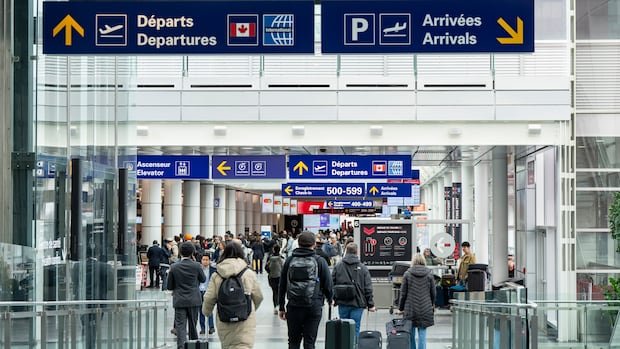

The federal government has announced an increase in the maximum fine that airlines can face for repeated violations of the air passenger bill of rights, raising it to $1 million. Transport Minister Steven MacKinnon revealed this development during a news conference, emphasizing that financial penalties are a final resort for clear breaches, intended to deter such events from recurring.
The air passenger protection regulations (APPR), which were implemented in 2019, mandate airlines to compensate passengers for delays or cancellations within their control. Airlines found repeatedly violating these regulations currently face a maximum fine of $25,000, with a proposed increase to $250,000 pending implementation.
Ian Jack, a spokesperson for the Canadian Automobile Association, expressed reservations about the efficacy of the increased fine without tangible enforcement. He highlighted the necessity for actual application of fines to prevent them from being perceived as empty threats.
The Canadian Transportation Agency (CTA) has been grappling with a backlog of 95,000 air passenger complaints since the introduction of the air passenger bill of rights. To address this issue, the government plans to outsource the resolution process to a neutral third-party organization, drawing inspiration from models in the U.K. and EU.
While Air Canada has piloted a program transferring air passenger complaints to a third party, Jack underscored the importance of streamlining regulations to expedite complaint resolution. The government has committed to simplifying the regulations to enhance passenger understanding and efficiency in the resolution process.
Although the CTA proposed new regulations in late 2024, consultations on these proposals concluded in March 2025, with the regulations yet to be enforced. Minister MacKinnon prioritized clearing the backlog before implementing new regulations to ensure fairness and expedited outcomes for complainants.
Jack encouraged the swift implementation of streamlined regulations to prevent the backlog from escalating further, citing the complexity and sluggishness of the current system. He emphasized the necessity of evolving the regulatory framework to efficiently address air passenger complaints without further delays.