
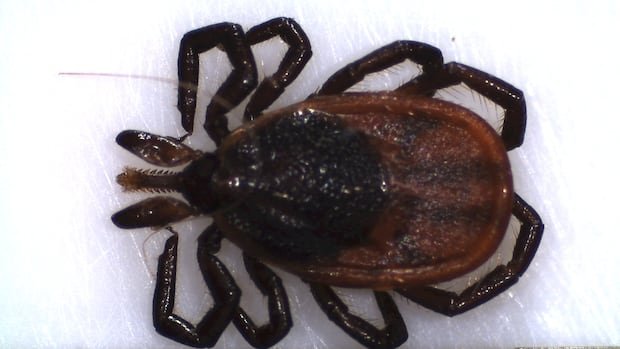

Nova Scotia’s snowy winter may not lead to a decrease in tick populations this year as many had hoped. According to tick researchers, deep and persistent snow cover can actually provide insulation for ticks, helping them survive harsh conditions. Laura Ferguson, an assistant professor at Acadia University, mentioned that the snow has likely shielded a significant portion of ticks, allowing them to endure the winter.
Although Nova Scotia experienced cold spells in December and January, the most effective temperatures for killing ticks occurred after snow had already protected them. The Halifax airport had continuous snow cover from January 18 to March 21, lasting for 64 days, the longest period since 2020.
Ticks typically seek sheltered areas like under leaf litter to survive the winter without feeding for months. Ferguson explained that ticks can endure temperatures of 0°C to –5°C for weeks or months. Sustained temperatures below –10°C, without protection from snow or leaf litter, or extreme temperature fluctuations, can lead to mortality. Internal ice formation can damage tick tissues and be fatal.
Jantina Toxopeus, an associate professor at St. Francis Xavier University, has studied how temperature affects ticks. She noted that ticks usually freeze at temperatures below –15°C in laboratory settings. However, the rate of temperature decrease plays a role, as gradual changes allow ticks to adapt better. Extreme cold temperatures like –27°C in the past did not significantly impact the tick population in Nova Scotia.
Ferguson believes that this year’s tick season is unlikely to be significantly different from previous years due to the resilient tick population. Despite the snowy winter, experts suggest that the tick population remains robust and unaffected.