
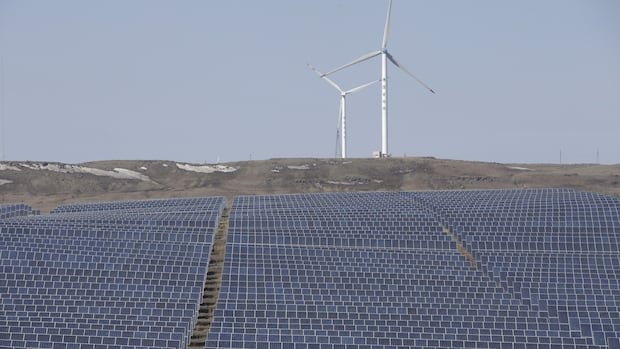

In the outskirts of China’s Gobi Desert, sophisticated wind turbines managed by artificial intelligence are generating electricity at a significantly lower cost compared to coal-fired power plants. Lei Zhang, the visionary behind this technology, now aims to replicate this successful model in remote areas of Canada. Zhang, the billionaire founder of Envision, a prominent green energy company based in Shanghai, has positioned his firm as the second-largest wind turbine manufacturer globally.
Regarded with a Steve Jobs-like aura in China and beyond, Zhang’s innovative ideas in the realm of futuristic energy solutions have garnered attention. During a recent visit to Envision’s headquarters in China, Zhang discussed ambitious plans that could address Canada’s impending energy challenges. However, concerns have been raised about the potential for Chinese AI technology to provide the government with control over Canada’s power grid.
With the cost of renewable energy production plummeting by over 90% in recent years, Zhang emphasized a significant shift in the energy landscape. According to Zhang, advancements in AI have revolutionized the efficiency and viability of green energy systems, surpassing the performance of traditional fossil fuel-based power sources. He highlighted the transformative impact of China’s renewable technology advancements, envisioning a future of abundant and affordable renewable energy accessible to all.
Envision’s flagship project, an off-grid facility in China’s Inner Mongolia region, exemplifies the integration of AI technology with sustainable energy generation. The facility, operational since July 2025, utilizes wind turbines to produce net-zero hydrogen and ammonium on a large scale. Plans are underway to establish an 800-kilometer pipeline to transport the green hydrogen to urban centers for clean power generation, circumventing the aging transmission infrastructure.
Zhang expressed confidence in replicating this model in Canada, leveraging the country’s vast natural landscapes to establish similar off-grid energy plants capable of meeting long-term energy demands sustainably. Through discussions with Canadian Prime Minister Mark Carney and other stakeholders, Zhang aims to explore collaborative opportunities in Canada’s renewable energy sector.
While China continues to invest in coal power plants alongside its renewable energy initiatives, environmental concerns persist. Greenpeace advocates for a gradual phase-out of coal power in China to accelerate the transition to cleaner energy sources. The organization emphasizes the importance of local energy solutions, such as rooftop solar programs, which empower communities to produce and sell renewable energy.
Despite skepticism and security concerns surrounding Chinese-driven energy systems, Zhang assures that Envision’s technology poses no risks to Canadian users. As China makes strides in embracing green energy, the contrast with the United States’ stance on renewables is evident. Zhang’s focus remains on the practical inevitability of transitioning to renewable energy sources, with China at the forefront of developing cutting-edge systems that could potentially benefit Canada and other nations.