

Jennifer Cooper stumbled upon her first vertical drama while browsing TikTok. The advertisement for a melodramatic series showcased a storyline where a woman seeks vengeance against her unfaithful boyfriend and cruel family by seducing her boyfriend’s affluent uncle. The themes of jealousy and romance in the series resonated with Cooper, who had been enjoying similar Chinese dramas, prompting her to binge-watch the brief episodes before investing in the full story.
The narrative concluded with the woman finding love and triumphing over her antagonistic family. Captivated by the abundance of stories featuring billionaire romances, formidable bosses, and vengeful vampires on the platform, Cooper began reviewing and creating content about these microdramas online.
Welcome to the realm of microdramas – exaggerated tales presented in one- to two-minute segments in a vertical format tailor-made for smartphones. Numerous apps are dedicated to this content, heavily promoted on social media platforms like TikTok. While each video is short, the entire plot unfolds over numerous installments, akin to a movie segmented into chunks.
Despite the somewhat predictable storylines, these videos are attracting significant attention, even from industry professionals and talent in Canada who are embracing this new medium.
**Expanding Influence in Asia**
For individuals in the North American entertainment industry like TV journalist Elaine Low, this format evokes memories of Quibi, the mobile-first streaming platform that ceased operations in 2020 after a brief stint. Although Quibi did not flourish in North America, the format has gained popularity in China in recent years.
The microdrama industry in China reportedly amassed $7 billion USD in 2024, surpassing the country’s box office revenue. Japan and South Korea are also making strides in producing similar dramas, while the global microdrama industry is projected to reach a value of $9.5 billion USD by 2030.
Low emphasized that this industry has thrived in Asia for several years and is now making headway in North America. Even traditional Hollywood studios are taking notice of this trend, with companies like Fox striking deals with microdrama producers. Notably, DramaBox, a vertical production company, secured investment and partnership opportunities from Disney through their accelerator program last year.
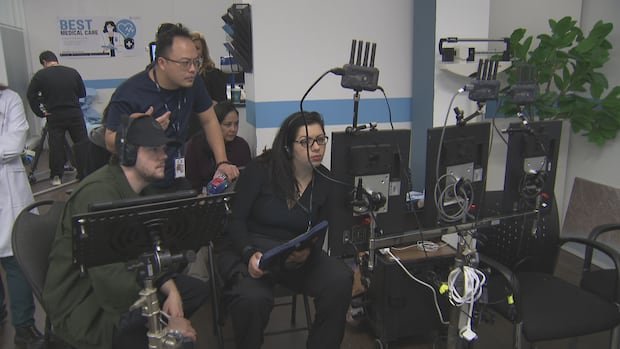
Director Samantha MacAdams, who has a decade of experience working on commercials and TV shows, recently delved into microdramas due to their increasing prevalence in Hollywood. She noted the growing popularity of vertical formats, especially among younger audiences who prefer watching content on their phones.
**Debates Over Compensation and Quality**
The microdrama trend has also gained traction in Canada. While the exact number of microdrama productions in Hollywood North remains unclear, actors like Evan Bacic have found consistent work in these productions. Bacic, who has acted in 38 vertical dramas since June 2024, attested to the abundance of opportunities this new medium has provided, enabling him to pursue acting full-time.
However, most of these gigs are non-unionized, raising concerns about worker wages and safety on microdrama sets. Kate Ziegler, president of ACTRA Toronto, emphasized the need for fair compensation and safety regulations for workers in these productions.
Ziegler’s organization has initiated a pilot project to establish guidelines for actor wages, the use of stunt coordinators, and the employment of underage actors in microdramas. While only one project has gone through the pilot program so far, Ziegler is hopeful for more participation in the future.
From a fan’s perspective, Cooper highlighted issues of racial diversity in casting and oversimplified storylines in microdramas. Tim Zhou, CEO of Toronto-based Ottawood Film Studios, acknowledged criticisms regarding the writing and acting in verticals, suggesting that the industry needs time to refine its skills and elevate the quality of its productions.
Zhou expressed optimism about the future of vertical formats, emphasizing that with a focus on quality production, verticals present significant opportunities in the entertainment industry.