
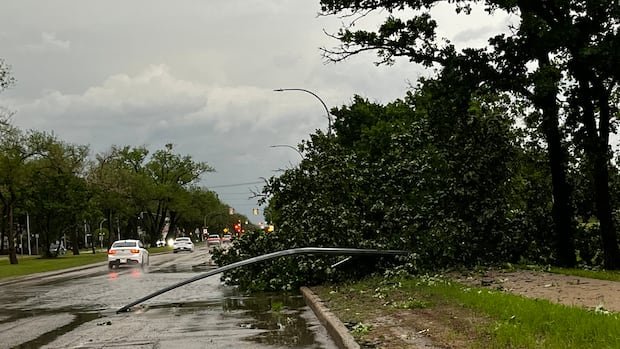

Phones in southern Manitoba were flooded with tornado alerts on Tuesday night, despite the distant threat for many recipients. Social media posts indicated some individuals received more than 20 alerts throughout the evening. Two tornadoes have been confirmed south of Winnipeg, with further investigation ongoing to determine if additional tornadoes formed in the region.
Tyler Samagalski, who was at a bar in East Selkirk during the storm, mentioned that he and others at the bar started to disregard the repeated alerts on their phones as the weather outside did not suggest an imminent tornado. The alerts were broadcasted to all devices within the “mobile coverage area,” leading to people in locations like Winnipeg receiving warnings about possible tornadoes in areas like Niverville, over 30 kilometers away.
Environment Canada is conducting an inquiry to understand why some individuals received multiple duplicate alerts. Although no immediate changes to the warning system were mentioned, a more targeted alert system for thunderstorms and tornadoes is in development. This new system, based on polygon-based workflows, aims to provide warnings only to those directly in the storm’s path, similar to the system used in the United States.
The current system’s shortcomings are evident, with many Canadians feeling overwhelmed by excessive and inaccurate warnings. Justin Oertel emphasized the need for this change, as continuous false alarms could lead to a lack of seriousness when a real threat materializes in urban centers like Winnipeg or Brandon.
Some residents, like Jason Emmers from East Selkirk, received around 20 tornado alerts on Tuesday night. While he appreciates the abundance of warnings, he believes a more precise approach is necessary to prevent panic or desensitization due to alert fatigue. Emmers highlighted the delay in receiving tailored warnings, with his household only getting a personalized alert from the Rural Municipality of St. Clements three hours after the initial alerts.
Concerns regarding unnecessary panic and anxiety due to the alerts were raised by residents, with calls for more location-specific information in the warnings. Emmers particularly stressed the importance of knowing the exact whereabouts of tornado sightings to improve the effectiveness and relevance of the alerts.
Overall, the community is eager for the implementation of a more targeted warning system to ensure that alerts are meaningful and actionable in times of severe weather events.