
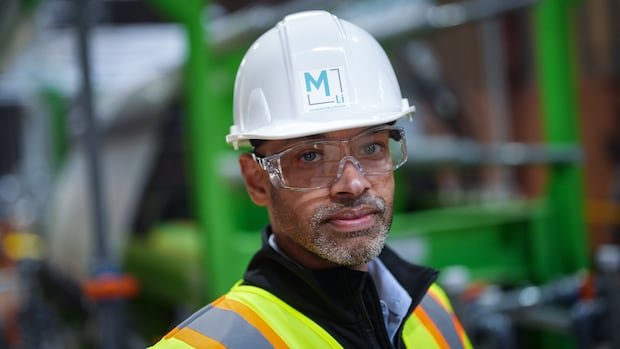

In Delta, British Columbia, North America’s inaugural electrochemical lithium refining plant is discreetly nestled among various industrial establishments. Situated in an unexpected location alongside businesses specializing in plumbing supplies, ladders, and fitness equipment, the facility marks Canada’s unconventional move to challenge China’s dominant position in lithium refining. Mangrove Lithium’s CEO and founder, Saad Dara, humorously likened the facility to a “clown building” during a recent private tour, amidst the buzzing sounds of machinery. The company’s journey culminated in an official ribbon-cutting ceremony following years of meticulous planning and execution.
Originally conceived as a solo venture in 2013, Dara’s brainchild evolved into a full-fledged company in 2018 after transitioning from a thesis project. The facility, now employing approximately 75 staff members, represents a significant milestone in the company’s quest to commercialize its refined technology. Anticipating the production of natural-grade materials throughout the upcoming summer and fall, Dara envisions achieving full commercialization of the technology.
Amid escalating trade tensions and surging demand for essential metals like lithium, copper, and nickel for electrification and defense purposes, countries are striving to secure their supply chains. Recognizing lithium as a critical mineral crucial for battery production and renewable energy, the Canadian government has labeled it as such. Despite Canada’s existing lithium mines in Manitoba and Quebec, the majority of global lithium mining and refining operations are concentrated in South America, Australia, and predominantly China, which refines most of Canada’s extracted lithium.
Mangrove’s strategic move to establish a refining plant in Delta signifies the country’s initiative to bolster its lithium supply chain, which has long been deficient. The plant’s inauguration is a crucial step towards enhancing Canada’s resilience in the face of potential supply disruptions. Geoff McCarney, an associate professor at the University of Ottawa, emphasizes the significance of diversifying critical mineral production to reduce dependency on China, particularly in refining capacities.
By utilizing proprietary electrochemical refining technology, Mangrove’s Delta facility can produce enough battery-grade lithium for approximately 25,000 electric vehicles annually, endorsing a sustainable and efficient approach to lithium processing. The plant’s operational commencement serves as a pioneering effort to set new standards in lithium refining while creating a competitive supply chain alternative outside of China.
Acknowledged by B.C.’s jobs and economic growth ministry for its contribution to clean technology and reduced reliance on foreign refining, Mangrove received $3 million in support from the province. The facility’s inauguration symbolizes a transformative moment for Canada’s critical minerals value chain, paving the way for a domestically powered battery supply chain essential for a sustainable future.
Plans for a forthcoming facility in Eastern Canada underscore Mangrove’s commitment to expanding the country’s lithium supply, with projections to cater to around 500,000 electric vehicles annually. While these initiatives enhance Canada’s self-sufficiency and mitigate market uncertainties, the sourcing of lithium remains a pertinent issue, necessitating responsible mining practices and collaboration with Indigenous communities to ensure ethical and sustainable procurement.