
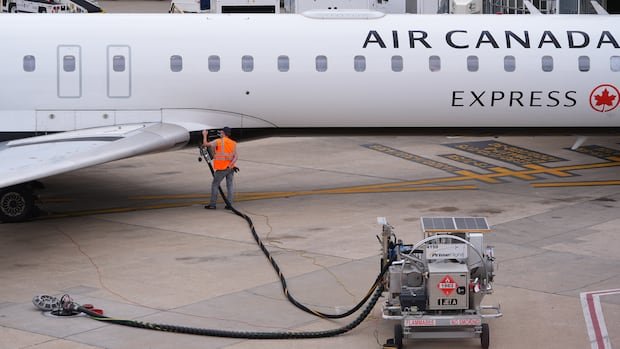

Air Canada has halted operations on six different routes, both domestic and cross-border, due to the surge in fuel costs driven by the ongoing conflict in the Middle East. The airline stated that doubling jet fuel prices since the conflict began have made certain routes and flights financially unviable, leading to the suspension of services.
Effective May 28, the route between Fort McMurray, Alta., and Vancouver has been suspended domestically, while the Yellowknife to Toronto route will be suspended from August 30. Additionally, service from Salt Lake City to Toronto will be temporarily halted starting June 30, with a plan to resume in 2027.
Starting June 1, Air Canada will temporarily suspend flights from Toronto and Montreal to New York’s John F. Kennedy International Airport, planning to resume operations on October 25. This affects one Montreal flight and three Toronto flights, though the airline will still maintain 34 daily flights between Canada and LaGuardia Airport in New York and Newark Liberty International Airport in New Jersey.
Furthermore, the planned route from Guadalajara, Mexico, to Montreal has been suspended by Air Canada. The airline assured that affected customers will be provided with alternative travel options. The overall impact on Air Canada’s planned capacity amounts to approximately one percent of annual available seat miles.
As air travel grapples with an unprecedented fuel crisis amid the prolonged U.S.-Israeli conflict with Iran, fuel prices have more than doubled, prompting cost implications for consumers. WestJet has also announced flight consolidations on lower-demand routes, reducing capacity in April by one percent and in May by three percent.
The International Energy Agency has warned that Europe may face jet fuel supply shortages within six weeks if the current oil supply disruptions persist due to the Iran war. Aviation expert John Gradek from McGill University highlighted the severity of the aviation crisis, emphasizing the prolonged resolution needed to restore the region’s refining capacity.
To counter rising fuel costs, airlines like Air Canada, WestJet, Porter Airlines, and Air Transat have unveiled plans to increase fares or impose surcharges. While Iran announced the opening of the Strait of Hormuz for commercial vessel passage after a ceasefire agreement between Israel and Lebanon, U.S. President Donald Trump affirmed the continuation of the naval blockade on Iran until a deal is reached.
Following Iran’s announcement, oil prices experienced a 10 percent decline, allowing oil tankers to resume exit from the Persian Gulf, facilitating global crude oil distribution.