
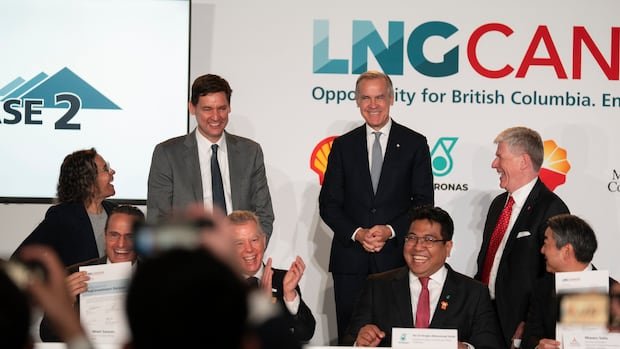

LNG Canada has confirmed the advancement of its Phase 2 expansion project in Kitimat, British Columbia, paving the way for a potential doubling of liquefied natural gas exports from the northern coastal site to international markets. The CEO of LNG Canada, Chris Cooper, emphasized the significant job creation and economic benefits that the project will bring, highlighting Canada’s enhanced position as a reliable energy partner.
The joint venture company, comprising Shell, Petronas, PetroChina, Mitsubishi Corporation, and Korea Gas Corp, has seen its Kitimat facility successfully deliver its inaugural LNG shipment to Asian markets last year. Prime Minister Mark Carney lauded the approximately $33 billion private sector investment in LNG Canada’s Phase 2, positioning it as the second-largest facility worldwide, facilitating the global distribution of low-cost, low-carbon Canadian energy.
Skeena-Bulkley Valley Conservative MP Ellis Ross, a strong advocate for LNG development and former chief councillor of the Haisla Nation, credited local Indigenous leaders for their longstanding efforts in establishing the LNG industry, downplaying the political accolades associated with the recent announcement.
Despite the project’s political backing and economic promises, concerns persist regarding its environmental impact, particularly in relation to greenhouse gas emissions amid a growing climate crisis. LNG production, derived from natural gas extracted through hydraulic fracturing, faces criticism for its potential adverse effects on seismic activity and emissions levels in British Columbia.
While proponents view LNG as a cleaner alternative to coal or oil, skeptics argue that the overall production process may not be as environmentally friendly as claimed. The ongoing debate over the expansion of LNG production underscores the complex balance between economic development and environmental sustainability, especially in the face of escalating climate change challenges.