

Prime Minister Mark Carney is currently attending the G20 summit in South Africa, which notably does not include the participation of the United States, the world’s largest economy. This exclusion is seen as part of a trend reflecting shifts in global dynamics initiated by U.S. President Donald Trump.
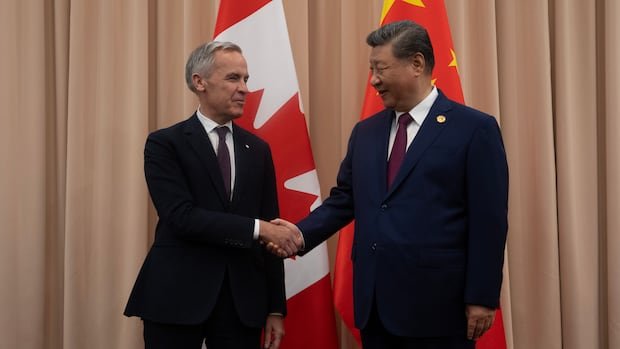
Given the increasingly uncertain and unreliable relationship with the U.S., Canada is looking to broaden its international partnerships, with a particular focus on strengthening ties with China. Prime Minister Carney has taken steps to lay the groundwork for this shift, including a recent meeting with Chinese President Xi Jinping during the Asia-Pacific Economic Cooperation summit in South Korea.
While Canada aims to double its non-U.S. exports in the next decade, the country’s trade with China presents significant potential for growth. Despite China being Canada’s second-largest trading partner after the U.S., Canadian exports to China accounted for only about five percent of the total exports in 2024, compared to approximately 75 percent with the U.S.
To enhance trade relations with China, experts suggest resolving ongoing trade disputes, like Canada’s tariff on Chinese electric vehicles. The current trade tensions have led to retaliatory tariffs from China on Canadian goods, impacting various sectors, including agriculture.
In addition to trade, Canada and China can explore collaborations in manufacturing, research, and development, especially in emerging technology sectors like electric vehicles and artificial intelligence. Experts emphasize the importance of strategic partnerships with China to leverage its technological advancements and market potential.
Utilizing soft power through cultural exchanges and educational initiatives could also strengthen bilateral relations between Canada and China. The recent decision to allow group tours from China to Canada signifies a positive step toward revitalizing the tourism sector and fostering people-to-people connections.
While pursuing closer ties with China, analysts caution about balancing risks, including concerns about human rights and cybersecurity. Crafting a comprehensive China strategy will require a nuanced approach that considers both economic opportunities and potential challenges in the evolving global landscape.