
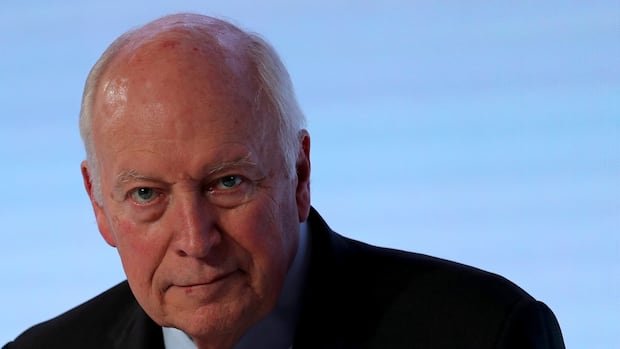

Former U.S. Vice President Dick Cheney, a prominent conservative figure known for his influential role in American politics and strong support for the 2003 Iraq invasion, has passed away at the age of 84. The announcement of his death came from his family, attributing it to complications from pneumonia and heart and vascular ailments.
Cheney, a key figure in the neoconservative movement, had a long and impactful career in Washington, serving in various capacities under different administrations. After his tenure in the Nixon administration, he rose to prominence as Chief of Staff under President Gerald Ford. Subsequently, he was chosen by President George W. Bush as his running mate for two terms in office.
Acknowledging Cheney’s passing, former President Bush expressed condolences to the Cheney family, describing his death as a loss to the nation and to those who knew him. Bush highlighted Cheney’s steady guidance and commitment to the welfare and security of the American people.
Throughout his career, Cheney held significant positions, including serving as Secretary of Defense under President George H.W. Bush and playing vital roles in military operations in Panama and the Gulf War. Following his time in the private sector, he re-entered the political arena as an adviser to George W. Bush’s presidential campaign and later took on the role of Vice President.
Unlike his predecessors, Cheney transformed the role of Vice President into a pivotal position for shaping policy decisions on critical issues such as Iraq, terrorism, and presidential powers. He emphasized his dedication to supporting the President’s agenda and not pursuing personal political ambitions.
Cheney’s tenure was marked by challenges, notably the aftermath of the 9/11 attacks and the subsequent focus on counterterrorism efforts. His leadership during this period, characterized by a preference for secrecy and strategic maneuvering, drew both praise and criticism.
Amidst Cheney’s involvement in the Iraq War and other contentious policies, his influence gradually diminished during Bush’s second term due to legal setbacks and shifting political dynamics. Despite facing setbacks, Cheney’s impact on American politics and foreign policy remained substantial.
Born in Nebraska, Cheney’s journey to political prominence included stints in Congress, the private sector, and ultimately the Vice Presidency. His family life, including his marriage to Lynne Anne Vincent and fatherhood to daughters Liz and Mary, was also a significant part of his legacy.
In his later years, Cheney’s family remained active in politics, with daughter Liz Cheney emerging as a prominent Republican figure critical of former President Donald Trump. The family’s political legacy continued to evolve, reflecting a mix of influence and controversy.
Cheney’s passing marks the end of a chapter in American politics, leaving behind a complex legacy shaped by his unwavering commitment to public service and his role in shaping critical policy decisions.