
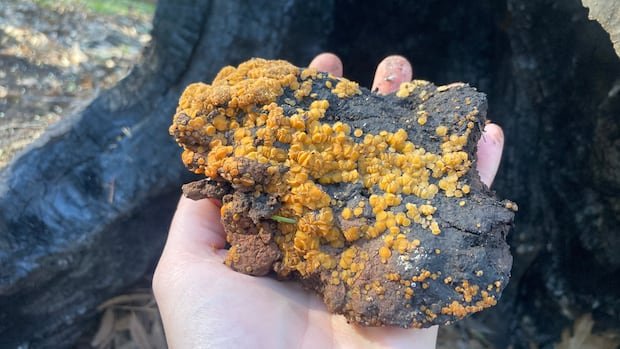

Shortly after a wildfire, a peculiar orange layer covers dead trees and the burned forest ground, creating an eerie scene that appears still smoldering. Instead of further devastation, this signifies renewal as small fungi begin to inhabit the aftermath.
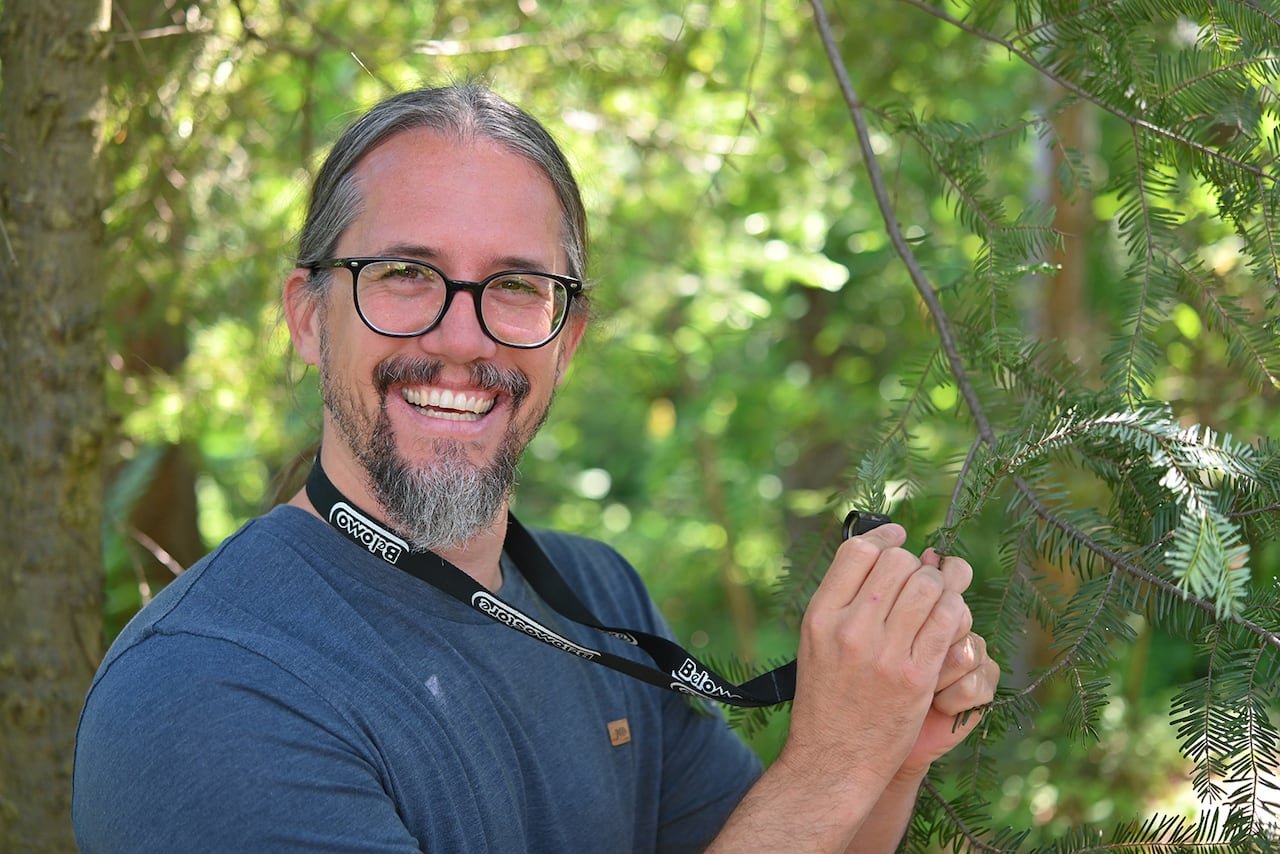
“They release spores in such abundance that it resembles smoke,” explained Joey Tanney, a mycologist and research scientist at the Canadian Forest Service.
These peachy-orange fungi, known as pyronema, are a type of pyrophilous fungi that serve as nature’s initial responders after a wildfire. With climate change intensifying wildfires, the study of their role in fire recovery has gained significance.
Pyrophilous fungal spores, believed to be dormant, remain inactive until a wildfire occurs, according to Monika Fischer, a mycologist at the University of British Columbia (UBC) focusing on fungi’s post-fire function. Historically, wildfires ignited by lightning strikes selected for adaptable organisms like pyrophilous fungi.
The past three years have witnessed unprecedented wildfire seasons exceeding the average annual burn size of 2.7 million hectares, states a recent Senate report. In 2023, a record-breaking 14.7 million hectares were consumed by flames.
“We’re facing these unprecedented fire seasons, making the understanding of post-fire environments, encompassing soils, fungi, and various organisms, crucial,” Tanney emphasized. “What’s the baseline? What outcomes can we anticipate after a ‘normal’ fire versus more extreme ones?”
How do these fungi endure?
Soil shields these organisms from extreme surface temperatures that can reach up to 1,000°C. Fischer recorded temperatures of 70°C just three centimeters below the surface during a controlled slash pile burn in California for her research.
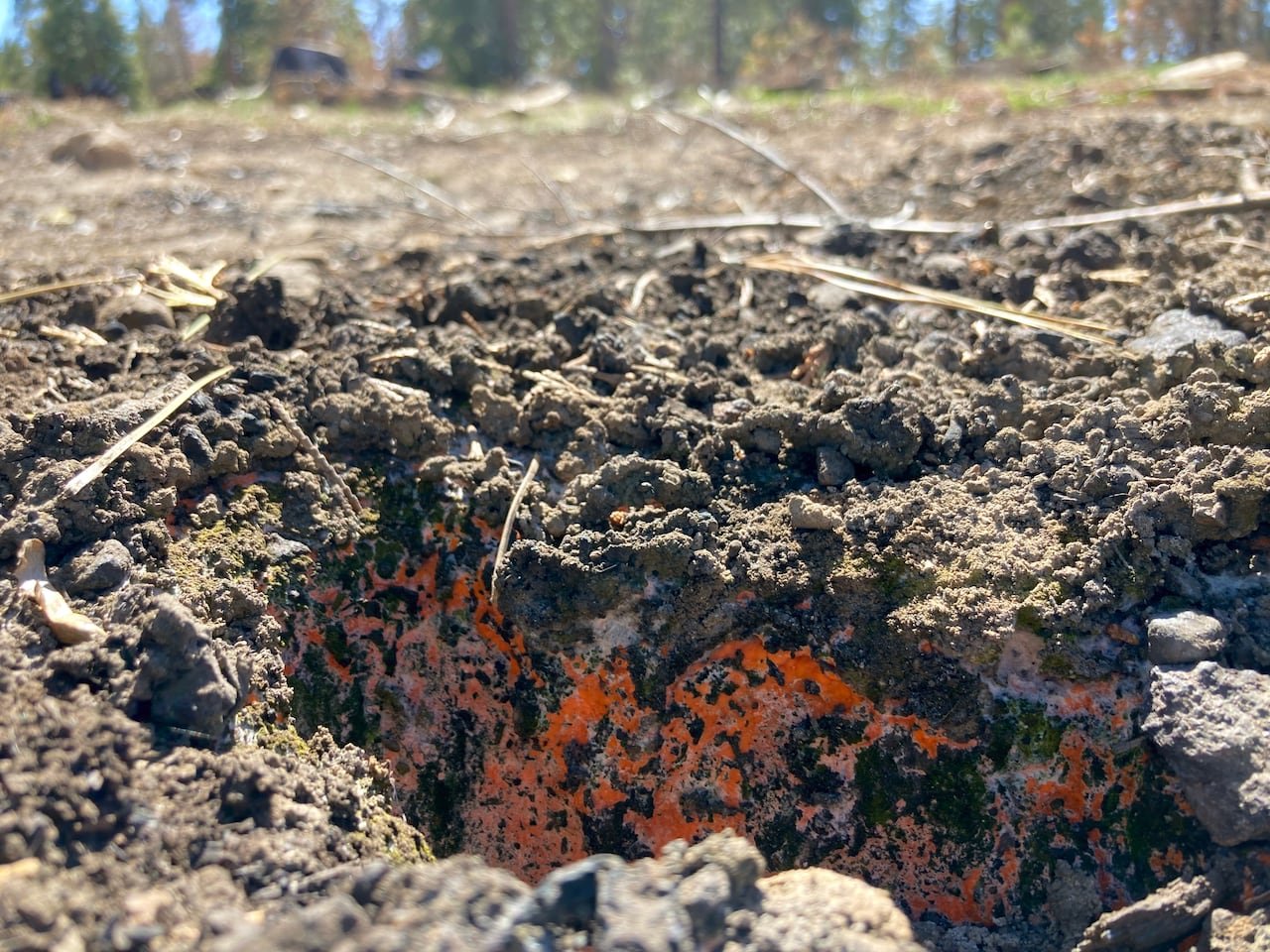
“They patiently await the triggering heat reaction,” Fischer stated regarding pyrophilous fungi, noting a substantial rise in fungal populations in soil samples taken immediately after the fire.
Their contribution to recovery
Pyrophilous fungi absorb ash, carbon, and other harmful byproducts of a forest fire that alter the chemical composition of upper