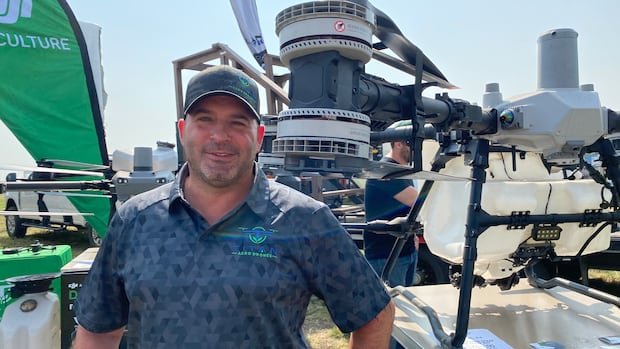

In the previous year, sales representative Ryan Crumly had foreseen a surge in farmers adopting drone technology once the use of drones for spraying insecticides and fungicides on crops was permitted. It appears his prediction was accurate.
In late June, Health Canada removed its restrictions, allowing drones to spray approved pesticides. This change has led to a high demand for the technology among farmers, according to Crumly from Titan Aero Drones, who mentioned that his business experienced a rapid sell-out of nearly 80 drones within days.
Farmers and drone vendors view this policy change positively, highlighting that drones can offer more efficiency compared to ground sprayers and airplanes for pesticide application. The adoption of pesticide-spraying drones is anticipated to be substantial, with many farmers expressing interest in acquiring one in the upcoming years.
‘Monitoring Made Easy’
Pesticide-spraying drones are being promoted as an innovative technology with various advantages. They outperform planes and helicopters as they can operate at any time and navigate closer to obstacles like trees and power lines, as stated by Crumly.
This year, there was interest from farmers dealing with flood-related issues hindering the use of ground sprayers, making drones an appealing alternative.

The use of artificial intelligence is becoming widespread in agriculture, with advancements showcased at the Ag in Motion event. Professor Steve Shirtliffe shares insights with Saskatoon Morning host Candice Lipski.
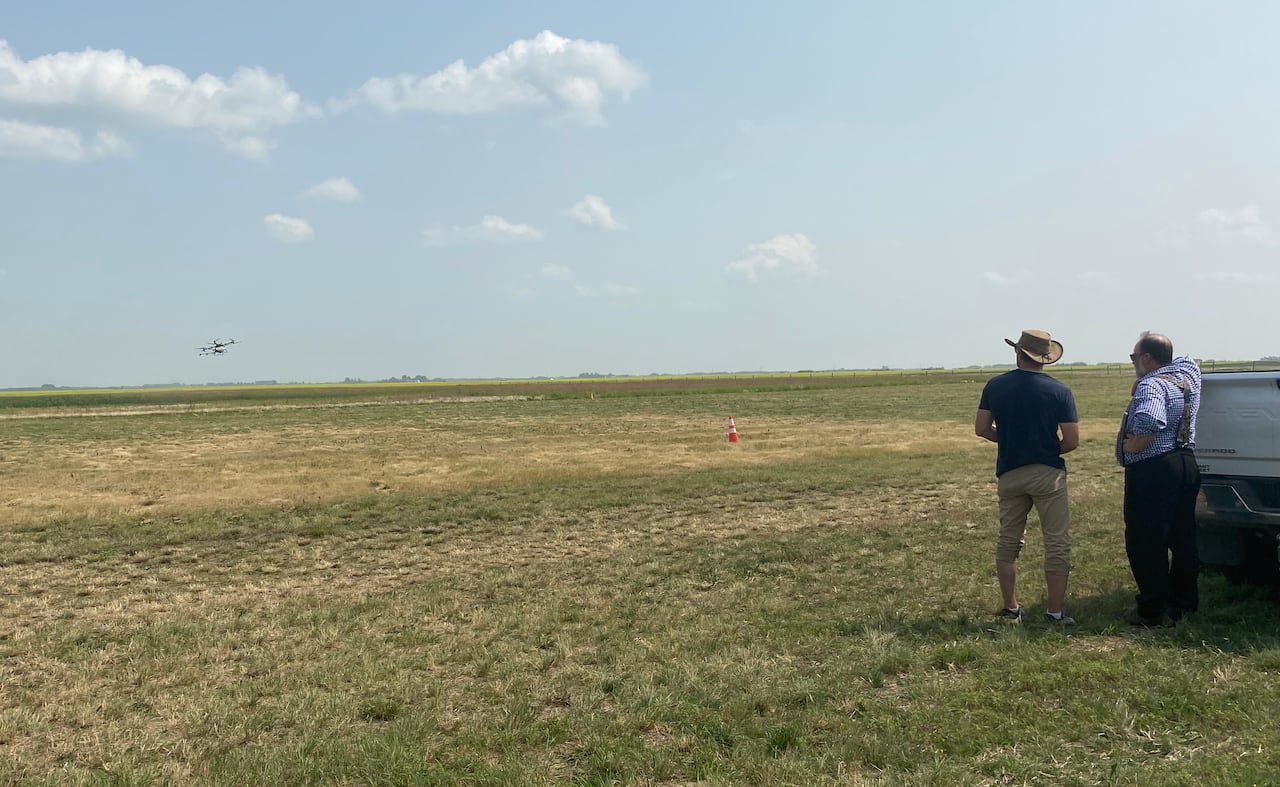
Crumly emphasized the user-friendliness of drones, allowing farmers to plan the spraying operations, after which the drone can autonomously execute the task. According to him, operators only need to monitor battery changes and refilling the tank.
Greg Hill, a farm and ranch owner in southeast Saskatchewan, envisions drones making a significant impact on agriculture. Ground sprayers, even with narrow tires, can damage up to 24 acres of crops, resulting in substantial losses, unlike drones.
“The return on investment with a drone is quick,” Hill stated.
Anticipated Adoption Rate
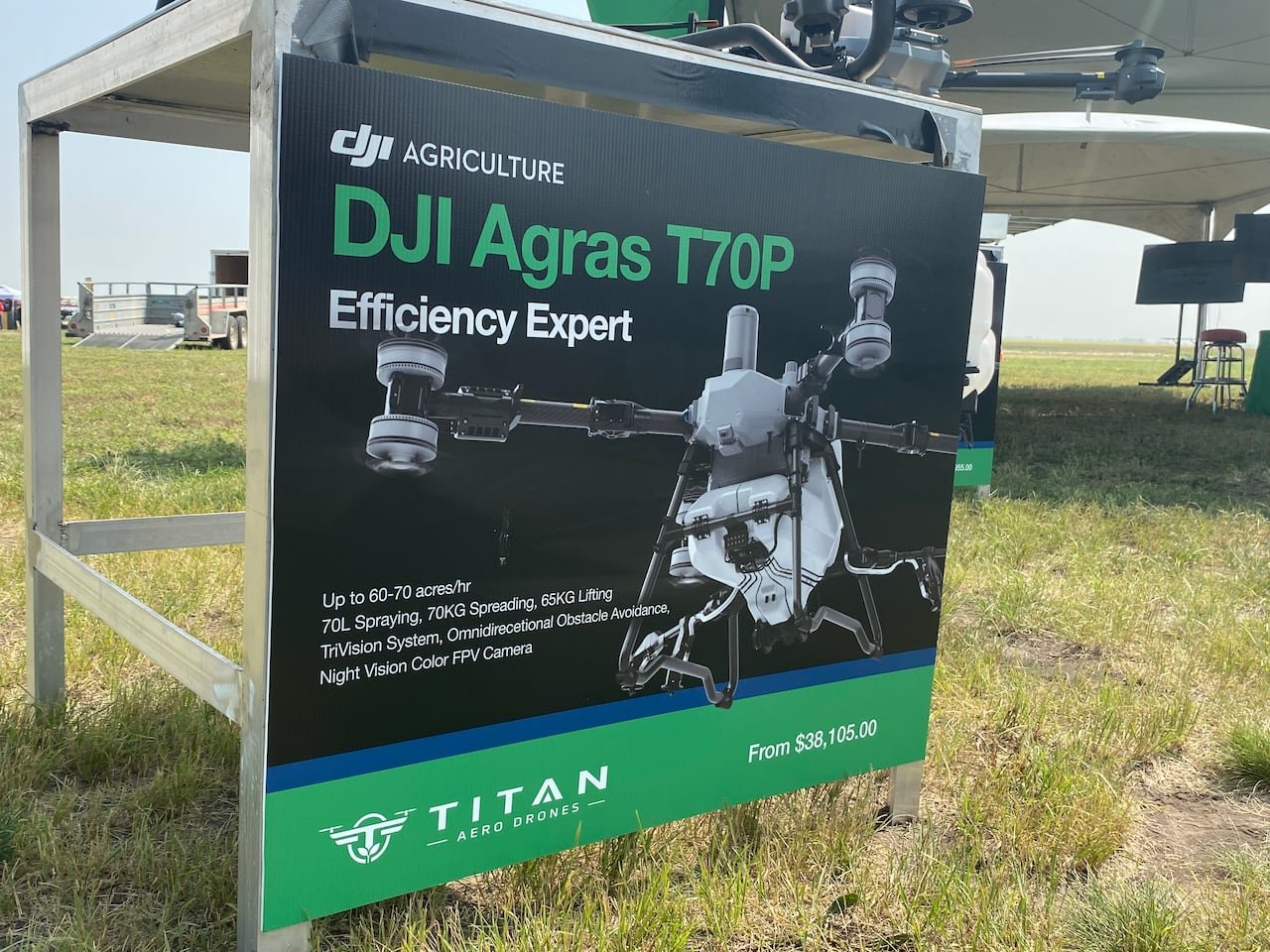
The cost of spray drones can reach tens of thousands of dollars, which is comparatively affordable in contrast to high-priced ground sprayers that can cost hundreds of thousands, noted Crumly.
Moreover, operational expenses are significantly lower, with drone operation costing approximately 83 cents per acre compared to $10.50 per acre for high-clearance ground sprayers.