
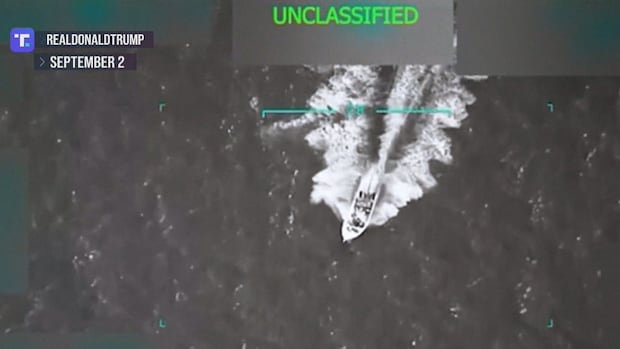

U.S. Congress is set to increase its examination of the military actions taken by the Trump administration against suspected drug trafficking vessels more than ever since the mission began along the South American coast.
Both the armed services committees in the House and Senate have stated their intention to investigate claims that two survivors from a vessel that was initially struck in early September in the Caribbean were killed in a subsequent targeted attack.
Members from both Republican and Democratic parties on these committees have commented that if it is true a strike was authorized against individuals who were defenseless after their boat had been destroyed, such an order could be deemed unlawful or even classified as a war crime.
Defence Secretary Pete Hegseth initially rejected the allegations after they were reported by the Washington Post last week, labeling them as “fabricated, inflammatory, and derogatory.”
However, on Tuesday, Hegseth admitted that a subsequent strike was executed against the Venezuelan boat, defending the decision by claiming he did not observe any survivors in the water during the operation.
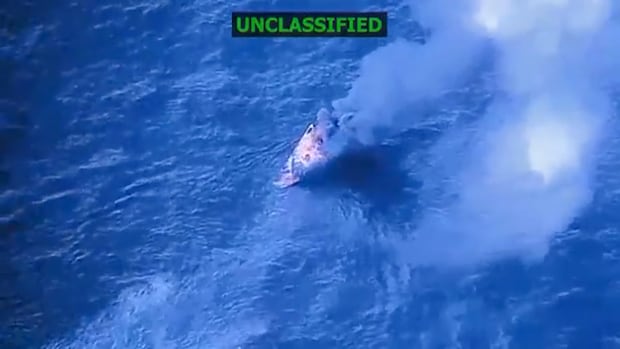
“The boat erupted in flames and smoke, obscuring visibility,” Hegseth stated during a televised cabinet meeting with President Donald Trump at the White House.
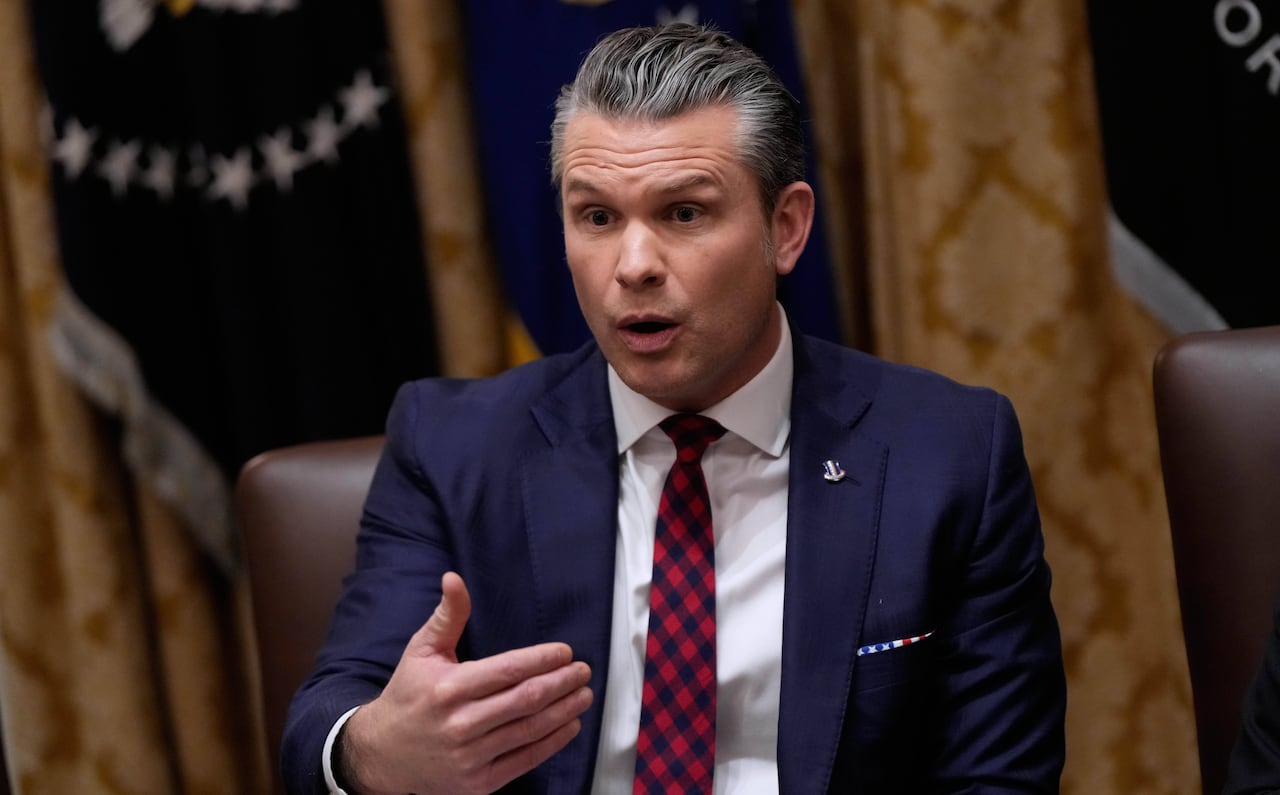
Defence Secretary Pete Hegseth participates in a cabinet meeting at the White House on Tuesday. (Julia Demaree Nikhinson/The Associated Press)
“This is what is referred to as the fog of war,” Hegseth remarked, asserting that the admiral in charge of the operation “made the correct decision” by calling for a follow-up strike.
Hegseth’s remarks mark a significant shift in the Trump administration’s narrative regarding the events of the operation on September 2, addressing whether a second strike occurred, who authorized it, and the justification for targeting individuals who were shipwrecked.
It wasn’t until Monday that the White House acknowledged multiple strikes were carried out during the discussed operation.
White House press secretary Karoline Leavitt indicated that Admiral Frank “Mitch” Bradley was the one who issued the order, having received authorization from Hegseth.
According to various U.S. media reports, Bradley is scheduled to provide a classified briefing to the armed services committee members on Thursday.
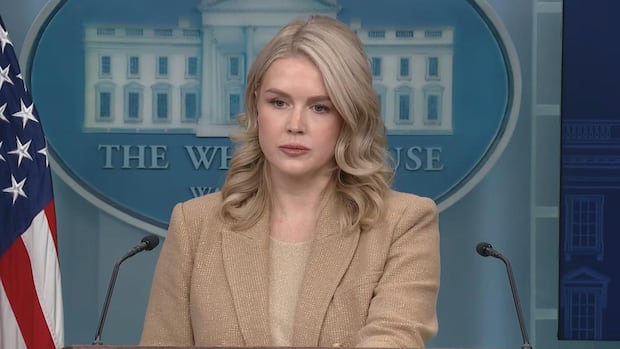
“Admiral Bradley acted well within his legal authority, directing the engagement to ensure the destruction of the boat and eliminate the threat to the United States,” Leavitt stated to reporters.
Pointing to the admiral’s involvement is significant in light of previous statements made by Trump.
‘Pete said that didn’t happen’
“I would not have wanted that, not a second strike,” Trump remarked to reporters aboard Air Force One on Sunday.
“If there were two people present, but Pete said that didn’t happen,” Trump continued. “Pete said he did not order the deaths of those two men.”
The legality surrounding the second strike will be a focal point of the investigations conducted by the two congressional committees.
Up until now, the Republican-led oversight committees have refrained from fully exercising their authority to examine the ongoing military operation, which has reportedly resulted in 83 fatalities over three months, according to Pentagon figures.
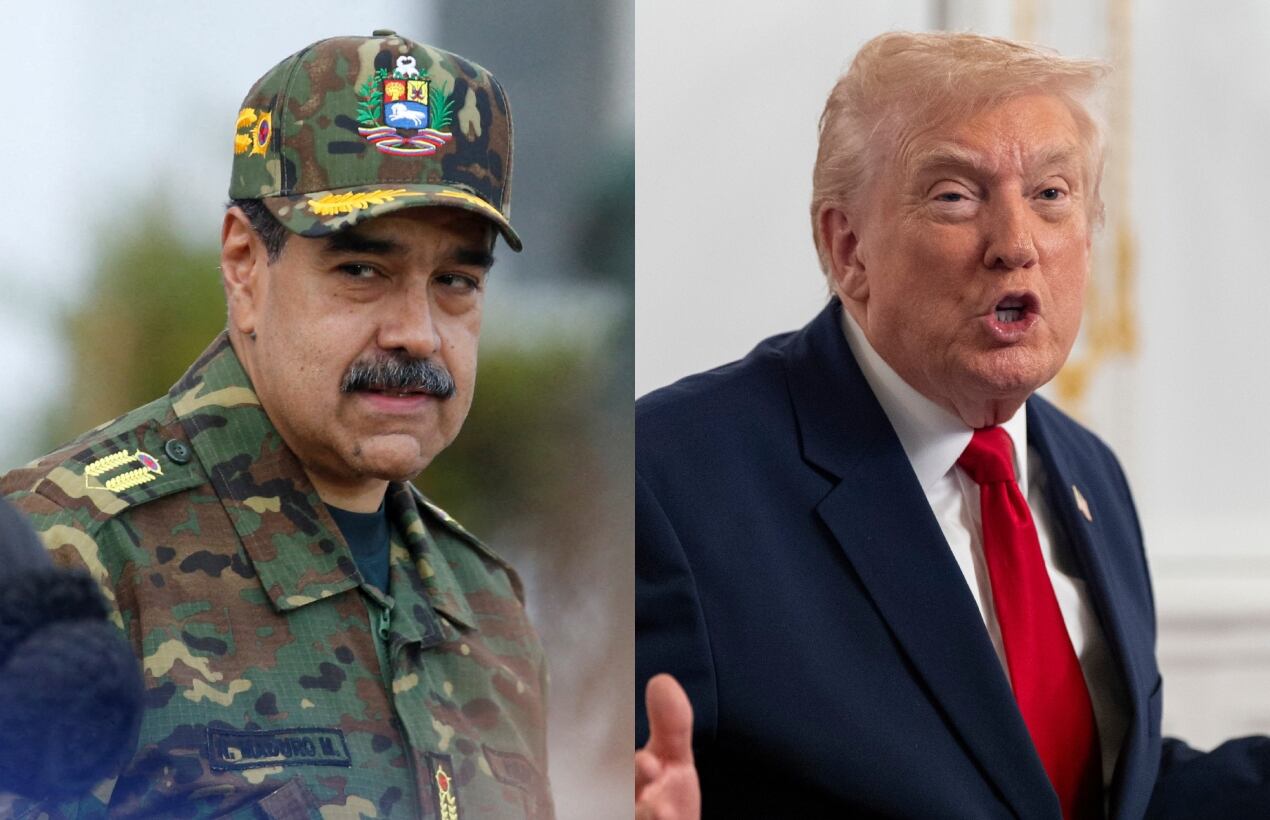
The Trump administration claims that the strikes in the Caribbean target drug cartels, some allegedly linked to Venezuelan President Nicolás Maduro, left. (Leonardo Fernandez Viloria/Reuters; Alex Brandon/Associated Press)
Trump has framed the operation as a focused campaign against foreign terrorist entities that does not necessitate congressional consent.
Daniel Maurer, a retired judge advocate general and current associate law professor at Ohio Northern University, asserts that the legality regarding attacks on individuals unable to defend themselves is unequivocal.
“It remains irrelevant whether they are identified as narco-terrorists by the president or not, or if they are considered war criminals; that does not change the legal context,” Maurer explained to CNN on Monday.
“Executing them while they are shipwrecked, while they are hors de combat — out of the fight — constitutes a war crime,” Maurer stated.
The armed services committees possess the authority to conduct hearings regarding the military operation, issue subpoenas for documentation, and summon testimony from Hegseth and others up the chain of command.
Such hearings typically shine a significant media spotlight on an issue and can create notable political pressure on an administration, potentially leading to resignations.
Senator Mark Kelly, a Democrat from Arizona and a retired navy veteran serving on the Senate armed services committee, has vowed to conduct a thorough investigation.
“We will hold a public hearing. We will place these individuals under oath, and we will uncover what transpired, followed by necessary accountability,” Kelly stated during an interview with Kristen Welker on NBC’s Meet the Press.
Both committees promise oversight
Senator Roger Wicker, the Republican chair of the Senate committee, issued an uncommon joint statement with the committee’s leading Democrat, Senator Jack Reed, highlighting reports of “follow-on strikes” on vessels suspected of drug trafficking.
“The committee has initiated inquiries to the Department [of Defence], and we will be conducting thorough oversight to ascertain the facts associated with these circumstances,” the statement read.
A similar statement promising “rigorous oversight” was also released by the Republican chair and the top Democrat of the House armed services committee.
“We take the reports of follow-on strikes on boats suspected of transporting narcotics in the SOUTHCOM region seriously and are taking bipartisan actions to collect a complete account of the operation in question,” stated the release from Republican Mike Rogers and Democrat Adam Smith.
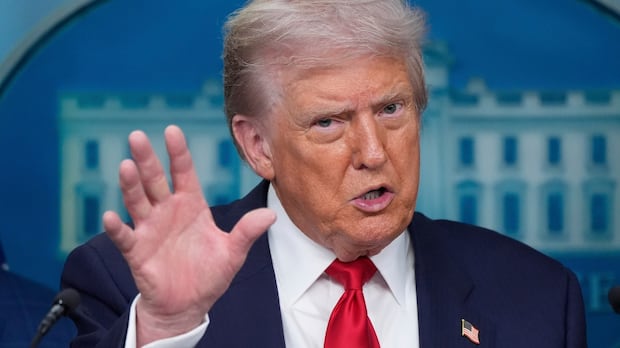
U.S. President Donald Trump stated that the U.S. executed a military strike in the southern Caribbean, resulting in 11 deaths aboard a vessel he claimed was operated by the Tren de Aragua gang, which was allegedly carrying drugs from Venezuela.
Representative Don Bacon, a Nebraska Republican on the House armed services committee, believes that if Hegseth indeed ordered the second strike as reported by the Washington Post, it would be unlawful.
“I doubt he would be reckless enough to make such a decision to say, ‘Kill everyone, kill the survivors,’ as that is a clear breach of the laws of war,” Bacon expressed during an interview with Jonathan Karl on ABC’s This Week.
“I’m very skeptical that he would have acted in that manner, as it would contradict common sense,” Bacon added.
Senator Tim Kaine, a Democrat on the Senate Armed Services Committee, stated that if the attack occurred as reported, it “rises to the level of a war crime.”
“If that reporting is accurate, it represents a blatant violation of the DOD’s own laws of war and international laws,” Kaine told Nancy Cordes on CBS’s Face the Nation.
- White House denies report U.S. ordered ‘second strike’ on already bombed alleged cartel boats
- Defence Secretary Pete Hegseth authorized 2nd strike on alleged drug vessel, White House says
It remains uncertain whether either congressional committee will investigate the legality of the overarching military operation against the accused drug trafficking vessels.
By designating drug cartels as foreign terrorist organizations, the Trump administration has provided itself with a similar rationale for the targeted strikes that the Obama administration used for drone attacks on individuals associated with the al-Qaeda and ISIS militant groups.
A collective of former judge advocates general released their own assessment asserting there is no legal justification for launching strikes on vessels carrying narcotics, arguing that the president lacks authorization to employ military force against the cartels.
The Pentagon has not publicly shared its legal stance supporting the military campaign, although it has reportedly presented it to congressional members in private sessions.