
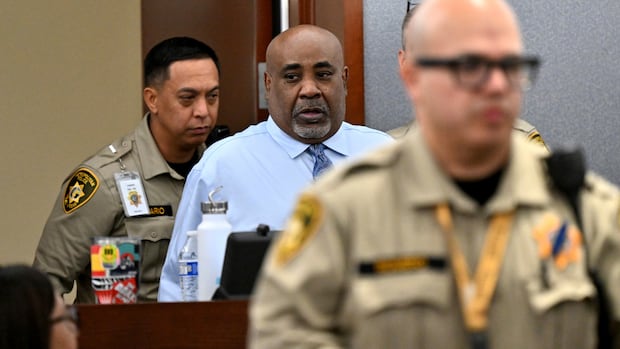

The trial of a former gang member accused in the unresolved shooting murder of hip-hop icon Tupac Shakur commenced on Monday with the selection of jurors, nearly three decades after the legendary rapper was fatally shot.
Duane (Keffe D) Davis, aged 63, is charged with one count of murder using a deadly weapon, aimed at promoting or aiding a criminal gang in the 1996 homicide of Shakur. Davis, who has been detained since 2023, has entered a plea of not guilty. The trial, being held in Las Vegas—the location of the shooting—begins with jury selection and is projected to last around a month.
Prosecutors will not attempt to establish that Davis fired the gun. Rather, they will seek to persuade the jury that he was the “shot caller,” a term denoting a leader or decision-maker, within the group that targeted Shakur during the shooting on September 7, 1996, on the Las Vegas Strip.
Dressed in a blue dress shirt and tie, Davis remained composed alongside his lawyer as Nevada Judge Carli Kierny posed questions to a pool of 75 potential jurors, inquiring about any medical issues, language barriers, or conflicts regarding their ability to serve.
‘Justice is a little bit weakened’
William Leslane, a cousin of Shakur, expressed that while the trial might offer some accountability, it comes too late to deliver true justice.
“Justice was forfeited years ago. The night my cousin lost his life—there should have been a thorough investigation from the start,” he remarked during an interview.
“Now, 30 years later, justice feels somewhat diminished.”
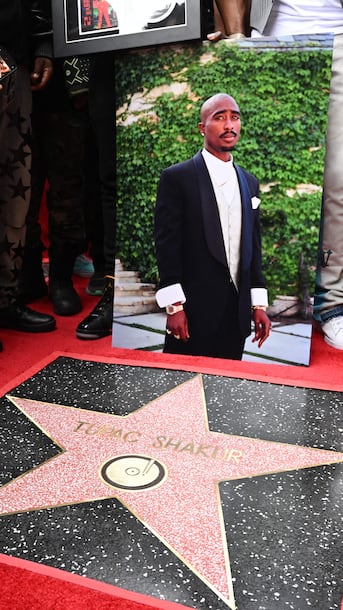
Thirty years posthumously, jury selection is underway in the murder trial of rapper Tupac Shakur. Former gang leader Duane (Keffe D) Davis faces charges for allegedly ordering the killing and supplying the firearm. Shakur’s cousin, William Lesane, believes the 63-year-old Davis is the murderer, asserting he was ‘publicly proclaiming it’ but maintains that justice was ‘lost’ on the day Shakur was slain.
A significant portion of the evidence presented in court will derive from a book co-authored by Davis. In his 2019 memoir, Compton Street Legend, the former senior member of the South Side Compton Crips gang detailed his purported involvement in the shooting.
At just 25 years old at the time of his death, Shakur was a prominent figure in rap, celebrated for hits like Dear Mama and California Love. Originally from New York City, he was closely linked to West Coast hip-hop. Throughout his career, he released four solo albums, followed by six posthumous releases.
-
Tupac is being digitally resurrected again, this time in a video game. Not everyone likes it
-
Commotion
Why solving Tupac Shakur’s murder still matters
At the time of his passing, Tupac was affiliated with Death Row Records, a label notorious in the rap industry.
Marion (Suge) Knight, co-founder and then-CEO of Death Row Records, was present with Shakur during the shooting. Knight, the only surviving witness to the incident, informed ABC News last week that he would not cooperate with the authorities and has no intention of testifying.
Currently, Knight is serving a 28-year prison sentence in California for a hit-and-run incident that resulted in the death of a Compton businessman in January 2015.
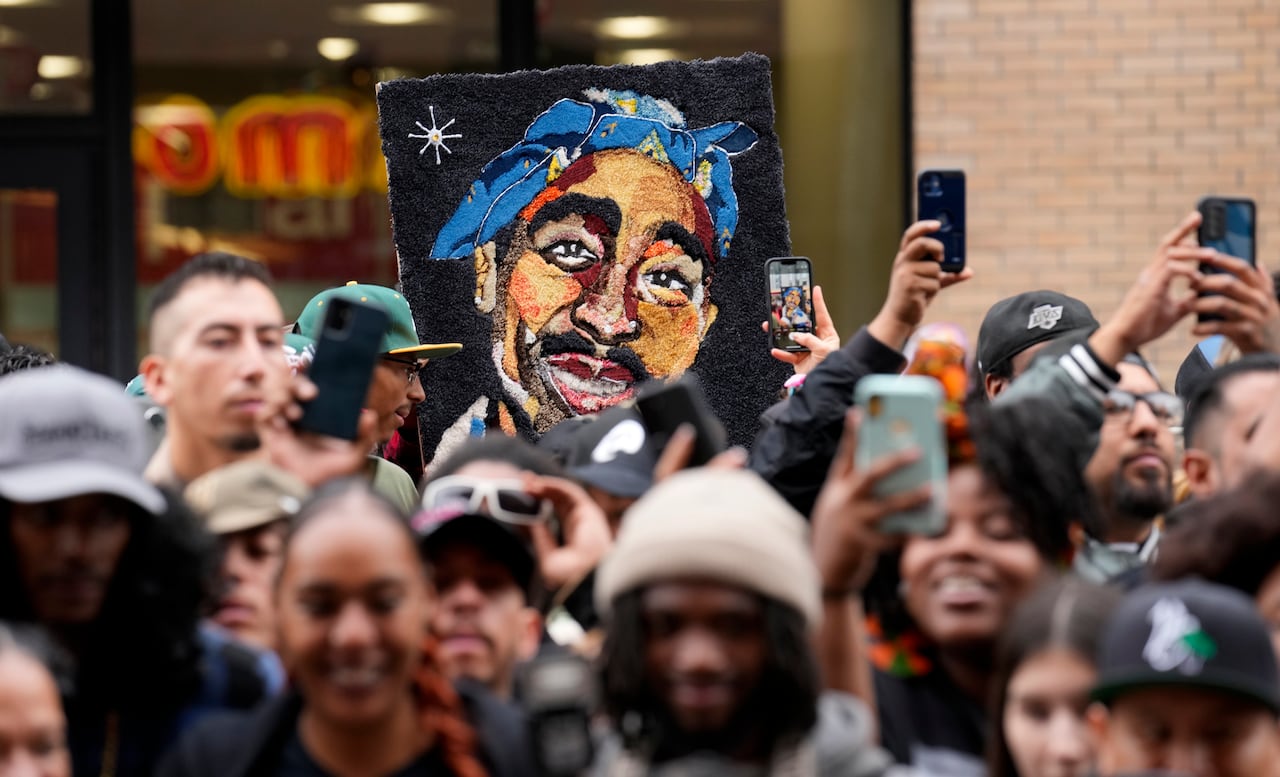
Supporters display a poster of Shakur during a ceremony honoring the late rapper with a star on the Hollywood Walk of Fame on June 7, 2023, in Los Angeles. Davis was arrested and charged that same year regarding his alleged involvement in Shakur’s shooting death in 1996. (Chris Pizzello/Invision/The Associated Press)
The night of the shooting
On the evening of September 7, Shakur and Knight were in Las Vegas to attend a boxing match featuring Mike Tyson against Bruce Seldon. After the fight, they cruised around Las Vegas in a BMW owned by Death Row Records.
At about 11:15 p.m., a Cadillac approached their vehicle and unleashed a barrage of gunfire, hitting Shakur four times. Although Knight sustained injuries as well, he managed to drive away and alert emergency services. Shakur succumbed to his wounds six days later, on September 13.
The murder ignited extensive speculation and conspiracy theories regarding the identity of the shooters and the events surrounding the incident, including claims that Shakur may not have actually died.
During this time, tensions were high between East Coast and West Coast rappers, which led to theories suggesting that rapper Notorious B.I.G.—an adversary from New York—was implicated. He was fatally shot less than a year later.
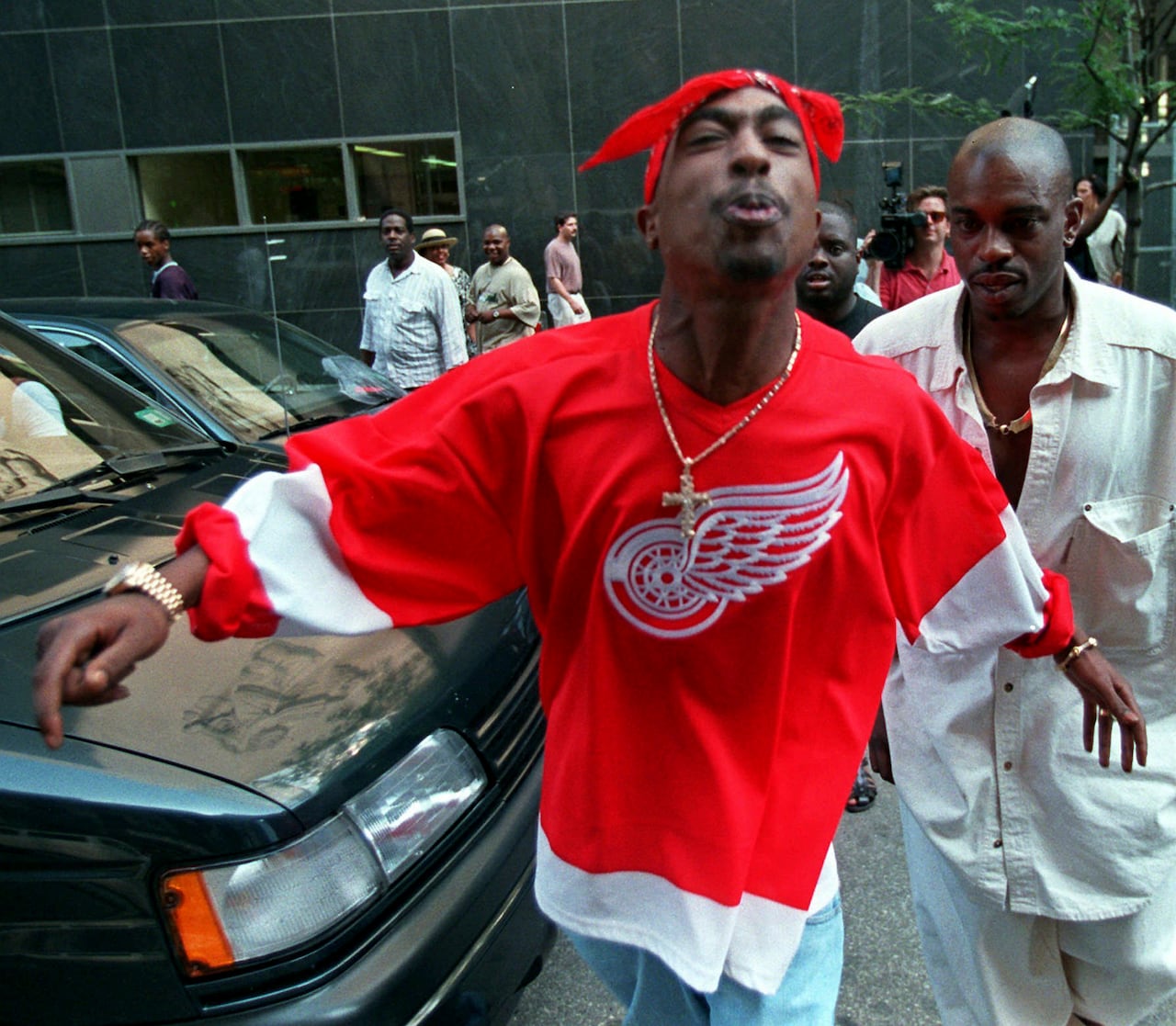
Shakur gestures at reporters as he exits the state Supreme Court in New York on July 5, 1994. Two years later, he was shot and killed on the Las Vegas Strip. (The Associated Press)
What Davis wrote about the shooting
In his memoir, Davis claimed the attack on Shakur was motivated by vengeance. Earlier that same evening, he noted, his nephew, Baby Lane, had been assaulted by individuals affiliated with Death Row.
Davis wrote that Shakur, Knight, and their associates “should not have interfered with Baby Lane. Their actions in attacking my nephew gave us the go-ahead to retaliate.”
He further described Shakur as “a small fish caught among fierce sharks. He never should have engaged in that reckless thug life.”
Davis recounted that his crew was able to locate Shakur’s vehicle because he was interacting with fans and waving from the window of the BMW. Had he not been visible, Davis claimed they would have missed him.
Davis provided a detailed account of the shooting but did not specify who fired the lethal shots, stating instead that he discarded the gun used to kill Shakur into the back seat.
He mentioned that Knight recognized them immediately when their Cadillac drew alongside the BMW.
“Tupac made an erratic move and started reaching down beneath his seat,” Davis recalled.
He claimed he witnessed Tupac draw a firearm. “That’s when the chaos began. One of my associates in the back seat grabbed the Glock and started firing back,” Davis stated.
Case hinges on 3 pieces of evidence: law prof
Lucius Outlaw III, an associate professor of law at Howard University, indicated that three critical pieces of evidence will be pivotal in the trial—the memoir, the promotional interviews conducted by Davis, and his statements to investigators.
He anticipates that Yusuf Jah, who co-authored Davis’s memoir, will serve as a crucial witness.
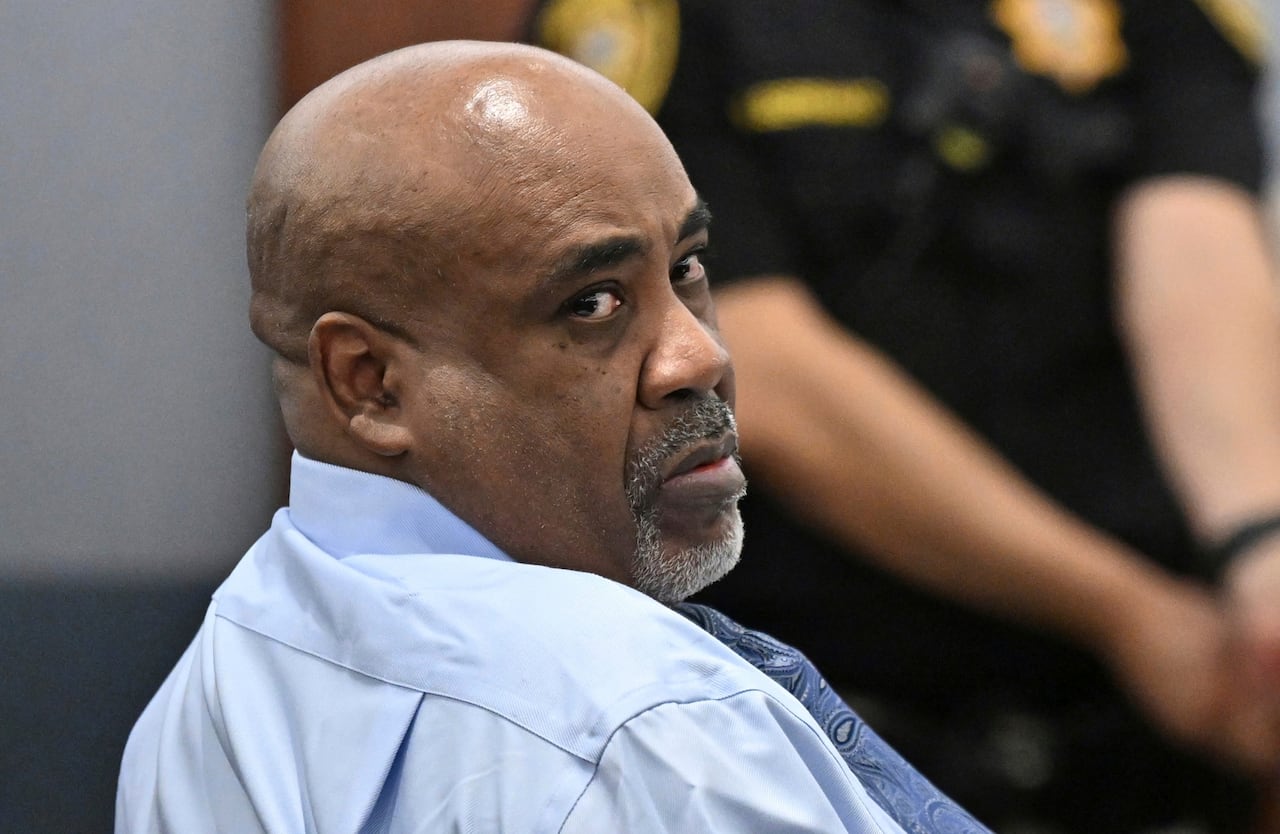
Davis appears in Clark County District Court on Monday in Las Vegas. He detailed his alleged involvement in Shakur’s murder in a 2019 publication. (David Becker/Pool AFP/The Associated Press)
“The defense will likely emphasize the co-writer’s role in the memoir to argue that the jury should be cautious, as these may not be purely Davis’s words,” he remarked.
“Conversely, the prosecution will assert that ‘[Davis] claimed in interviews that it is 100 percent accurate.’ “
Shakur’s legacy
In his book, Davis expressed regret over the shooting.
“At this stage in my life, I can acknowledge that I deeply regret what transpired with Tupac,” he stated. “Pac was an exceptionally gifted artist with immense potential.”
Shakur’s music frequently addressed political themes. He was largely raised by his mother, Afeni Shakur, a member of the Black Panther Party. An avid reader, he often adopted the name “Makaveli” in homage to political thinker Niccolò Machiavelli.
In addition to being a musician, Shakur also ventured into acting, featuring in the 1992 film Juice and the 1993 movie Poetic Justice, among other projects. He also penned poetry and previously worked as a backup dancer.
For A.D. Carson, a rapper and associate professor of hip-hop and the Global South at the University of Virginia, Shakur’s multifaceted talent is particularly noteworthy.
“You could never characterize Tupac as unchanging. He was an extraordinarily dynamic artist,” Carson remarked.
“He was engaging in a vibrant expression of hip-hop during a time when it was not yet the globally acknowledged art form it is today.”