
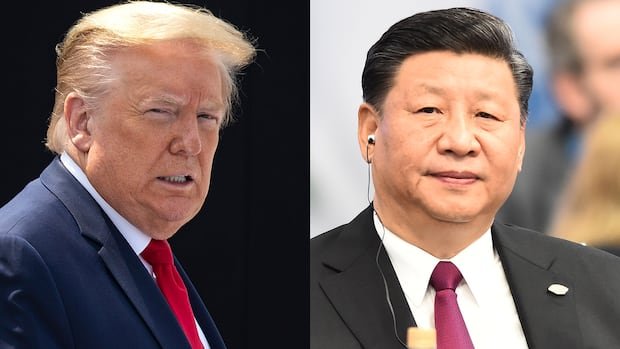

China’s strong hold on the rare earth minerals market gives it significant influence over the U.S., despite recent trade deal talks between the two countries ahead of a meeting between U.S. President Donald Trump and Chinese President Xi Jinping. The anticipated meeting, the first of Trump’s second term, is scheduled for Thursday during the annual Asia-Pacific Economic Cooperation summit in Gyeongju, South Korea.
The ongoing trade war between the world’s top two economies has escalated with tariffs exceeding 100 per cent, posing threats to the global economy. This situation underscores China’s readiness to leverage its strengths as bargaining tools against economic challenges from the U.S.
Recent discussions between top officials from both nations have hinted at a potential trade agreement, raising hopes of averting tariffs just before the Trump-Xi meeting. U.S. Treasury Secretary Scott Bessent, in collaboration with U.S. trade representative Jamieson Greer and Chinese Vice-Premier He Lifeng, revealed a significant framework at the Association of Southeast Asian Nations summit in Kuala Lumpur. While details remain unclear, the agreement involves potential resolutions such as the transfer of TikTok’s U.S. operations and resuming soybean purchases from U.S. farmers by China.
One crucial aspect of the deal is China’s commitment to postpone export controls on rare earth minerals for a year, a critical concern for the U.S. Given China’s dominant position in rare earth mineral production and processing, this move signifies a strategic advantage that Beijing holds in the global supply chain.
The trade truce remains fragile, with uncertainties looming over the U.S.-China relationship. Mary Lovely, a senior fellow at the Peterson Institute for International Economics, emphasized that while a ceasefire exists, disarmament is not guaranteed, indicating that tariffs and economic leverage could still be on the table for both sides.
As Trump and Xi prepare for their high-stakes meeting, the agreement signals an understanding of the potential repercussions of a breakdown in negotiations. Both leaders seem inclined towards stabilizing their bilateral relationship, acknowledging the necessity of a pragmatic approach amid deep-rooted structural competition.
The delicate balance struck by the agreement allows room for both sides to claim victories while leaving scope for further actions and potential challenges. Although the meeting may not address all outstanding issues, it presents an opportunity to tackle smaller concerns incrementally, given the deep-seated mistrust between the two nations.
The upcoming encounter between Trump and Xi follows a series of interactions, indicating a mutual desire to engage constructively despite underlying tensions. The recent expansion of China’s export rules on rare earth minerals underscores Beijing’s strategic posture, backed by its near-monopoly in the sector, which poses challenges for the U.S. and other countries reliant on these essential minerals.
Efforts by the U.S. to bolster its critical minerals supply chain through agreements with Japan, Pakistan, and Australia highlight the urgency to reduce dependency on China. However, achieving self-sufficiency in these resources may take years, underscoring the long-term strategic implications of the rare earth minerals dispute.
The leaders’ domestic political landscapes further shape their negotiating positions, with Xi focusing on self-reliance in technology amid economic challenges, while Trump navigates a potential government shutdown. As tensions persist between the world’s largest economies, global stakeholders hope for a peaceful resolution, recognizing the far-reaching impacts of a prolonged U.S.-China conflict.