

Just five days prior to the upcoming inauguration of the new president, Justin Trudeau convened the provincial leaders in Ottawa to address the impending crisis.
Following the meeting, Trudeau expressed that they had developed a “shared sense of purpose, a shared sense of understanding, and a commitment to stand united on the path ahead.” Ontario Premier Doug Ford, seated next to Trudeau, characterized the approach as a true representation of “Team Canada.”
While the gathered first ministers did not reach a consensus on all matters, Alberta Premier Danielle Smith notably opposed considering a surcharge on oil exports to the United States. However, Ford highlighted the significance of having representatives from three political parties engaging in constructive dialogue, emphasizing the rarity of such collaboration in comparison to the political landscape in the United States.
Fast forward nine months, and the unity among the leaders seems to be waning.
British Columbia Premier David Eby recently advocated for equal attention to the province’s softwood lumber industry akin to Ontario’s auto sector. Conversely, the head of Canada’s largest union suggested that the auto industry was being overshadowed by the steel and aluminum sectors.
Meanwhile, Manitoba Premier Wab Kinew and Saskatchewan Premier Scott Moe urged the federal government to remove tariffs on electric vehicles from China in hopes of prompting a reciprocal action on canola tariffs by China. However, Ford, concerned about the impact on domestic vehicle production, vehemently opposed lifting the tariff on Chinese EVs.
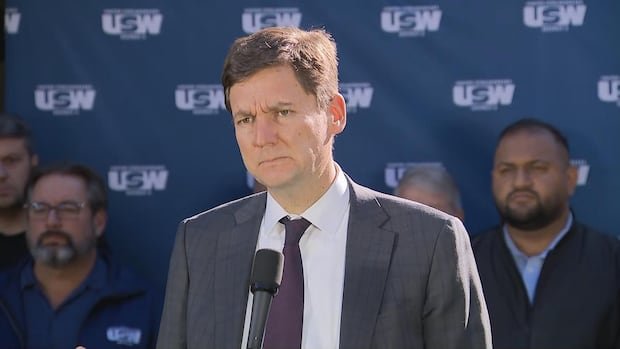
B.C. Premier David Eby highlights that Canadian lumber faces higher tariffs entering the U.S. compared to lumber from Russia, urging Ottawa to treat the escalating tariffs as a national emergency.
Eby challenged Danielle Smith’s decision to advocate for a pipeline across northern B.C., with Smith branding Eby’s remarks as “un-Canadian,” while former Alberta premier Jason Kenney labeled Eby a threat to national unity.
Simultaneously, Ford criticized the federal government’s handling of negotiations with the United States and persistently called for a more assertive stance against American tariffs.
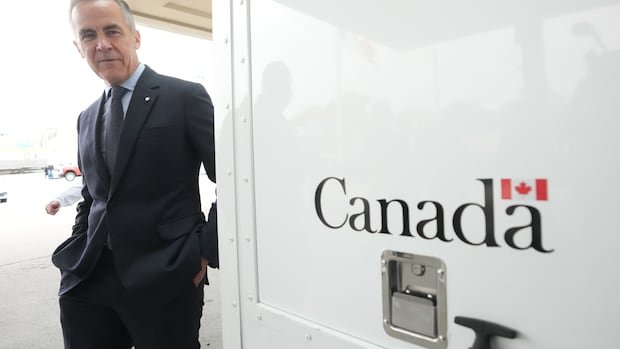
Reflecting on the situation, Ford expressed uncertainty about Prime Minister Carney’s insights, suggesting a need for further communication between Carney and the premiers, culminating in a private meeting between Carney and Ford in Toronto.
These internal divisions may be expected in a diverse nation like Canada, especially in the face of trade challenges posed by the U.S. and China. The leaders, including Premiers Eby, Smith, Moe, Kinew, and Ford, are advocating for their constituents’ interests, albeit potentially complicating negotiations with the U.S.
Considering this, there is a growing argument for enhanced coordination among the first ministers, potentially requiring more frequent meetings to address the escalating trade issues.
However, fostering unity may necessitate broader engagement beyond provincial capitals.
Read more