
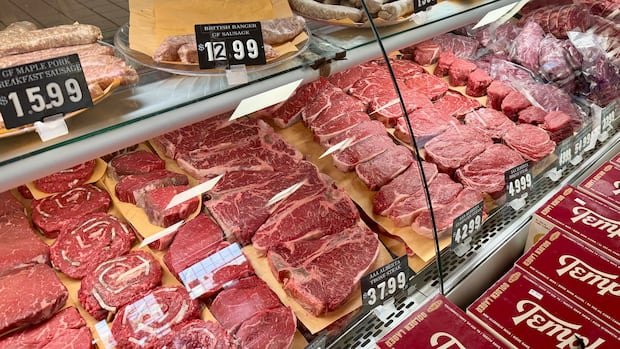

As Canadians gear up for the grilling season, they are encountering steep prices for steak and hamburgers. The cost of beef has surged to record levels, with a 62.6% increase since 2021, driven by prolonged droughts, reduced cattle herds, and escalating production expenses.
Recent data from Statistics Canada in April revealed a 12.5% spike in beef prices over the past year, reaching a peak of 17.7% in November 2025. Despite the soaring prices, consumers like Linda Brown in Calgary express dismay at the high cost of purchasing steak, emphasizing the financial strain it poses.
Industry experts attribute the price surge to the ongoing scarcity of cattle supply, stemming from past droughts. Nevertheless, consumer demand for beef remains robust, reaching unprecedented levels.
The escalation in prices traces back to issues that commenced several years ago. Severe drought conditions in Canada, the United States, and Mexico in 2021 compelled ranchers to downsize their herds due to feed scarcities and deteriorating pasture conditions. As a result, beef prices have steadily risen, with the Canadian cattle herd hitting a 40-year low.
However, there are glimpses of recovery on the horizon. The Canadian cattle herd witnessed its first expansion since 2018 at the outset of this year, growing by 2.5% to 11.1 million cattle and calves. This positive trend signals a potential turnaround in the market.
Despite the optimistic outlook, challenges persist for producers like Kent Holowath, who faces mounting costs hindering the expansion of his operation. The prolonged timeline for animals to move through the system means that consumers may not immediately experience relief from the high prices at grocery stores.
In response to the inflated beef prices, consumers are adjusting their purchasing behaviors, opting for more economical cuts like brisket, chuck roast, and tri-tip, or exploring alternative protein sources such as chicken or pork.
Looking ahead, the recovery of cattle herds hinges on favorable weather conditions, with ranchers hopeful for improved summer pasture conditions. While tight supply conditions persist, industry analysts anticipate stable prices in the near term.
Despite the challenges, Canadians maintain their love for beef, with a strong preference for various protein options. As supply catches up with demand, consumers may need to wait before seeing beef promotions in grocery store advertisements.