
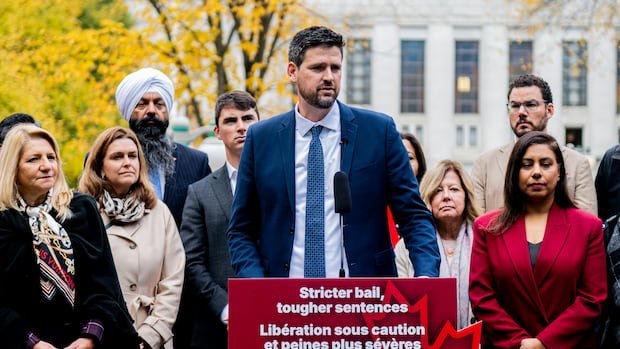

The Canadian government led by the Liberal party unveiled alterations to the legal system on Thursday aimed at extending the incarceration period for certain offenders as part of efforts to reduce crime rates. The new bill, C-14, introduces numerous targeted adjustments to the bail and sentencing structure within the federal Criminal Code, a move that has long been advocated for by victims’ rights groups, law enforcement unions, and several provincial leaders.
These changes come in response to a rise in violent crime incidents over the past decade, despite a slight decrease in crime rates last year following the post-COVID surge. Justice Minister Sean Fraser announced the modifications, which primarily focus on making bail more challenging to obtain, particularly for repeat and violent offenders. The legislation proposes the establishment of new “reverse onuses,” where detention becomes the default choice, shifting the burden to the bail seeker to justify why they should not be held in custody pending trial.
If approved by Parliament, these new reverse onuses will be applicable to individuals facing charges related to violent or organized crime, including car theft, break and enter, human trafficking, assault, sexual assault involving specific actions like choking or strangulation, and violent extortion. The government emphasizes the need for courts to thoroughly review the bail proposals of individuals involved in these reverse onus cases to ensure the credibility and reliability of their requests for release.
During a press briefing, Minister Fraser highlighted that the bill aims to enhance public trust in the justice system and prevent dangerous individuals from engaging in criminal activities. He expressed concerns about a small group of repeat offenders, many of whom are familiar to law enforcement, cycling in and out of the justice system like a revolving door. Fraser anticipates an increase in the incarceration of high-risk individuals as a consequence of their actions.
Additionally, the bill refines the “principle of restraint” established by the previous Liberal government, which mandates judges to grant bail to certain individuals at the earliest reasonable opportunity and with minimal restrictions. While calls have been made to repeal this principle due to its perceived leniency, the Liberals have retained it with adjustments to address Charter rights concerns. The legislation now directs courts and law enforcement to prioritize public interest and the protection of victims and witnesses when determining whether to release an accused individual.
Moreover, the bill introduces specific considerations for bail decisions, particularly focusing on cases involving random or unprovoked violence to ensure the enhanced retention of potentially dangerous offenders. These proposed legislative changes are prompted by notable criminal incidents, such as the tragic murder of Bailey McCourt by her ex-husband shortly after his release on bail for assault.
However, the bill’s constitutionality is likely to face scrutiny, especially concerning an offender’s right to reasonable bail without unjust cause as outlined by the Supreme Court in previous rulings. Despite the government’s confidence in the new measures passing constitutional tests, critics, including criminal defense attorney Lawrence Greenspon, warn of potential Charter violations and the risk of the legislation being overturned by the courts.
In addition to the bail reforms, the bill advocates for stricter sentencing measures, urging courts to adopt a tougher stance on repeat and violent offenders to ensure lengthier prison terms. The introduction of consecutive sentencing, where individuals serve one sentence after another rather than concurrently for multiple offenses, is part of the government’s strategy to enhance deterrence and public safety. The bill also includes provisions for harsher penalties for crimes against first responders, retail theft, and offenses causing harm to essential infrastructure, aiming to impose more severe sentences.
Furthermore, C-14 proposes changes to the detention criteria for accused individuals under 18, broadening the scope of offenses that could result in their incarceration. Despite a decline in the incarceration of young offenders since the enactment of the Youth Criminal Justice Act in 2003, recent years have witnessed a rise in youth-related criminal activities.
Justice Minister Fraser views these legislative adjustments as a comprehensive approach to combating crime, combining stronger legal measures with investments in law enforcement resources and social programs. The government’s strategy involves hiring additional RCMP officers and border personnel, along with allocating funds for housing, mental health services, and programs to support at-risk youth in avoiding criminal involvement. Discussions regarding the financial implications for provinces in implementing these changes are ongoing, emphasizing the shared responsibility between federal and provincial authorities in addressing the complex issue of crime prevention and law enforcement.