

The Canadian government unveiled a new aid package on Monday to assist the steel, aluminum, and copper sectors, which have been severely impacted by U.S. President Donald Trump’s expanded tariff policies. Industry Minister Melanie Joly announced a $1-billion loan program in partnership with the Business Development Bank of Canada (BDC) to provide financial support to companies most affected by the tariffs. This program will offer favorable terms over the next three years.
Additionally, a separate $500-million fund will aid companies in making strategic pivots to navigate the challenging U.S. market conditions. Isabelle Hudon, the CEO of BDC, emphasized the importance of swiftly delivering financial assistance to keep steel and aluminum companies operational.
The recent measures supplement existing government initiatives aimed at alleviating the effects of Trump’s tariffs on industrial products. The government has already implemented tariffs on Chinese steel to reduce foreign competition and introduced a $5-billion strategic response fund.
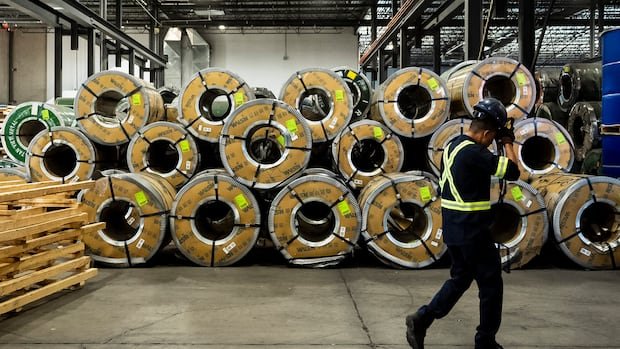
The urgent need for this new aid package arises from Trump’s recent decision to extend tariffs to include previously exempted products like steel coils and aluminum sheets. Consequently, Canadian manufacturers, including tool and mold makers, are now facing substantial customs duties at the border.
Conservative industry critic Raquel Dancho criticized the government’s efforts as a short-term solution and stressed the necessity of a tariff agreement with the U.S. Trade Representative Jamieson Greer reiterated the U.S.’s commitment to tariffs, indicating that a return to tariff-free trade is unlikely.
The Canadian Steel Producers Association welcomed the aid package but called for further tariff actions to safeguard the domestic market from foreign steel imports. Statistics show a significant decline in steel exports, primarily to the U.S., leading to job losses in companies like Algoma Steel.
Despite Trump’s tariff strategy aiming to boost U.S. employment in the steel sector, data from the World Steel Association reveals only a modest increase in American steel production. Research indicates that the section 232 tariffs have resulted in a substantial job loss in the U.S. economy.