

Internal documents acquired by CBC News reveal that the federal government is requesting the authority to annul applications for groups of visa holders, primarily due to fraud concerns associated with India and Bangladesh.
A presentation intended for the immigration minister’s office indicated that Immigration, Refugees and Citizenship Canada (IRCC), along with the Canada Border Services Agency (CBSA) and unnamed partners in the U.S., are working to detect and revoke fraudulent visitor visa applications.
According to the presentation, Canadian agencies and their U.S. counterparts have established a collaborative group aimed at strengthening their ability to deny and revoke visas, highlighting India and Bangladesh as countries presenting particular challenges.
The document outlined potential scenarios for exercising mass cancellation powers, such as during a pandemic, in times of war, or concerning “country-specific visa holders.”
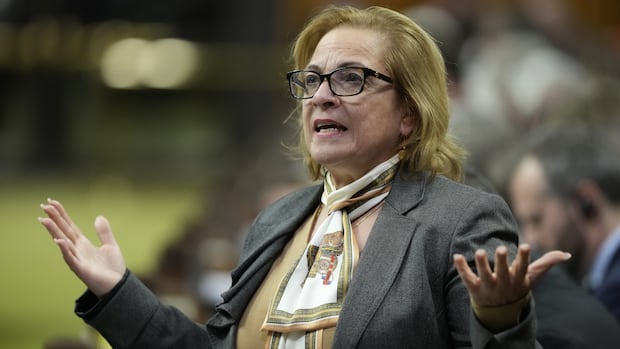
Immigration Minister Lena Diab has publicly cited reasons for requesting these powers, including a pandemic or war, but she has not addressed the issue of country-specific visa holders.
The presentation sheds light on Ottawa’s rationale for seeking mass cancellation powers.
This provision was introduced in Parliament as part of Bill C-2, the comprehensive border legislation. This bill has since been divided into two separate pieces, with the mass visa cancellation aspect included in C-12, which the government is eager to expedite through the legislative process.
Over 300 civil society organizations have voiced concerns regarding the legislation. Some, including the Migrant Rights Network, argue that such group cancellations would enable the government to establish a “mass deportation machine.”
Immigration attorneys have also questioned whether the drive for mass cancellation powers is aimed at alleviating the increasing backlog of applications faced by the federal government.
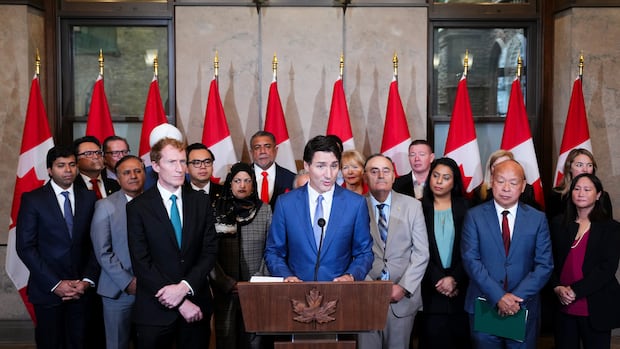
The federal government plans to reduce permanent immigration to Canada by over 20 percent within the next three years, leaving temporary workers and international students in uncertainty. This decision follows recent polling indicating that a majority of Canadians have grown more negative towards immigration.
The number of asylum claims from Indian nationals rose from under 500 monthly in May 2023 to approximately 2,000 by July 2024, according to the document.
The presentation indicates that verifying temporary resident visa applications from India delays the processing of applications.
Processing times climbed from an average of 30 days at the end of July 2023 to 54 days a year later. Additionally, approvals began to decline in 2024 as resources were diverted to verification, decreasing from over 63,000 in January to around 48,000 by June.
The document also highlighted an increase in “no boards” in India — passengers barred from boarding flights — as of summer 2024. By July 31 of that year, 1,873 applicants had been flagged for further questioning and received procedural fairness letters detailing their rights and possible legal options.
There was no information provided regarding claims from Bangladesh in the document.
Last month, IRCC informed CBC News in a statement that the new powers were not being sought “with a specific group of people or situation in mind,” and that “decisions would not be taken unilaterally.”
An additional document from October 2024, a memo directed to then-immigration minister Marc Miller, recommended he advocate for the department to obtain enhanced visa cancellation powers without specifying any particular nations.
“The capability to revoke temporary resident documents mitigates security threats and curtails the potential misuse of such documents,” it remarked.
The memo further indicated that the likelihood of applicants pursuing judicial review of cancellations would “depend on the specific circumstances of each case, particularly whether procedural fairness was adhered to.”
‘Concrete steps’ to control immigration
CBC News directed inquiries regarding the documents to Diab’s office, the Immigration Department, and Global Affairs.
In a statement, the Immigration Department noted it has implemented “concrete steps to reduce unnecessary border volumes, enhance information sharing, and decrease non-genuine visitors and illegal crossings at the border.”
The department reported that these measures, which include increased scrutiny of temporary resident visa (TRV) applications from “countries with the highest rates of abuse,” have resulted in a 97 percent decrease in illegal crossings from the U.S. into Canada by foreign nationals since the peak in June 2024.
The department also reported a 71 percent drop in asylum claims from TRV holders in May compared to the same period last year, alongside a 25 percent rise in visa refusals due to fraud from January to May, also compared to the previous year.
It did not address the query regarding the specific reasons for singling out Bangladesh and India in the internal presentation and why the scenario of mass cancellation for country-specific cases was not disclosed publicly.
Additionally, IRCC did not specify the U.S. partners referenced in the document, stating that it cannot discuss bilateral negotiations with foreign nations.
The department clarified that any use of mass cancellation powers would be “determined by the Governor in Council” and announced in the Canada Gazette to clarify “the rationale for the order, who will be affected, how they will be impacted, any exceptions, refunds, or other pertinent factors.”
Mending fences with India
While the department pursues these powers, the federal government has also been working to mend its relationship with India.
Relations between the two nations have been strained since 2023, when Prime Minister Justin Trudeau accused Indian government agents of potentially being involved in the assassination of a Canadian Sikh separatist leader, Hardeep Singh Nijjar, in British Columbia.
The Indian government has refuted these claims.
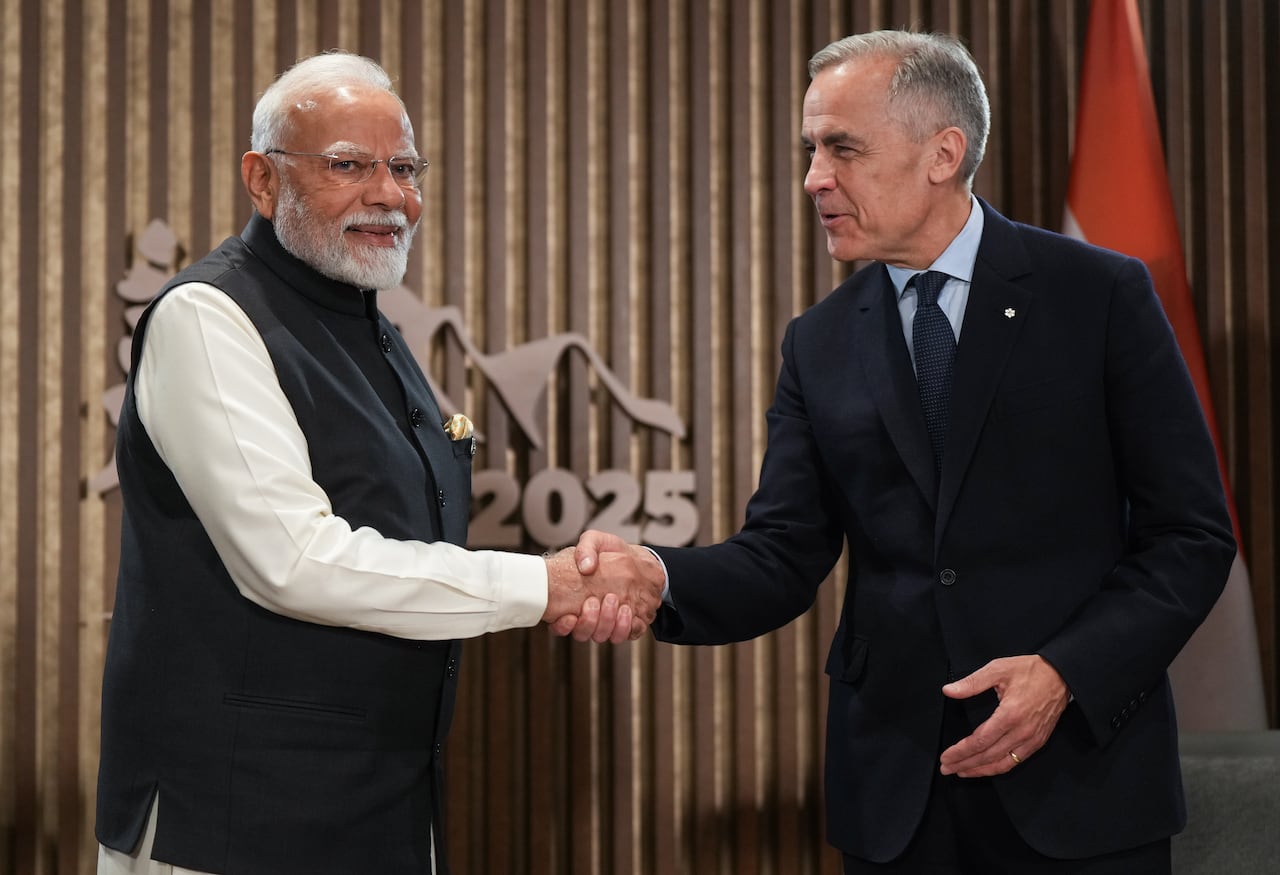
Indian Prime Minister Narendra Modi met with Prime Minister Mark Carney in Alberta in June. (Darryl Dyck/The Canadian Press)
In June, Indian Prime Minister Narendra Modi attended a G7 summit in Canada at the invitation of Prime Minister Mark Carney, amidst protests from Canada’s Sikh community. The two leaders expressed a desire to revitalize their bilateral ties.
In August, both nations renamed their high commissioners in each other’s territories.
The IRCC deferred a question regarding how the powers being sought might affect relations between India and Canada to Global Affairs, which has yet to respond to CBC News on this issue.