
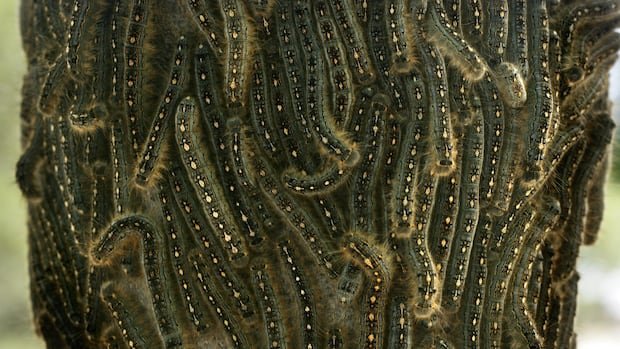

In Mahogany, a neighborhood in southeast Calgary, Samantha Tong was surprised by what appeared to be a moving tree bark until she took a closer look. She described it as resembling dark, fuzzy patches that seemed to be in motion. Upon examination, Tong discovered that the tree was infested with forest tent caterpillars.
Not only Tong, but residents in various municipalities like Red Deer, Olds, and Devon have also observed an increase in forest tent caterpillar populations. According to Ken Fry, an entomologist at Olds College, these caterpillars are native to Alberta and undergo population cycles, with significant spikes occurring roughly every decade, known as outbreaks.
The causes of these outbreaks are still under investigation but are believed to be influenced by factors such as weather conditions, tree health, predators, parasites, and diseases. Forest tent caterpillars are notorious for consuming tree leaves, and while healthy trees can typically recover from defoliation, stressed or diseased trees may face challenges.
To address caterpillar infestations, residents can consider manual removal methods like freezing or drowning the caterpillars. Additionally, the use of a biological pesticide called bacillus thuringiensis kurstaki (BTK) is an environmentally friendly solution that targets the caterpillars’ digestive systems without harming other insects.
While forest tent caterpillars can pose risks to trees, they also serve as a food source for predators and their feces act as natural fertilizers. Understanding the broader ecological perspective, Fry emphasized the importance of tree care and vigilance during outbreaks to maintain a healthy ecosystem.
As forest tent caterpillar outbreaks are a natural part of Canada’s ecology, managing their populations is crucial to prevent long-term damage to trees and promote overall ecosystem health.