
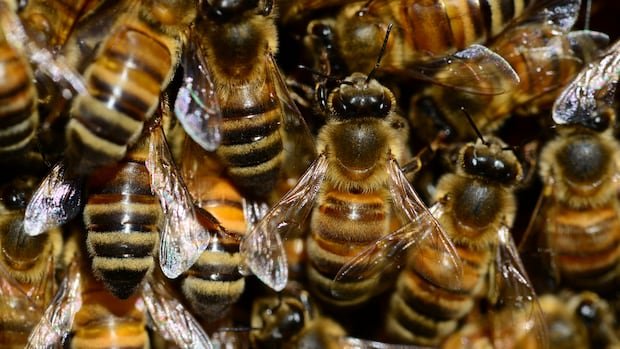

In Canada, the cold climate poses challenges for beekeepers, as highlighted by a 2025 report revealing that more than 41% of honeybee colonies in Alberta failed during that winter. To address this issue, Beekeeping Innovations Ltd., based in the Calgary area, has introduced an innovative solution known as the Bee Cube. This apiary features a fully climate-controlled environment that can accommodate multiple honeybee colonies and was developed in Okotoks.
Herman Van Reekum, the company’s founder and CEO, explained that the primary objective of the Bee Cube is to provide bees with a comfortable environment to survive the winter. Additionally, the Bee Cube offers an opportunity to revolutionize Canada’s beekeeping industry by focusing on the production of queens in a safe and cost-effective manner.
Van Reekum emphasized the significance of producing queens locally to reduce reliance on importing foreign queen bees, which currently amounts to around 300,000 annually from countries like Australia, New Zealand, California, and Hawaii. Importing foreign bees not only presents challenges in acclimatization but also carries the risk of introducing harmful pests such as varroa mites and potential threats like the Tropilaelaps mite.
By breeding local queens, Van Reekum believes that beekeepers can lower mite infection rates and cultivate bees with genetic resilience to withstand the harsh Canadian winters. The process involves creating queen cells in one hive and transferring them to a queen-less colony to allow the emergence of new queens, which are then placed in individual cages for mating and egg-laying before establishing their own colonies.
Canada, particularly Alberta, holds a significant position in beekeeping, with the province hosting nearly 40% of the nation’s bee colonies and serving as the largest honey producer in the country. The 2025 honey harvest in Canada was valued at $241 million, with the beekeeping industry playing a vital role in agriculture through pollination services that contribute billions to the economy.
Van Reekum stressed the importance of bees in pollinating crops, noting that approximately 33% of the food consumed comes from crops pollinated by bees. The Bee Cube’s focus on local queen production aims to enhance the sustainability and resilience of bee populations in Canada.
[Source](https://www.cbc.ca/news/canada/calgary/honey-bee-apiculture-okotoks-9.7243805)