
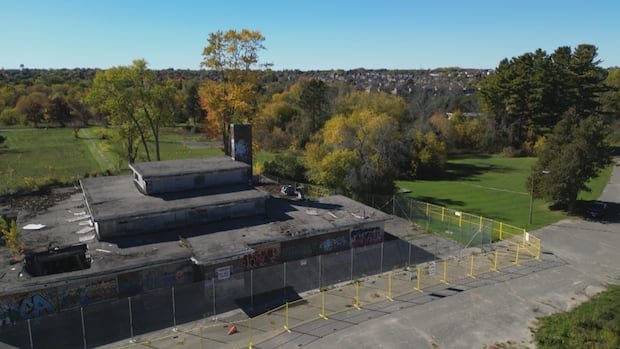

Marilyn Morawetz gazes at the deteriorating walls of a historical cafeteria structure, appreciating the charm of its prairie-style design. She notes the rarity of such architecture in an industrial context like this and expresses concern over the potential loss of the building and its significance.
The century-old cafeteria, part of the former Camp 30 in Bowmanville, Ontario, ceased operations in 2008 and now stands in disrepair alongside other heritage buildings on the site. Initially serving as a school for boys in the 1920s, the location later housed up to 800 German prisoners of war during World War II. Morawetz recalls a reunion in 1992 where former prisoners shared a meal prepared by the cafeteria and reminisced about their experiences.
The site witnessed the Battle of Bowmanville, a three-day uprising by prisoners during World War II, unique for being the only such battle on Canadian soil fought without firearms. Morawetz, chair of the Jury Lands Foundation overseeing the site’s preservation, faces a crucial decision as Clarington’s council deliberates on the fate of the cafeteria, the only municipally-owned building on the property.
Options range from full restoration, estimated at over $20 million, to demolition, with various alternatives proposed in between. One suggestion involves temporarily stabilizing the building for public use, allowing for community activities and upkeep. A garden established nearby has already been utilized to donate fresh produce to local food banks, showcasing the potential for community engagement.
Clarington Mayor Adrian Foster expresses skepticism about the long-term viability of stabilization efforts, favoring the demolition and reconstruction of a replica building to preserve the site’s history more sustainably. The Jury Lands Foundation advocates for funding stabilization through community benefits charges and heritage grants, presenting a settlement offer from the landowners to dedicate the land for park space in exchange for preserving the remaining buildings.
As the council prepares to debate the cafeteria’s future, the community remains divided over the best course of action, balancing historical preservation with financial considerations. The decision will impact not just the physical structure but also the cultural heritage and community engagement opportunities associated with the site.