
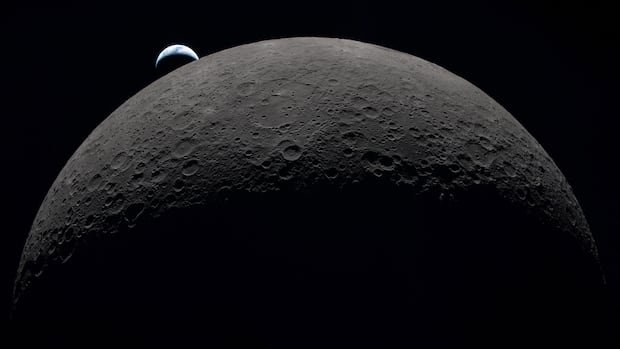

The Artemis II astronauts have created a lasting connection with the Apollo 8 mission. Following their historic lunar flyaround, NASA unveiled impressive photographs captured by the U.S.-Canadian crew. These images included a reimagined version of Apollo 8’s iconic “Earthrise” shot from 1968, now referred to as “Earthset,” depicting Earth setting behind the moon’s gray, pockmarked surface.
The original “Earthrise” photo was taken by astronaut William Anders during the Apollo 8 mission on December 24, 1968. This image, recognized as the first color photo of Earth from space, played a pivotal role in catalyzing the global environmental movement and inspiring the establishment of Earth Day in 1970, an annual event advocating for environmental activism.
Additionally, the crew captured a striking image of a total solar eclipse caused by the moon blocking the sun from their vantage point in space. The crew, consisting of three Americans and one Canadian, is now en route back to Earth, scheduled for a splashdown in the Pacific on Friday.
In a reminiscent nod to history, Apollo 8’s astronauts, the world’s initial lunar visitors, orbited the moon on Christmas Eve in 1968. Their memorable “Earthrise” photograph remains emblematic of the contemporary environmental conservation movement.
Artemis II signifies NASA’s inaugural return to the moon with astronauts, a crucial progression towards a lunar landing by a different team in the next two years. The mission paves the way for future endeavors, including establishing a moon base and ultimately venturing to Mars, highlighting the necessity of international collaboration for such ambitious undertakings.