

Long ago, a hornless rhino, comparable in size to a pony, roamed through the forests of what is now northern Nunavut, making it the most northerly rhino ever discovered.
A recent study released on Tuesday classifies it as a new species and provides a fascinating theory regarding its presence in the area.
After years of investigation, a clearer understanding of a rhino discovered in Nunavut, located 1000 kilometers above the Arctic Circle, is coming to light. This suggests that a land bridge may have been utilized by animals for a longer duration than previously believed.
Epiatheracerium itjilik was approximately the size of a contemporary Indian rhinoceros and significantly smaller than an African rhino, standing roughly one meter tall at the shoulder, according to Danielle Fraser, the principal author of the new research featured in the journal Nature Ecology and Evolution.
The team discovered over 70 percent of the animal’s skeleton within the Haughton Crater on Devon Island, located about 1,000 kilometers north of the Arctic Circle, surpassing the previous record for the northernmost rhino established by a specimen from Yukon.
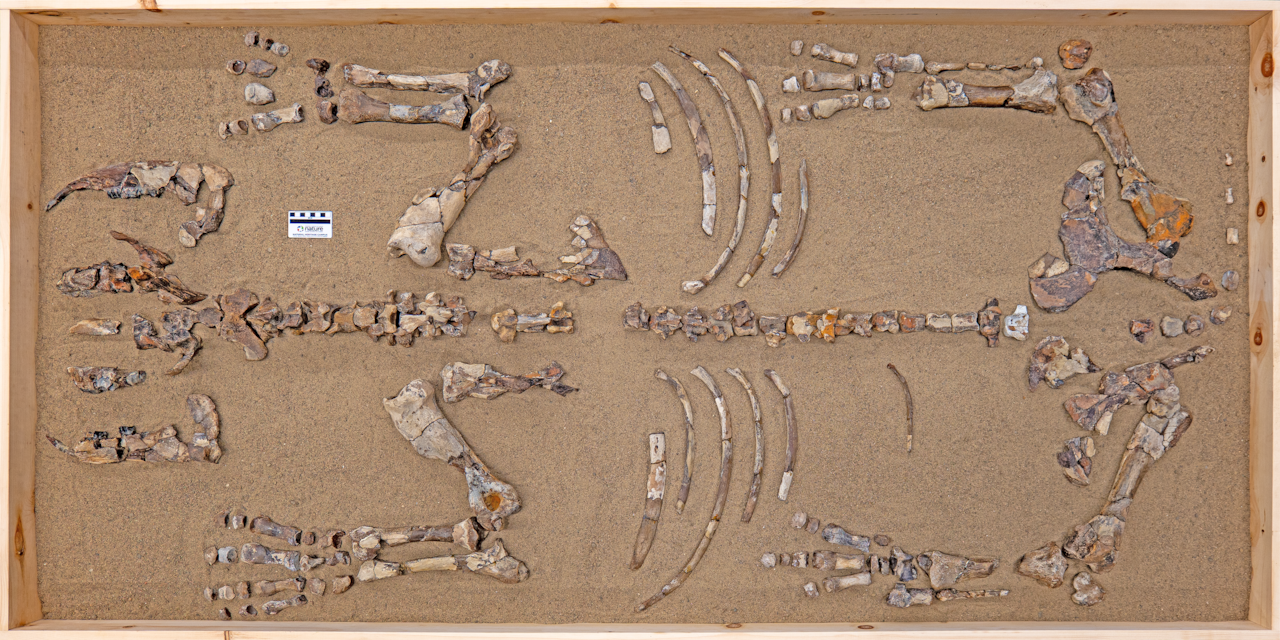
Aerial view of the fossil of Epiatheracerium itjilik. Approximately 75 percent of the animal’s bones were recovered, including important components such as teeth, mandibles, and parts of the skull. (Pierre Poirier/Canadian Museum of Nature)
Through examining its skull, teeth, and various bones, researchers gained significant insights about the animal.
The wear observed on its teeth indicated that the rhino was in its early to mid-adulthood.
Natalia Rybczynski, a paleobiologist at the Museum of Nature and Carleton University who co-authored the recent study, mentioned that the team believes the rhino was female, based on the relatively small size of some lower teeth, which are generally larger in male rhinos.
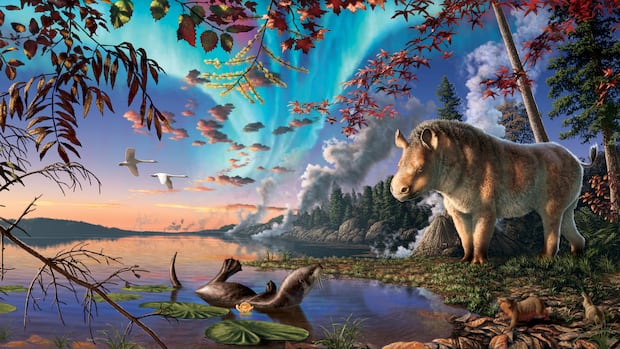
In an artistic depiction, a furry rhino with broad nostrils and no horn stands beside a lake adorned with lilies, swans, and an otter-like creature. The background showcases a forest filled with pine and spruce trees, along with maple, birch, and alder exhibiting autumn hues, as northern lights illuminate the twilight sky.
“I wanted the artist to portray the rhino as resembling a pony in winter,” stated Fraser, head of paleobiology at the Canadian Museum of Nature in Ottawa.
Although the climate then was akin to present-day southern Ontario, winters were snowy, and Fraser speculated that the animal needed to stay warm through the prolonged dark winters characteristic of its polar habitat.
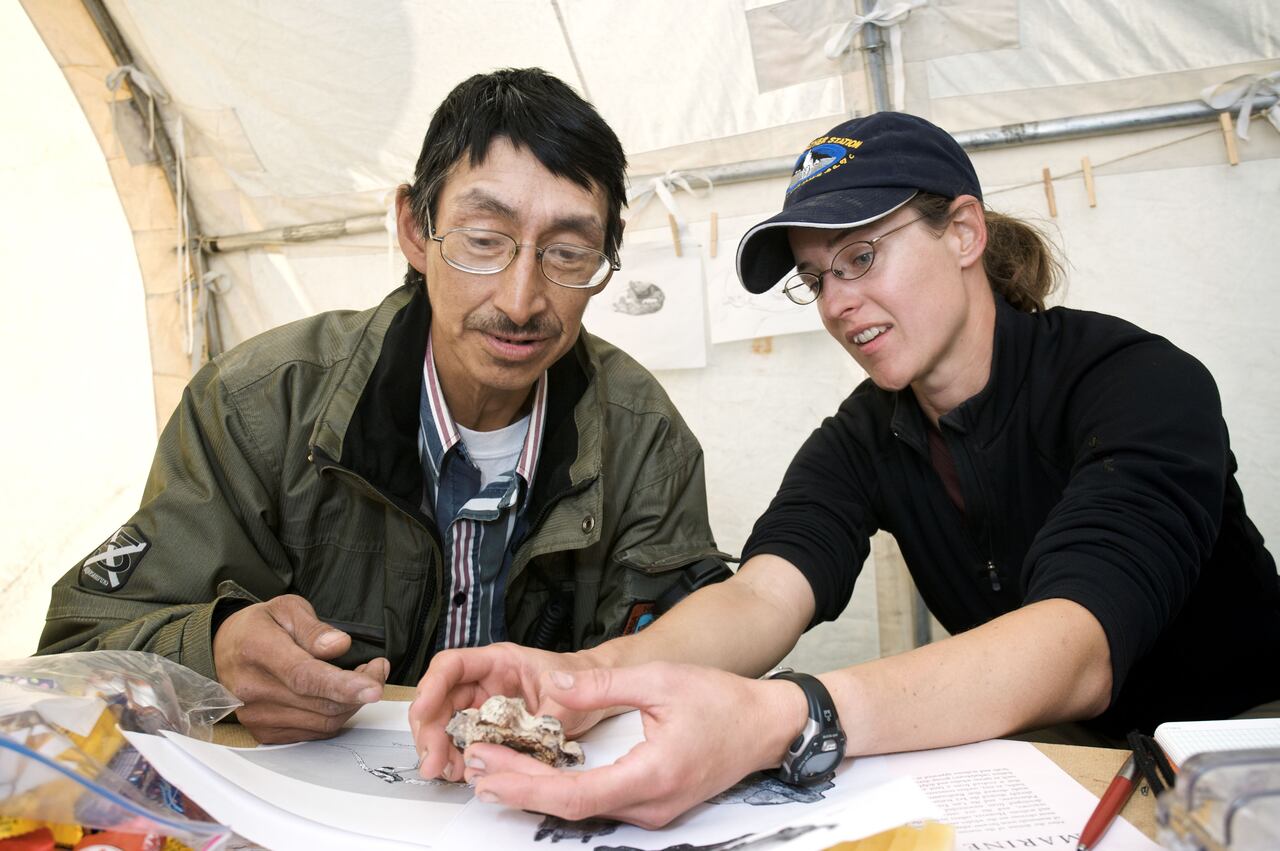
Natalia Rybczynski, right, and Jarloo Kiguktak inspect bones collected during an expedition to the Haughton Crater in 2008. Kiguktak, a local Inuk elder, assisted in naming the new rhino. (Martin Lipman/Canadian Museum of Nature)
The species name itself is derived from the Inuktitut term for “frosty” or “frost,” selected by Jarloo Kiguktak, an Inuk elder from Grise Fiord who collaborated with paleontologists during fossil collection expeditions on Devon Island and Ellesmere Island.
Fraser noted that this new species walked on four toes rather than the three commonly found in most rhinos: “In that regard, it’s quite unique.”
Interestingly, its lack of a horn is not uncommon — the majority of fossil rhinos lacked horns, despite the “horned nose” designation stemming from their modern relatives.
In general, this new species significantly differs from the numerous fossil rhino species that once inhabited North America. Instead, it has been classified within a genus of similar species found in Europe, Epiatheracerium.
This raises questions about how it arrived on Devon Island. Past research suggested a land bridge once connected Europe and North America, but it fractured roughly 33 million years before E. itjilik existed.
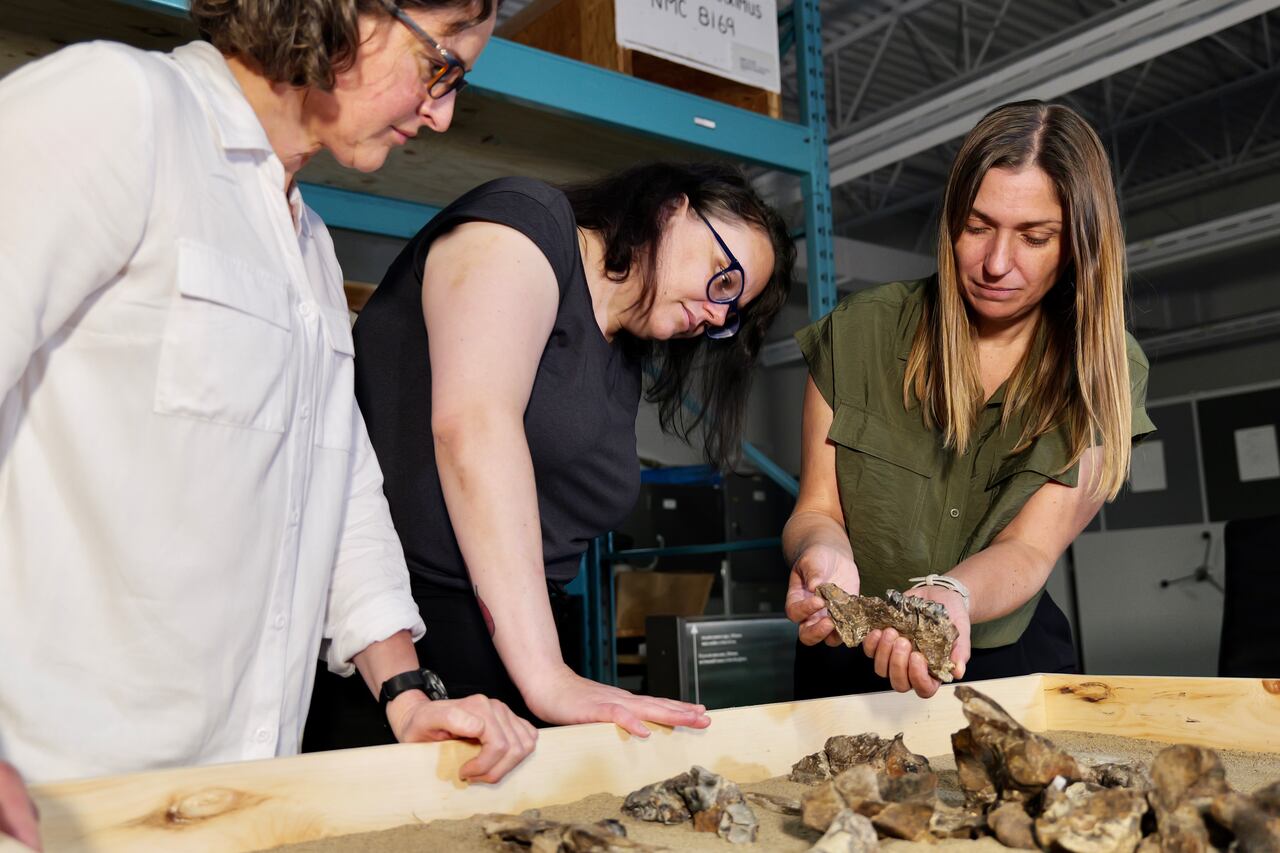
From left, study co-authors Natalia Rybczynski, Danielle Fraser, and Marisa Gilbert, holding rhino jaw, analyze the bones of Epiaceratherium itjilik at the Canadian Museum of Nature in Ottawa. (Pierre Poirier/Canadian Museum of Nature)
The researchers suggest that this rhino’s discovery indicates that some animals might still have been able to cross over during the Early Miocene, even with water separating the islands at that time.
“During various periods… there might have actually been some ice present in the winter that permitted crossings,” Fraser explained.
A 40-year journey
Although E. itijilik has only recently been recognized as a new species, its initial bones were uncovered 40 years ago by Mary Dawson, a paleontologist and curator at the Carnegie Museum of Natural History, who is a posthumous co-author of the new study, having passed away in 2020.
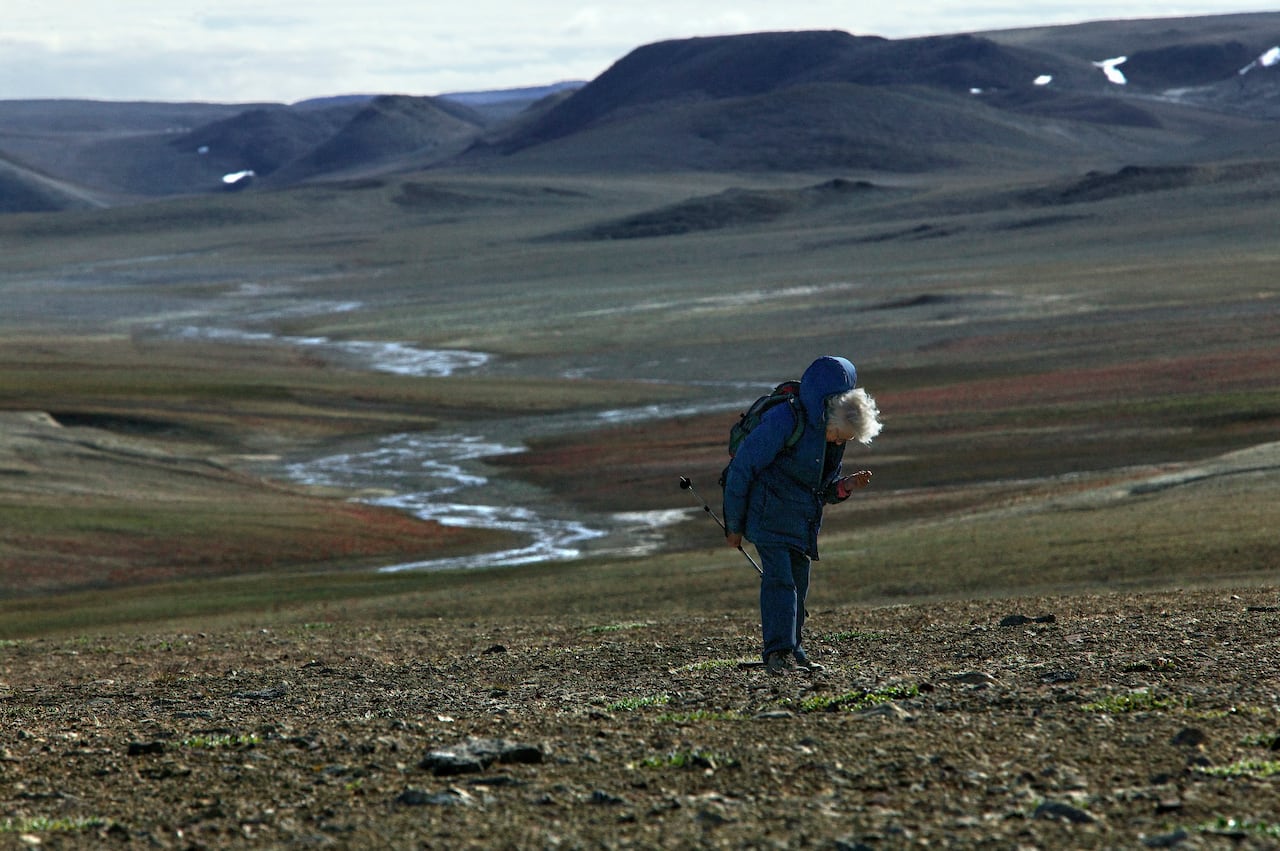
Mary Dawson is depicted searching for fossils at the Haughton Crater site in 2007. She gathered many of the bones of E. itjilik at this site during the 1980s. (Martin Lipman/Canadian Museum of Nature)
The lake where E. itijilik once drank was situated in the Haughton Crater, a massive depression formed by an asteroid collision on Devon Island. The artist’s visualization of the rhino shows steam rising in the background from hydrothermal vents believed to have been activated by the impact.
The lake has since evaporated, leaving behind a polar desert that has proven to be a rich source of fossil fragments, according to Rybczynski.
The fossils discovered there include diverse species such as fish, swans, ducks, an otter-like precursor to seals, countless rabbits, and a shrew — many of which are depicted in the artist’s reconstruction.
This era was marked by the presence of various horse, camel, rhino, and large predator species like saber-toothed cats across North America — although thus far, the rhino is the only large animal identified at the Haughton Crater.
The freeze-thaw cycles in the Arctic frequently disturb the ground at the site, exposing, burying, and dispersing bone fragments over extensive areas.
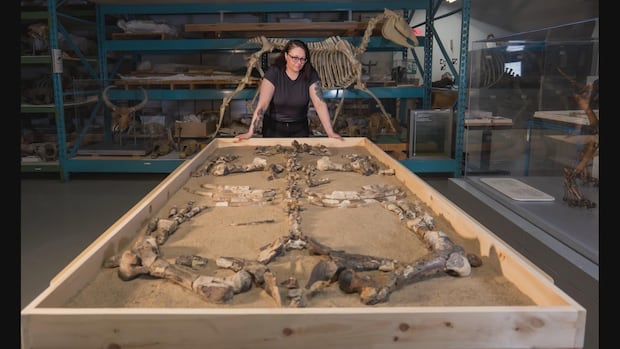
Paleontologists carefully extract these pieces from the dusty soil, then package and transport them back to the museum. However, reconstructing them can be a lengthy and complicated task. Rybczynski remarked that when the bones are organized, “on the side we have a table of scraps” that the researchers aspire to identify and assemble in the future.
When Dawson first uncovered the rhino’s bones in 1986, she immediately recognized it as a rhino due to the distinct bands on its teeth, as noted by Fraser.
After returning to the Carnegie Museum, Dawson presented the bones to several fossil rhino specialists. One such expert was Donald Prothero, a professor of geosciences at California State Polytechnic University, Pomona, who has since authored a book on fossil rhinos.
He remarked that the animal’s teeth and four toes bore resemblance to those of some ancient rhinos, though none dated as recently as 23 million years ago.
“I thought, ‘This is a very peculiar creature, good luck,'” Prothero recounted.
He suggested that this might be one reason for the extended duration required for thorough examination.
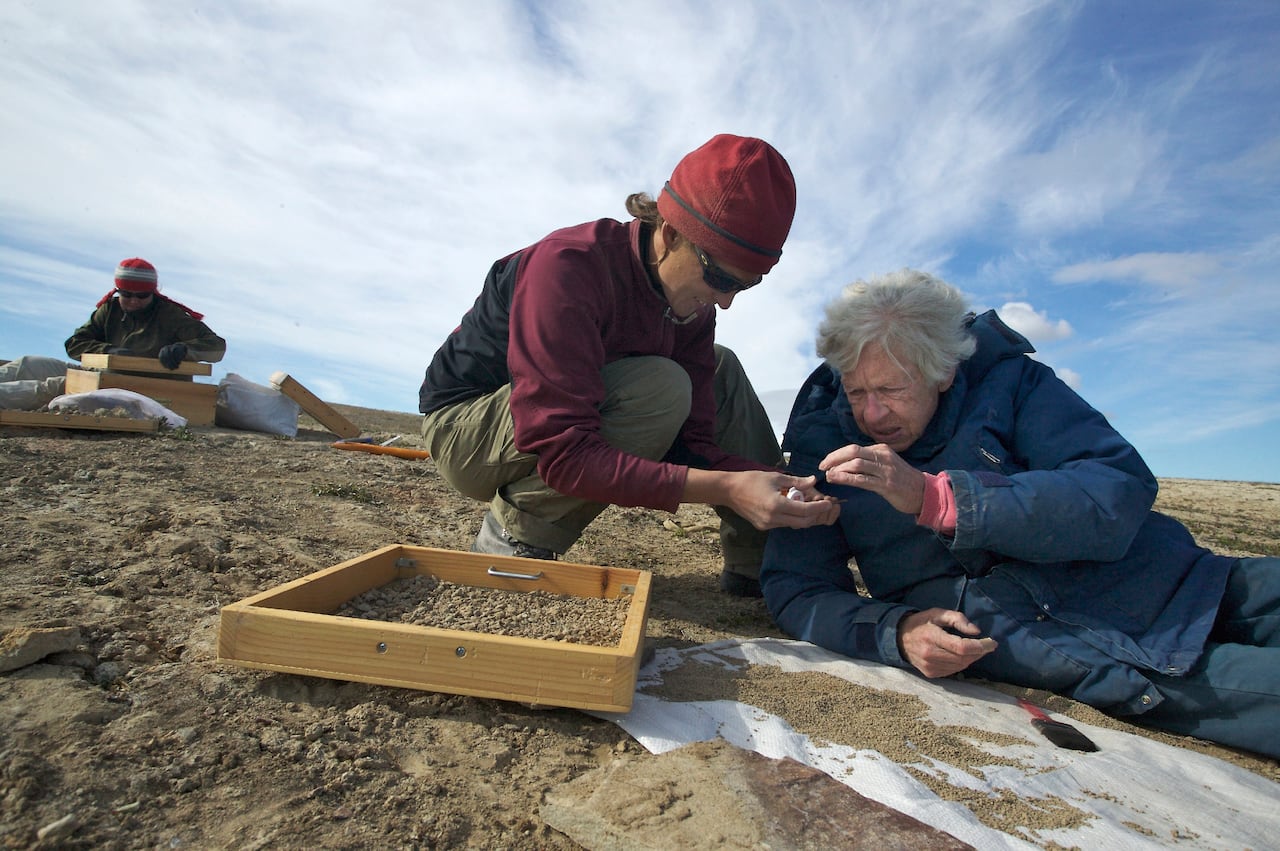
Natalia Rybczyski and Mary Dawson search for fossils during a 2007 expedition at the Haughton Crater on Devon Island, Nunavut. (Martin Lipman/Canadian Museum of Nature)
A group that included Dawson and Rybczynski revisited the fossil site several times in the late 2000s and ultimately managed to recover around 70 percent of the skeleton.
Jaelyn Eberle, a Canadian paleontologist at the University of Colorado Boulder who studies Arctic mammal fossils, remarked that discovering such a complete fossil skeleton is quite rare, particularly in the Arctic. Typically, researchers only find “small pieces, fragments, perhaps part of a jaw, or a single tooth.”
Given the amount they have from the animal, she expressed confidence in the findings.
Both she and Prothero expressed interest in the study’s implication that animals may have utilized a land bridge between Europe and Asia for a significantly longer duration than previously understood.
“That’s quite fascinating and very exciting,” Eberle stated, adding that it motivates her to search for additional evidence of animal crossings in that area.
Like Prothero, she and other fossil mammal researchers had long been aware of this rhino fossil and are eager to uncover more details.
“We’ve been waiting for this.”