

The United States has put forward a peace proposal to Sudan’s conflicting factions, but neither side has officially agreed to it, according to U.S. envoy Massad Boulos. The Sudanese army accused its adversaries of launching an attack despite announcing a ceasefire. Boulos mentioned that although there were no objections to the substance of the U.S. proposal, the Sudanese army raised what he termed as unattainable “preconditions.”
In a development aligned with U.S. preferences, the paramilitary Rapid Support Forces (RSF) independently declared a halt to hostilities. However, the army reported thwarting an assault on a base in Babanusa, located in West Kordofan state, the most recent battleground in the conflict. President Donald Trump pledged to intervene last week to halt the conflict between the army and RSF, which originated in April 2023 from a power struggle, leading to famine, ethnic violence, and mass displacement.
Previous mediation efforts by the U.S., Saudi Arabia, Egypt, and the United Arab Emirates have not yielded results, with a joint proposal submitted to the conflicting parties in September. Boulos, Trump’s advisor for African and Arab affairs, stated that a comprehensive truce proposal was presented, but neither the Sudanese Armed Forces (SAF) nor RSF has formally accepted it.
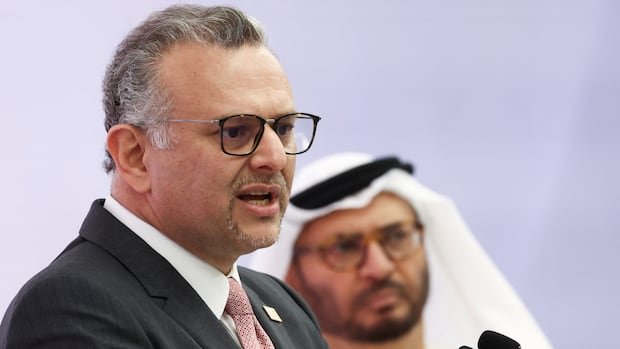
Sudanese army chief Abdel Fattah al-Burhan criticized the latest U.S. proposal, describing it as biased towards the RSF and undermining the army’s position. Boulos, alongside Anwar Gargash, diplomatic advisor to the U.A.E. president, refuted Burhan’s claims as based on misinformation. The Sudanese army has voiced objections to U.A.E.’s involvement in peace talks and insisted on a truce only after the RSF withdraws from civilian areas.
Amid accusations of arming the RSF, the U.A.E. denied the allegations. Gargash emphasized that misinformation campaigns would not deter their pursuit of peace. He also emphasized that Sudan’s future should not be influenced by the Muslim Brotherhood or related groups, alluding to Islamist elements in the Sudanese army, a claim refuted by Burhan.
Boulos hinted at potential scrutiny of regional affiliates if the U.S. proceeds with designating the Muslim Brotherhood as a terrorist organization. Following international pressure due to recent civilian attacks by RSF forces, RSF chief Mohamed Hamdan Dagalo announced an immediate unilateral ceasefire on Monday. The status of this ceasefire on Tuesday remained uncertain.
Boulos welcomed the RSF’s ceasefire declaration and urged its adherence. He emphasized the need to halt external financial and military support to the conflicting parties. Khalid Aleisir, a spokesperson for Sudan’s government led by the army, dismissed the RSF’s announcement as a diversion tactic to deflect attention from alleged atrocities committed by its members. The RSF pledged to address any reported abuses and hold perpetrators accountable.